
Foolproof Sourdough Starter: The Key to Authentic Homemade Bread
I remember the first time I tasted truly exceptional sourdough bread. It wasn’t in a fancy bakery or a Michelin-starred restaurant. It was at a small, family-run vineyard in Sonoma, California. The bread, crusty and fragrant with a tangy, almost addictive flavor, was served alongside a simple cheese board. I learned the secret wasn’t just the baker’s skill, but the heart of every sourdough loaf: the starter. That experience sparked my lifelong fascination with sourdough and the magic of wild yeast fermentation, a journey I’m delighted to share with you.
Recipe Overview
- Prep Time: 10 minutes
- Fermentation Time: 3-5 days
- Feeding Time: 10 minutes (weekly)
- Total Time: 3-5 days + ongoing maintenance
- Yield: Approximately 2 cups of active starter
- Dietary Type: Vegetarian
Ingredients
- ½ cup plain yogurt
- ½ cup milk (skim, regular, or buttermilk)
- ½ cup unbleached flour
- Optional: ⅓ cup dry milk powder and ⅔ cup bottled water (as an alternative to milk for feeding)
Equipment Needed
- Glass or pottery container (avoid metal)
- Lid (not airtight)
- Spoon or whisk
- Warm location (80-90°F / 27-32°C)
Instructions
-
Combine Milk and Yogurt: In your glass or pottery container, thoroughly mix together the ½ cup of milk and ½ cup of plain yogurt. Avoid using a metal container, as it can negatively react with the acids produced during fermentation.
-
Cover and Warm: Place the lid loosely on the container, ensuring it’s not airtight. A slight gap is essential for gas exchange and prevents pressure buildup. Position the container in a warm place, ideally between 80 to 90 degrees Fahrenheit (27 to 32 degrees Celsius). This temperature range encourages the growth of the desired bacteria and yeasts.
-
Rest for 24 Hours: Allow the mixture to sit undisturbed in the warm location for approximately 24 hours. During this time, the milk and yogurt will begin to separate, forming curds. Don’t be alarmed by this separation; it’s a natural part of the fermentation process.
-
Incorporate the Flour: After the 24-hour resting period, add the ½ cup of unbleached flour to the mixture. Stir thoroughly to combine the flour with the milk and yogurt, ensuring all ingredients are well incorporated. The mixture will likely appear somewhat lumpy due to the curd formation; that’s perfectly normal.
-
Ferment and Stir: Return the container, still loosely covered, to its warm location. Allow the mixture to ferment for 3 to 5 days, stirring daily. This daily stirring helps to aerate the mixture, distributes the nutrients, and encourages even fermentation.
-
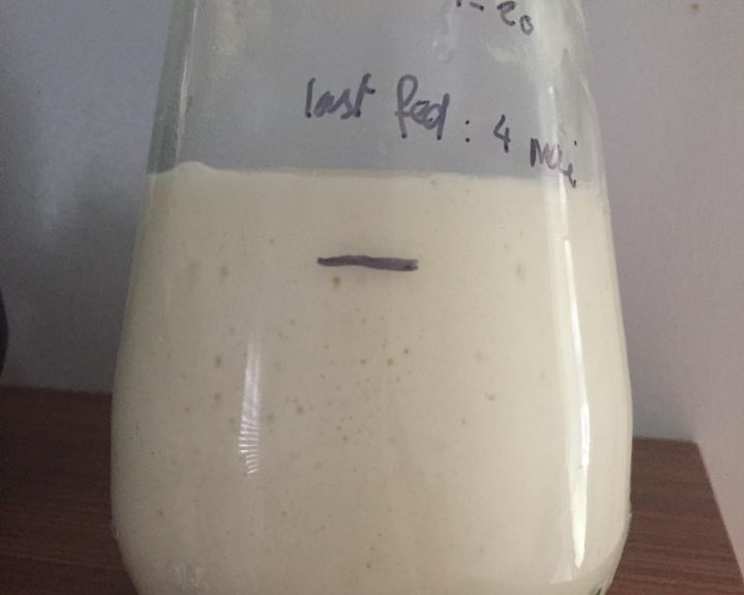
Observe and Smell: Over the next few days, you will observe signs of fermentation: the starter will begin to bubble and develop a characteristic sour odor. This is a clear indication that your starter is coming to life and is becoming a thriving culture of wild yeasts and beneficial bacteria.
-
Feeding the Infant Starter: Remember that a sourdough starter is a living culture and requires regular feeding to maintain its activity and health. To feed your “infant” starter, especially during the first few weeks, feed weekly.
-
Weekly Feeding: To feed, first place it on the counter for several hours, allowing it to come to room temperature. Then, remove ½ cup of the starter, discarding the remainder. This discard step prevents the starter from becoming too large and unmanageable.
-
Mix and Replenish: Feed the remaining ½ cup of starter with equal amounts of milk (or buttermilk for a stronger sour flavor) and unbleached flour. For example, mix the ½ cup starter with ½ cup of flour and ½ cup of milk. Stir thoroughly to ensure a smooth consistency.
-
Alternative Feeding Method (Optional): Instead of milk, you can also feed the starter with a mixture of ⅓ cup of dry milk powder and ⅔ cup of bottled water. This option can be useful if you want to control the hydration level or if you have specific dietary needs.
Expert Tips & Tricks
- Temperature is Key: Maintaining a consistent temperature is crucial for successful sourdough starter development. Use a warming mat or place the container near a warm oven (but not directly on it) to ensure a stable environment.
- Observe the Bubbles: The presence of bubbles is a good sign, but pay attention to their size and frequency. Small, frequent bubbles indicate a healthy and active starter.
- Trust Your Nose: The sour odor is another indicator of fermentation. It should be a pleasant, tangy smell, not an off-putting or moldy one.
- Flour Power: Unbleached flour is preferred because it contains more nutrients that nourish the yeast and bacteria.
- Consistency is King: A thick, pancake-batter consistency is ideal for a sourdough starter. Adjust the amount of flour or liquid as needed to achieve this consistency.
- Discard is Important: Don’t skip the discard step! It helps to maintain the right balance of yeast and bacteria in your starter.
Serving & Storage Suggestions
Once your starter is active and bubbly, it’s ready to be used in your favorite sourdough recipes. Store your starter in the refrigerator to slow down the fermentation process and reduce the frequency of feedings. When stored in the refrigerator, you only need to feed it every 1-2 weeks.
To revive the starter after refrigeration, take it out of the fridge a few hours before feeding, allowing it to warm up to room temperature. Discard a portion of the starter, feed it as directed, and let it sit at room temperature until it doubles in size before using it in a recipe.
Nutritional Information
The nutritional information for sourdough starter is minimal and varies based on the flour and liquid used for feeding. Generally, it contributes a small amount of carbohydrates and trace amounts of protein, vitamins, and minerals to baked goods.
| Nutrient | Amount per Serving (approx. 1/2 cup) | % Daily Value (approximate) |
|---|---|---|
| Calories | 50-70 kcal | 2-4% |
| Total Fat | Less than 1g | 1-2% |
| Saturated Fat | Less than 0.5g | 1-2% |
| Cholesterol | 0mg | 0% |
| Sodium | 1-5mg | 0% |
| Total Carbohydrate | 10-15g | 3-5% |
| Dietary Fiber | Less than 1g | 2-4% |
| Sugars | 0-2g | N/A |
| Protein | 1-3g | 2-6% |
Note: This table represents estimated values and can vary.
Variations & Substitutions
- Gluten-Free Starter: Use a gluten-free flour blend instead of unbleached flour. Brown rice flour, tapioca flour, and sorghum flour are good options.
- Dairy-Free Starter: Use non-dairy milk, such as almond milk, soy milk, or oat milk, instead of cow’s milk. Ensure the yogurt is also non-dairy.
- Whole Wheat Starter: Use whole wheat flour instead of unbleached flour for a nuttier, more complex flavor.
- Rye Starter: Use rye flour for a darker, earthier starter that imparts a distinct flavor to bread.
FAQs (Frequently Asked Questions)
Q: Why is it important to use a glass or pottery container?
A: Metal containers can react with the acids produced during fermentation, potentially affecting the taste and the health of the starter. Glass or pottery are non-reactive and therefore ideal.
Q: What if I don’t have a warm place to keep my starter?
A: You can use a warming mat, a proofing oven, or even the oven with the light on to create a consistently warm environment. Just be careful not to overheat it.
Q: My starter isn’t bubbling. Is it dead?
A: Not necessarily. It might just need more time. Ensure it’s in a warm place and continue feeding it regularly. It can take several days for the yeast and bacteria to become active.
Q: Can I use bleached flour for the starter?
A: It’s best to avoid bleached flour, as it contains fewer nutrients that are essential for the yeast and bacteria to thrive. Unbleached flour is a better choice.
Q: My starter smells bad. What should I do?
A: A healthy starter should have a pleasant, sour smell. If it smells moldy, rotten, or otherwise unpleasant, it’s best to discard it and start over.
Final Thoughts
Embarking on the journey of sourdough baking can feel daunting, but creating your own starter is a rewarding first step. This foolproof method provides a simple and reliable way to cultivate a thriving culture that will elevate your homemade bread to new heights. Don’t be discouraged by initial setbacks; sourdough baking is a process of learning and experimentation. Embrace the challenge, share your successes (and failures!) with fellow bakers, and enjoy the unparalleled satisfaction of creating delicious, authentic sourdough bread from scratch. And who knows, maybe you too will be serving up sourdough bread at a vineyard in Sonoma someday.