
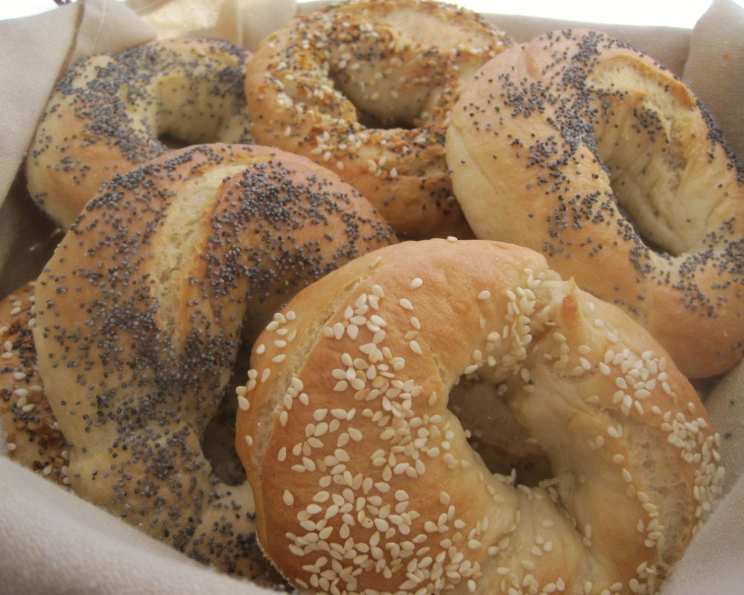
Montreal Bagels: A Taste of Nostalgia
The aroma of a Montreal bagel is a time machine. Just one whiff instantly transports me back to crisp autumn mornings in university. I can almost feel the chill air nipping at my cheeks as I waited in line outside St-Viateur Bagel, the scent of woodsmoke clinging to my coat. Each bite was a revelation – the subtle sweetness, the chewy texture, the satisfying crunch of poppy seeds. It was more than just breakfast; it was a ritual, a shared experience with friends, a symbol of home.
Recipe Overview
- Prep Time: 45 minutes
- Rise Time: 30 minutes
- Cook Time: 20 minutes
- Boiling Time: 1.5 minutes
- Total Time: 1 hour 35 minutes
- Yields: 12 bagels
- Dietary Type: Vegetarian
Ingredients
- 1 1/2 cups warm water
- 5 tablespoons sugar
- 3 tablespoons canola oil
- 1 (8 g) package dry yeast (not instant)
- 1 tablespoon beaten egg
- 1 tablespoon malt drink powder or 1 tablespoon syrup
- 4 1/2 cups unbleached white bread flour (you may need more)
- 1 teaspoon kosher salt
- 1/2 cup poppy seeds (or 1/2 cup sesame seeds, or a combination)
- 6 quarts water
- 1/3 cup honey
Equipment Needed
- Large mixing bowl
- Measuring cups and spoons
- Clean work surface
- Large pot
- Slotted spoon or spider
- Baking sheets
- Parchment paper or silicone baking mats
- Clean, dry dish towels
Instructions
-
In a large bowl, combine the warm water, sugar, canola oil, yeast, egg, and malt drink powder (or syrup). Stir until the yeast dissolves completely. It’s crucial to use warm, but not hot, water, as excessive heat can kill the yeast. A temperature between 105-115°F (40-46°C) is ideal.
-
Add the salt and one cup of the flour to the wet ingredients. Stir to combine.
-
Gradually add the remaining flour, about 3 cups, until a soft dough forms. You may need slightly more or less flour depending on the humidity and the brand of flour you’re using. The dough should be slightly sticky, but manageable.
-
Turn the dough out onto a lightly floured surface and knead for 10 to 12 minutes. As you knead, incorporate extra flour as needed to prevent the dough from sticking excessively. The dough should become firm, smooth, and elastic.
-
Form the dough into a ball, place it back in the bowl, cover with an inverted bowl, and let it rest for 10 minutes. This allows the gluten to relax, making the dough easier to shape.
-
Divide the dough into 12 equal pieces. A kitchen scale can help ensure consistency.
-
Roll each piece into a 10-inch rope. A light touch is key here; avoid overworking the dough.
-
Curve each rope around your hand, pressing the ends together firmly to form a bagel shape. If the ends aren’t sticking, lightly moisten them with a few drops of water. Aim for a consistent size and shape for each bagel.
-
Arrange the shaped bagels on a baking sheet lined with parchment paper or a silicone mat. Cover loosely and let them rise for 30 minutes. The bagels won’t double in size, but they should become slightly puffy.
-
While the bagels are rising, fill a large pot with 6 quarts of water and stir in the honey. Bring the mixture to a rolling boil. Using a generous amount of water ensures the bagels cook evenly during the boiling process.
-
Preheat your oven to 425°F (220°C) and line two baking sheets with fresh parchment paper or Silpat mats.
-
Once the honey-water is boiling, carefully drop the bagels into the pot, a few at a time. Boil for about 90 seconds (1 1/2 minutes) per side, turning only once. Don’t overcrowd the pot; boil in batches to maintain the water temperature.
-
Use a slotted spoon or spider to remove the boiled bagels from the water. Drain them briefly on clean, dry dish towels to remove excess moisture.
-
Place the drained bagels on the prepared baking sheets. Sprinkle both sides generously with poppy seeds (or sesame seeds, or your preferred topping). Press the seeds gently into the surface of the bagels to help them adhere.
-
Bake in the preheated oven for about 20 minutes, or until the bagels are golden brown. Turn the baking sheets halfway through baking to ensure even browning. Watch them carefully during the last few minutes to prevent burning.
-
Remove the baked bagels from the oven and let them cool on a wire rack before serving.
Expert Tips & Tricks
- For a chewier bagel: Use high-gluten flour or add a tablespoon of vital wheat gluten to the dough.
- To achieve a glossier crust: Brush the bagels with an egg wash (beaten egg with a splash of water) before baking.
- If you don’t have malt powder or syrup: You can substitute with brown sugar or molasses, but the flavor will be slightly different.
- For a more intense poppy seed flavor: Toast the poppy seeds in a dry skillet for a few minutes before using them.
- If your oven runs hot: Reduce the baking temperature by 25°F (15°C) and increase the baking time slightly.
Serving & Storage Suggestions
Montreal bagels are best enjoyed fresh, ideally still warm from the oven. They are delicious on their own or with cream cheese, smoked salmon, or your favorite toppings.
- Storage: Store leftover bagels in an airtight container at room temperature for up to 2 days. For longer storage, freeze them in a freezer-safe bag for up to 2 months.
- Reheating: To reheat, thaw frozen bagels completely. Then, toast them, warm them in a 350°F (175°C) oven for 5-10 minutes, or microwave them briefly.
Nutritional Information
| Nutrient | Amount per Serving | % Daily Value |
|---|---|---|
| Calories | 292.4 kcal | N/A |
| Calories from Fat | N/A | N/A |
| Total Fat | 6.7 g | 10% |
| Saturated Fat | 0.7 g | 3% |
| Cholesterol | 4.5 mg | 1% |
| Sodium | 217.2 mg | 9% |
| Total Carbohydrate | 52.2 g | 17% |
| Dietary Fiber | 2.7 g | 10% |
| Sugars | 14.4 g | 57% |
| Protein | 6.4 g | 12% |
Note: Nutritional information is an estimate and may vary based on specific ingredients and preparation methods.
Variations & Substitutions
- Sesame Bagels: Substitute sesame seeds for poppy seeds.
- Everything Bagels: Use an “everything” bagel seasoning mix.
- Cinnamon Raisin Bagels: Add 1/2 cup raisins and 1 tablespoon cinnamon to the dough.
- Garlic & Herb Bagels: Add 2 cloves minced garlic and 1 tablespoon dried herbs (such as rosemary, thyme, or oregano) to the dough.
- Whole Wheat Bagels: Replace up to half of the unbleached white bread flour with whole wheat flour.
FAQs (Frequently Asked Questions)
Q: Why do I need to boil the bagels before baking them?
A: Boiling the bagels gelatinizes the starches on the surface, creating a chewy texture and a shiny crust. This is a crucial step in making authentic Montreal bagels.
Q: Can I use instant yeast instead of active dry yeast?
A: Yes, you can. If using instant yeast, you can add it directly to the flour without proofing it in water first.
Q: My dough is too sticky. What should I do?
A: Add more flour, one tablespoon at a time, until the dough becomes manageable and less sticky. Be careful not to add too much flour, as this can make the bagels tough.
Q: Can I make the dough ahead of time?
A: Yes, you can prepare the dough, let it rise, and then refrigerate it for up to 24 hours. Allow the dough to come to room temperature before shaping and baking.
Q: My bagels are not rising properly. What could be the problem?
A: Several factors can affect the rise of the dough. Ensure your yeast is fresh, the water is warm but not hot, and the dough is kneaded properly. A warm environment also helps the dough rise.
Final Thoughts
Making Montreal bagels at home is a rewarding experience. Although it takes a little time and effort, the result is a batch of delicious, authentic bagels that rival those from your favorite bakery. Don’t be afraid to experiment with different toppings and flavors to create your own signature bagel. And most importantly, share them with friends and family – because everything tastes better when shared. I hope this recipe brings a little bit of Montreal magic into your kitchen!