
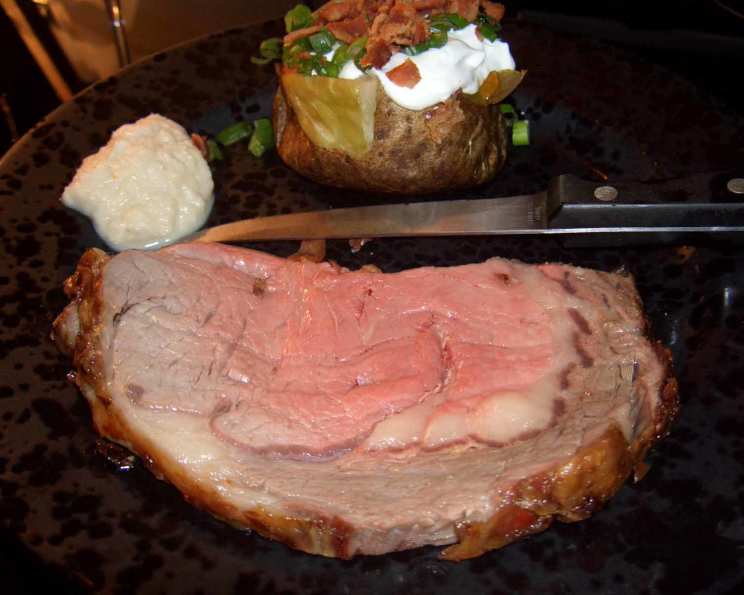
Garlic Prime Rib Roast: A Culinary Masterpiece
The scent of roasting meat, kissed with garlic, is the aroma of pure comfort and celebration in my book. Growing up, my grandfather, a butcher by trade, would always prepare a prime rib for special occasions. The anticipation, the perfectly pink center, and the family gathered around the table are etched in my memory. It wasn’t just a meal; it was a tradition, a symbol of love and togetherness, a culinary experience I’ve strived to recreate and share ever since. This garlic-infused prime rib recipe is my humble attempt to capture that magic, bringing the warmth and joy of those cherished moments to your table.
Recipe Overview
- Prep Time: 5 minutes
- Cook Time: 1 hour 30 minutes
- Total Time: 1 hour 35 minutes
- Servings: 4-6
- Yield: 1 roast
- Dietary Type: Carnivore
Ingredients
- 2 lbs prime rib roast (bone in has more flavor)
- 2 tablespoons olive oil, plus more olive oil for the baking dish if needed
- 5 garlic cloves, fresh minced (or pre-made jar kind will work too)
- White pepper, to taste
- Salt, to taste
Equipment Needed
- Baking dish
- Oven
- Aluminum Foil
- Meat Thermometer (optional, but recommended)
- Carving Knife
Instructions
-
Preheat your oven to 400 degrees Fahrenheit (200 degrees Celsius). Ensure your oven rack is positioned in the center of the oven for even heat distribution.
-
Prepare the prime rib by patting it dry with paper towels. This helps to achieve a beautiful sear.
-
In a small bowl, combine the 2 tablespoons of olive oil, the minced garlic, salt, and white pepper. Mix well to form a flavorful paste.
-
Generously rub the olive oil mixture all over the prime rib roast, ensuring every surface is coated. This creates a delicious crust during roasting.
-
If needed, lightly grease your baking dish with olive oil to prevent sticking. Place the prime rib roast in the baking dish, bone-side down if it’s a bone-in roast.
-
Place the prime rib in the preheated oven and let it cook for 1 and 1/2 hours. For a more rare prime rib, reduce the cooking time to 1 hour.
-
Use a meat thermometer to check the internal temperature of the roast. For medium-rare, aim for 130-135°F (54-57°C). For medium, aim for 135-145°F (57-63°C). For medium-well, aim for 145-155°F (63-68°C). Remember that the internal temperature will continue to rise slightly during the resting period.
-
Once cooked to your desired doneness, remove the prime rib from the oven and immediately cover it loosely with aluminum foil.
-
Let the prime rib stand and rest for 15 to 20 minutes. This crucial step allows the juices to redistribute throughout the meat, resulting in a more tender and flavorful roast. Skipping this step will result in the juices running out when you carve the meat, leaving it dry.
-
After resting, carve the prime rib into fairly thick slices using a sharp carving knife. Serve immediately and enjoy!
Expert Tips & Tricks
- Bone-in vs. Boneless: While a boneless prime rib is easier to carve, a bone-in roast generally offers more flavor due to the bone marrow.
- Searing (Optional): For an even more pronounced crust, sear the prime rib in a hot skillet with olive oil on all sides before placing it in the oven.
- Temperature is Key: Use a reliable meat thermometer for accurate results. Oven temperatures can vary, so relying solely on time can lead to overcooked or undercooked meat.
- Dry Brining: The night before, generously salt the prime rib and leave it uncovered in the refrigerator. This process, called dry brining, enhances the flavor and helps create a better crust.
- Garlic Lovers: For an extra garlic kick, insert slivers of garlic directly into the roast before cooking.
- Resting is Essential: Resist the urge to cut into the prime rib immediately after removing it from the oven. The resting period allows the juices to redistribute, resulting in a more tender and flavorful roast.
- Gravy Potential: Save the pan drippings to make a delicious gravy. Simply skim off the excess fat, add a little flour to create a roux, and then whisk in beef broth until you reach your desired consistency. Season with salt and pepper to taste.
Serving & Storage Suggestions
Serve the Garlic Prime Rib Roast immediately while it’s hot and juicy. Classic accompaniments include roasted potatoes, Yorkshire pudding, green beans, and horseradish sauce. For a complete meal, consider serving a side of creamy mashed potatoes and asparagus.
Leftover prime rib can be stored in an airtight container in the refrigerator for up to 3-4 days. For longer storage, freeze individual slices wrapped tightly in plastic wrap and then placed in a freezer bag for up to 2-3 months.
To reheat refrigerated prime rib, gently warm it in a low oven (around 250°F or 120°C) or in a skillet over low heat with a little bit of beef broth to prevent it from drying out. Frozen prime rib should be thawed in the refrigerator overnight before reheating.
Nutritional Information
| Nutrient | Amount per Serving | % Daily Value |
|---|---|---|
| Calories | 890.8 kcal | N/A |
| Calories from Fat | 731 kcal | N/A |
| Total Fat | 81.3 g | 125% |
| Saturated Fat | 32 g | 160% |
| Cholesterol | 165.6 mg | 55% |
| Sodium | 121 mg | 5% |
| Total Carbohydrate | 1.2 g | 0% |
| Dietary Fiber | 0.1 g | 0% |
| Sugars | 0 g | 0% |
| Protein | 36.3 g | 72% |
Note: Nutritional information is an estimate and may vary based on specific ingredients and preparation methods.
Variations & Substitutions
- Herb Crusted Prime Rib: Add fresh herbs like rosemary, thyme, and oregano to the garlic and olive oil mixture for an herbaceous twist.
- Spicy Prime Rib: Incorporate a pinch of red pepper flakes or a dash of cayenne pepper to the garlic rub for a spicy kick.
- Mustard Glaze: Spread a layer of Dijon mustard over the prime rib before adding the garlic rub for a tangy and flavorful crust.
- Alternative Oils: While olive oil is preferred, you can substitute it with avocado oil or vegetable oil.
- Garlic Powder: If you don’t have fresh garlic, you can use garlic powder, but the flavor will not be as intense. Use approximately 1-2 teaspoons of garlic powder.
FAQs (Frequently Asked Questions)
Q: What’s the best way to ensure my prime rib is cooked to the correct temperature?
A: Using a reliable meat thermometer is the most accurate way to gauge doneness. Insert the thermometer into the thickest part of the roast, avoiding the bone.
Q: How long should I let the prime rib rest?
A: Aim for a resting period of 15 to 20 minutes. This allows the juices to redistribute throughout the meat, resulting in a more tender and flavorful roast.
Q: Can I prepare the prime rib ahead of time?
A: Yes, you can rub the prime rib with the garlic mixture up to 24 hours in advance. Store it covered in the refrigerator. Allow it to come to room temperature for about an hour before roasting.
Q: What should I do if my prime rib is overcooked?
A: If your prime rib is overcooked, slice it thinly and serve it with a flavorful gravy or au jus to add moisture.
Q: Can I use a different cut of beef for this recipe?
A: While prime rib is ideal, you can also use a ribeye roast. Cooking times may vary slightly depending on the thickness of the roast.
Final Thoughts
The Garlic Prime Rib Roast isn’t just a dish; it’s an experience. It’s a testament to the power of simple ingredients combined with careful technique, resulting in a show-stopping centerpiece for any occasion. Don’t be intimidated – with a little patience and attention to detail, you can create a truly unforgettable meal. I encourage you to try this recipe, experiment with the variations, and make it your own. And, of course, I’d love to hear your feedback and see your culinary creations. Happy cooking, and happy eating!