
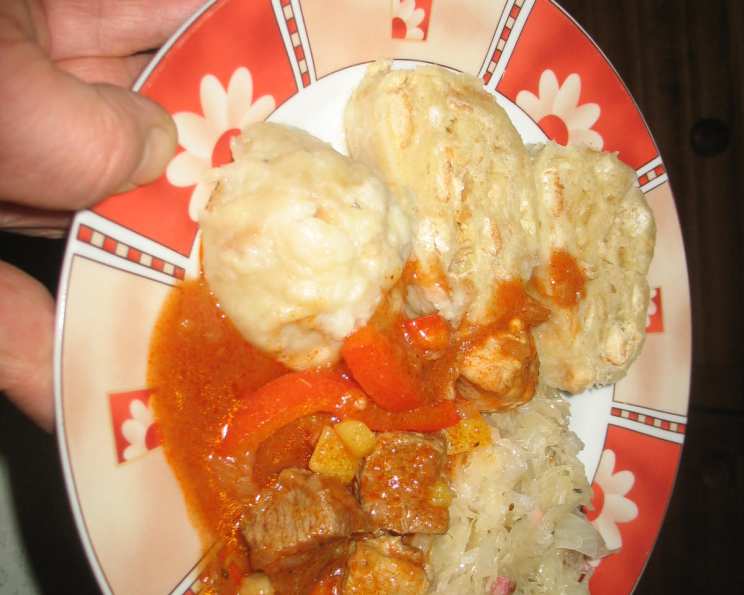
German Bread Dumplings (Semmelknödel): A Taste of Home
My grandmother, Oma Hildegard, had hands that could coax magic from the simplest ingredients. I remember her bustling around her small kitchen in Bavaria, the air thick with the scent of simmering broth and caraway. One of my fondest memories is standing on a stool beside her, watching her deftly form these very bread dumplings – Semmelknödel – her weathered hands gently shaping them into perfect orbs. They weren’t just food; they were love made edible, a taste of home that transported me back to her warm embrace with every bite.
Recipe Overview
- Prep Time: 20 minutes
- Cook Time: 15 minutes
- Total Time: 35 minutes
- Servings: 8
- Yield: 8 dumplings
- Dietary Type: Vegetarian
Ingredients
- 1/2 lb day-old white bread, cut into 10 slices
- 1 cup milk, warmed
- 1 tablespoon vegetable oil
- 1 medium onion, chopped
- 3 eggs
- 1/2 teaspoon salt
- 1/4 teaspoon white pepper
- 1/8 teaspoon ground nutmeg
- 3 tablespoons finely chopped parsley
Equipment Needed
- Medium bowl
- Medium skillet
- Large saucepan
- Slotted spoon
Instructions
- Break the day-old white bread into small pieces. Place the bread pieces into a medium bowl. Using day-old bread is key, as fresh bread will be too soft and the dumplings will fall apart.
- Pour the warmed milk over the bread in the bowl. Ensure that the milk is warm, not hot, to help the bread soften evenly. Allow the bread to soak for a few minutes, until softened.
- Heat the vegetable oil in a medium skillet over medium heat.
- Add the chopped onion to the skillet. Sauté the onion until it becomes golden brown and softened, about 5-7 minutes. Sautéing the onion adds a wonderful depth of flavor to the dumplings.
- Add the sautéed onion, eggs, salt, white pepper, ground nutmeg, and finely chopped parsley to the bread mixture in the bowl.
- Blend all the ingredients together thoroughly. The mixture should be relatively stiff. If the mixture is too wet, add more bread crumbs to adjust the consistency. If it’s too dry, add a little more milk, one tablespoon at a time, until the desired consistency is reached.
- Lightly flour your hands. This will prevent the dumpling mixture from sticking to your hands as you shape them.
- Form the smooth paste into a roll about 2 1/2 inches in diameter.
- Cut the roll into 8 equal pieces.
- Form each piece into a dumpling. The dumplings should be round and smooth. It’s important to work quickly but gently to avoid overworking the mixture.
- Bring a large saucepan of salted water to a rolling boil. Generously salting the water seasons the dumplings from the inside out.
- Gently add the dumplings, one at a time, to the boiling water. Be careful not to overcrowd the saucepan, as this can lower the water temperature and cause the dumplings to fall apart. If necessary, cook the dumplings in batches.
- Do not cover the saucepan. This helps the dumplings maintain their shape.
- Reduce the heat to low and simmer the dumplings for about 15 minutes.
- The dumplings are done when they float to the surface of the water. This indicates that they are cooked through.
- Carefully remove the dumplings from the water with a slotted spoon and allow them to drain well.
Expert Tips & Tricks
- Day-old bread is crucial: Using fresh bread will result in soggy dumplings that fall apart during cooking. If you only have fresh bread, you can dry it out in a low oven (about 200°F/95°C) for about an hour, until it’s stale.
- Don’t overmix: Overmixing the dumpling mixture can result in tough dumplings. Mix just until the ingredients are combined.
- Test a dumpling: If you’re unsure if the consistency is right, cook one dumpling first. If it falls apart, add more breadcrumbs to the mixture.
- Sautéing the onions: Don’t rush the onion sautéing process. Allowing them to caramelize slightly will significantly enhance the flavor of the dumplings.
- Adding Herbs: Feel free to experiment with different herbs. Marjoram, thyme, or chives are all excellent additions.
Serving & Storage Suggestions
Serve the Semmelknödel immediately while they are hot. They pair perfectly with roast meat such as pork, beef, or poultry, and are traditionally served with a rich gravy or sauce. They are also a delicious accompaniment to cooked kale, sauerkraut, or other hearty German side dishes. They are especially wonderful with roast goose or duck, as Oma Hildegard often served them.
Leftover dumplings can be stored in an airtight container in the refrigerator for up to 3 days. To reheat, you can gently pan-fry them in a little butter or oil until heated through and lightly browned, or steam them for a few minutes until warmed through. They can also be frozen for up to 2 months. To freeze, place the cooked and cooled dumplings on a baking sheet lined with parchment paper and freeze until solid. Then, transfer them to a freezer-safe bag or container. Reheat from frozen by simmering in water or steaming until heated through.
Nutritional Information
| Nutrient | Amount per Serving | % Daily Value |
|---|---|---|
| Calories | 180 kcal | 9% |
| Total Fat | 7g | 11% |
| Saturated Fat | 2g | 10% |
| Cholesterol | 80mg | 27% |
| Sodium | 350mg | 15% |
| Total Carbohydrate | 20g | 7% |
| Dietary Fiber | 1g | 4% |
| Sugars | 2g | – |
| Protein | 6g | 12% |
Note: Nutritional information is an estimate and may vary based on specific ingredients and cooking methods.
Variations & Substitutions
- Gluten-Free Semmelknödel: Use gluten-free bread instead of regular white bread. You may need to adjust the amount of milk or breadcrumbs to achieve the right consistency.
- Vegan Semmelknödel: Substitute the eggs with a flax egg (1 tablespoon of ground flaxseed mixed with 3 tablespoons of water, let sit for 5 minutes to thicken). Use plant-based milk instead of dairy milk. Ensure the bread is also vegan-friendly.
- Herb Variations: Experiment with different herbs. Fresh thyme, rosemary, or sage can add unique flavors.
- Cheese Semmelknödel: Add shredded Gruyere or Emmental cheese to the dumpling mixture for a cheesy twist.
- Speck (Smoked Pork Belly) Semmelknödel: Dice and fry small pieces of speck and add them to the dumpling mixture for a smoky, savory flavor.
FAQs (Frequently Asked Questions)
Q: Can I make these dumplings ahead of time?
A: Yes, you can prepare the dumpling mixture ahead of time and store it in the refrigerator for up to 24 hours before cooking. However, it’s best to cook the dumplings fresh for the best texture.
Q: Why did my dumplings fall apart while cooking?
A: This is usually caused by the mixture being too wet or using bread that is not stale enough. Add more breadcrumbs to the mixture to bind it together, and ensure that you are using day-old or dried bread.
Q: How do I know when the dumplings are cooked through?
A: The dumplings are done when they float to the surface of the water and are firm to the touch.
Q: Can I bake these dumplings instead of simmering them?
A: While traditionally simmered, you can bake them. Place the formed dumplings in a greased baking dish with a little broth or water at the bottom, cover with foil, and bake at 350°F (175°C) for about 30-40 minutes.
Q: What is the best way to reheat leftover dumplings?
A: Gently pan-fry them in butter or oil until heated through and lightly browned, or steam them for a few minutes until warmed through. Avoid microwaving, as this can make them rubbery.
Final Thoughts
These Semmelknödel are more than just a recipe; they are a connection to tradition, a taste of comfort, and a way to bring a little bit of Oma Hildegard’s kitchen into your own home. I encourage you to try this recipe and experience the simple joy of creating something delicious from scratch. Don’t be afraid to experiment with variations and make it your own. And most importantly, share your creations and your stories with those you love. Pair these dumplings with a hearty Sauerbraten or a crisp German Riesling for a truly authentic German experience. Guten Appetit!