
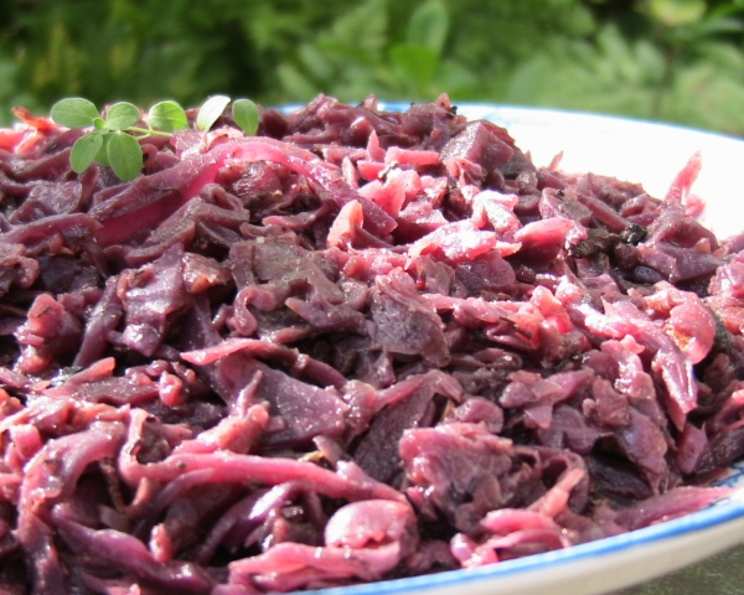
German Rotkohl: Spiced Red Cabbage With Apples and Wine
The first time I tasted Rotkohl, I was a wide-eyed exchange student in Germany, far from the familiar comfort of home. My host mother, Frau Schmidt, presented a vibrant purple dish alongside a generous slab of Schweinshaxe. The earthy aroma of spiced cabbage, punctuated by a hint of sweetness, was both intriguing and comforting. With the first bite, the tender, slightly tangy cabbage melted in my mouth, mingling with the rich flavors of the pork. It was a revelation, a taste of home away from home, and a culinary memory I’ve cherished ever since.
Recipe Overview
- Prep Time: 30 minutes
- Cook Time: 1 hour 45 minutes
- Total Time: 2 hours 15 minutes
- Servings: 6-8
- Yield: About 8 cups
- Dietary Type: Can be Gluten-Free, Dairy-Free
Ingredients
- 1⁄4 cup chopped pork fat or 1/4 cup chopped bacon
- 1 large red onion, finely chopped
- 2 inches fresh ginger, peeled and finely chopped
- 1⁄2 cinnamon stick
- 1 large red cabbage, tough outer leaves removed, quartered, cored, and finely shredded
- 1 sprig fresh marjoram
- 1⁄2 teaspoon garam masala
- 1⁄2 cup red wine vinegar
- 1⁄2 cup ruby port or 1/2 cup madeira wine
- 1⁄2 cup brown sugar or 1/2 cup real maple syrup
- 1 bay leaf (optional)
- 1 whole clove (optional)
- 1 firm apple, chopped (optional)
Equipment Needed
- Large skillet or Dutch oven
- Cutting board
- Sharp knife
- Measuring cups and spoons
- Wooden spoon or spatula
Instructions
-
Begin by rendering the fat. If using pork fat, cook it in a large skillet or Dutch oven over low heat, stirring occasionally until it has rendered its fat, about 20 minutes. If using bacon, cook it over low heat, stirring occasionally, for about 10 minutes.
-
Add the finely chopped red onion, fresh ginger, and cinnamon stick to the rendered fat. Increase the heat to medium, and cook, stirring occasionally for about 5 minutes, or until the onion has softened and become translucent. The aroma should be fragrant and inviting.
-
Now, add the shredded red cabbage to the skillet or Dutch oven. It’s often easier to do this in batches, especially if you have a large cabbage. Stir and cook over medium heat until some of the bits are slightly browned and caramelized, about 10 minutes per batch. This step is crucial for developing a deeper, richer flavor.
- Note: You can skip the browning step if you’re pressed for time, but browning adds a wonderful caramelized flavor to the finished dish.
-
Once the cabbage has browned slightly, add the fresh marjoram, garam masala, red wine vinegar, and ruby port (or Madeira wine). Stir well to combine all the ingredients, ensuring the cabbage is evenly coated with the flavorful liquid.
-
Optional Ingredients: At this point, if desired, you can add the bay leaf, whole clove, and chopped apple for extra depth of flavor.
-
Reduce the heat to medium-low, cover the skillet or Dutch oven, and simmer for 1 to 1 1/4 hours. Stir occasionally to make sure the cabbage is not sticking to the bottom of the pan and burning. This slow simmering process allows the flavors to meld and the cabbage to become tender.
-
After simmering, remove the lid and cook, stirring frequently, for 15 minutes. This allows some of the excess liquid to evaporate, concentrating the flavors further.
-
Stir in the brown sugar (or maple syrup) and cook for 15 minutes longer, or until most of the liquid has cooked away and the Rotkohl has reached your desired consistency. Taste and adjust seasoning if needed.
-
Before serving, remember to remove the cinnamon stick and bay leaf. These have imparted their flavor and are no longer needed.
Expert Tips & Tricks
-
Make-Ahead Magic: Rotkohl is a fantastic make-ahead dish. In fact, it often tastes even better the next day, as the flavors have more time to marry. Prepare it a day or two in advance and simply reheat before serving.
-
Freezing for the Future: This dish freezes beautifully. Cool completely, then transfer to an airtight container and freeze for up to 3 months. Thaw overnight in the refrigerator before reheating.
-
Flavor Boost: For an even deeper flavor, consider adding a tablespoon of balsamic vinegar along with the red wine vinegar.
-
Sweetness Adjustment: Adjust the amount of brown sugar or maple syrup to your liking. Some prefer a more tangy Rotkohl, while others enjoy a sweeter version.
-
Garam Masala Alternative: If you can’t find garam masala, use just a small dash each of ground black pepper, rock salt, cinnamon, & cardomom.
Serving & Storage Suggestions
Serve the Rotkohl hot as a flavorful side dish to roasted meats like pork, beef, or poultry. It’s also a wonderful accompaniment to sausages like bratwurst or Weisswurst. For a traditional German meal, serve it with German Meatballs, Beef Rouladen, Bavarian Sauerbraten, or Wiener Schnitzel. Boiled new potatoes or buttered spaetzle noodles sprinkled with fresh snipped parsley make excellent sides.
To store leftovers, allow the Rotkohl to cool completely before transferring it to an airtight container. It will keep in the refrigerator for up to 5 days. To reheat, simply warm it gently in a saucepan over low heat, stirring occasionally, or microwave until heated through.
Nutritional Information
| Nutrient | Amount per Serving | % Daily Value |
|---|---|---|
| Calories | 250.6 kcal | N/A |
| Calories from Fat | 79 g | 32% |
| Total Fat | 8.9 g | 13% |
| Saturated Fat | 4.3 g | 21% |
| Cholesterol | 9.3 mg | 3% |
| Sodium | 60.5 mg | 2% |
| Total Carbohydrate | 37 g | 12% |
| Dietary Fiber | 4.4 g | 17% |
| Sugars | 27.6 g | 110% |
| Protein | 3 g | 6% |
Note: Nutritional information is an estimate and can vary based on specific ingredients and portion sizes.
Variations & Substitutions
-
Vegan Rotkohl: Substitute the pork fat or bacon with olive oil or vegetable oil. Ensure the sugar used is vegan-friendly (some brown sugars are processed with bone char).
-
Spice It Up: Add a pinch of red pepper flakes for a subtle kick.
-
Fruity Twist: Experiment with different types of apples, such as Granny Smith for a tart flavor or Honeycrisp for added sweetness. You could also add other fruits like cranberries or raisins.
-
Regional Adaptations: In some regions, juniper berries or caraway seeds are added for a more earthy flavor.
FAQs (Frequently Asked Questions)
Q: Can I make this Rotkohl in a slow cooker?
A: Yes, you can adapt this recipe for a slow cooker. Brown the onion and cabbage as instructed, then transfer everything to the slow cooker. Cook on low for 6-8 hours, or on high for 3-4 hours, until the cabbage is tender.
Q: Is it necessary to brown the cabbage?
A: While not strictly necessary, browning the cabbage adds a depth of caramelized flavor that greatly enhances the dish. It’s highly recommended if you have the time.
Q: Can I use pre-shredded cabbage?
A: Yes, you can use pre-shredded cabbage to save time. However, freshly shredded cabbage tends to have a better texture and flavor.
Q: What if I don’t have ruby port or Madeira wine?
A: You can substitute with another sweet red wine, or even use apple cider vinegar for a tangier flavor.
Q: How do I prevent the cabbage from sticking to the bottom of the pan?
A: Stir the Rotkohl occasionally during simmering to prevent sticking. If it seems dry, add a tablespoon or two of water or broth.
Final Thoughts
German Rotkohl is more than just a side dish; it’s a taste of tradition, a celebration of simple ingredients transformed into something truly special. I encourage you to try this recipe and experience the comforting flavors of spiced red cabbage, apples, and wine. Whether you’re serving it alongside a festive holiday roast or a simple weeknight meal, Rotkohl is sure to be a hit. Don’t hesitate to experiment with variations and make it your own. Guten Appetit!