
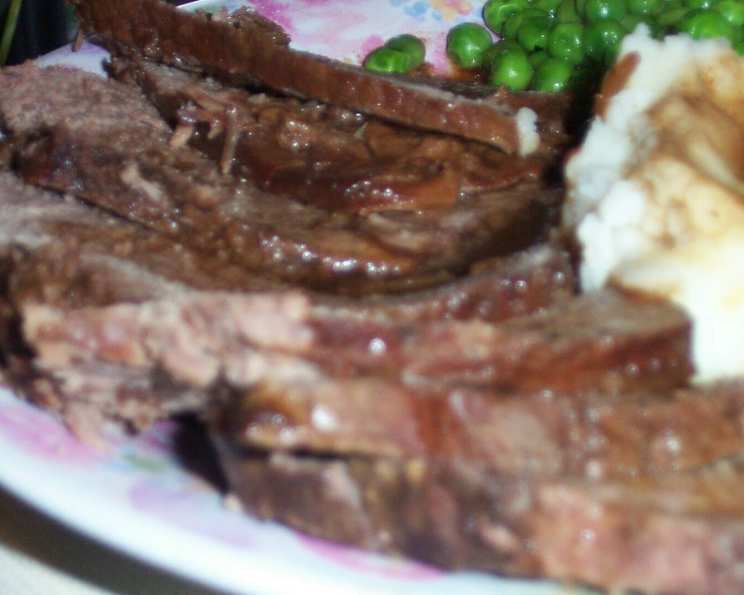
German-Style Pot Roast: A Taste of Oma’s Kitchen
The aroma alone transports me back to my grandmother’s kitchen. The comforting scent of slowly braised beef, mingling with the subtle sweetness of onions and the earthy hint of caraway, would fill her entire house on Sundays. It was a promise of warmth, family, and a meal that nourished both body and soul – a German-style pot roast, lovingly prepared and shared with everyone she held dear. Every bite felt like a warm hug from Oma herself.
Recipe Overview
- Prep Time: 15 minutes
- Cook Time: 2 hours 30 minutes
- Total Time: 2 hours 45 minutes
- Servings: 6
- Yield: 6 servings
- Dietary Type: Varies (can be gluten-free with appropriate beer/soup mix)
Ingredients
- 3 – 3 ½ lbs boneless pot roast (rump, chuck, or round work well)
- 1 ¼ ounces dry onion soup mix (or onion mushroom or mushroom variety)
- ¾ cup water
- 1 ½ cups beer (a German lager or pilsner is ideal)
- 1 teaspoon brown sugar
- ½ teaspoon caraway seed
Equipment Needed
- Dutch oven (or heavy-bottomed pot with a lid)
- Measuring cups and spoons
Instructions
-
Begin by thoroughly patting the pot roast dry with paper towels. This is crucial for achieving a good sear. A dry surface browns much better than a wet one.
-
Place your Dutch oven over medium heat. You don’t need to add any additional oil, as the roast will render its own fat during the browning process.
-
Once the Dutch oven is hot, carefully place the pot roast inside. Brown the roast on all sides. This step develops a rich, flavorful crust that will deeply enhance the final dish. Don’t rush this process; allow each side to develop a deep brown color before turning. This should take about 5-7 minutes per side. Remove the roast from the Dutch oven and set aside.
-
In a separate bowl, blend together the dry onion soup mix with the water and beer. Ensure the soup mix is fully dissolved.
-
Mix in the brown sugar and caraway seed to the liquid mixture. The brown sugar adds a touch of sweetness, balancing the savory flavors, while the caraway seed provides a distinctive, slightly licorice-like note that is characteristic of German cuisine.
-
Pour the soup mixture into the Dutch oven.
-
Return the browned roast to the Dutch oven, nestling it into the liquid. The liquid should come about halfway up the sides of the roast. If it doesn’t, add a little more water or beer to reach that level.
-
Bring the liquid to a simmer. Then, cover the Dutch oven tightly with its lid.
-
Simmer on the stovetop, covered, for 2 ½ hours, or until the pot roast is fork-tender. Check the roast occasionally to ensure the liquid hasn’t completely evaporated; add a little more water or beer if needed. The internal temperature should reach around 203°F (95°C) for maximum tenderness.
-
Once the roast is cooked to your liking, remove it from the Dutch oven and let it rest for at least 10-15 minutes before slicing. This allows the juices to redistribute, resulting in a more tender and flavorful roast.
-
If desired, you can thicken the gravy. To do this, remove about 1/2 cup of the braising liquid from the Dutch oven and whisk in 1-2 tablespoons of cornstarch (or flour) until smooth. Pour this slurry back into the Dutch oven and simmer over medium heat, stirring constantly, until the gravy thickens to your desired consistency.
-
Slice the pot roast against the grain and serve immediately with the gravy.
Expert Tips & Tricks
- Browning is Key: Don’t skip the browning step! It’s essential for developing a rich, deep flavor in the final dish. Ensure your pan is hot before adding the roast, and don’t overcrowd the pan if you’re browning in batches.
- Beer Choice Matters: The type of beer you use will influence the flavor of the dish. A German lager or pilsner will provide a classic, authentic flavor. A darker beer, like a dunkel or bock, will add a richer, more robust flavor. Avoid using overly hoppy beers, as the bitterness can become concentrated during the long cooking time. If you don’t want to use beer, you can substitute beef broth.
- Salt to Taste: The onion soup mix can be quite salty, so taste the gravy before adding any additional salt.
- Slow and Steady: The key to a tender pot roast is low and slow cooking. Don’t be tempted to rush the process by increasing the heat.
- Vegetable Additions: While this recipe is simple, feel free to add vegetables like carrots, potatoes, and celery during the last hour of cooking for a complete one-pot meal.
- Deglaze the Pan: After browning the roast, consider deglazing the pan with a little extra beer or beef broth before adding the soup mixture. Scrape up any browned bits from the bottom of the pan to add even more flavor to the gravy.
Serving & Storage Suggestions
Serve the German-style pot roast hot, sliced, and generously drizzled with the gravy. Traditional accompaniments include mashed potatoes, buttered noodles, or sauerkraut. A dollop of sour cream or a sprinkle of fresh parsley can also add a nice touch.
Leftovers can be stored in an airtight container in the refrigerator for up to 3-4 days. The flavors often meld and improve overnight! To reheat, gently warm the roast and gravy in a saucepan over low heat, or in the microwave. You can also freeze the pot roast for up to 2-3 months. Thaw completely in the refrigerator before reheating.
Nutritional Information
(Estimated values – will vary based on specific ingredients and portion sizes)
| Nutrient | Amount per Serving | % Daily Value |
|---|---|---|
| Calories | 450 kcal | 23% |
| Total Fat | 25g | 38% |
| Saturated Fat | 10g | 50% |
| Cholesterol | 150mg | 50% |
| Sodium | 800mg | 35% |
| Total Carbohydrate | 15g | 5% |
| Dietary Fiber | 2g | 8% |
| Sugars | 5g | N/A |
| Protein | 35g | 70% |
Variations & Substitutions
- Gluten-Free: Use a gluten-free onion soup mix and ensure your beer is gluten-free. Many brands now offer excellent gluten-free options.
- Vegetables: Add root vegetables such as carrots, parsnips, and turnips for a more rustic and hearty meal.
- Spice it up: Add a pinch of red pepper flakes for a subtle kick.
- Wine Substitution: If you prefer wine to beer, use a dry red wine such as a Cabernet Sauvignon or Merlot.
- Herb Infusion: Add fresh herbs like thyme or rosemary to the Dutch oven during cooking for an aromatic twist.
FAQs (Frequently Asked Questions)
Q: Can I make this in a slow cooker?
A: Yes, you can adapt this recipe for a slow cooker. Brown the roast as directed, then transfer it to the slow cooker. Add the remaining ingredients and cook on low for 6-8 hours, or on high for 3-4 hours, or until the roast is very tender.
Q: What if I don’t have a Dutch oven?
A: A heavy-bottomed pot with a tight-fitting lid will work as a substitute. Ensure the pot is oven-safe if you plan to transfer it to the oven for braising (although this recipe simmers on the stovetop).
Q: Can I use a different cut of beef?
A: While rump, chuck, and round are commonly used for pot roast, you can experiment with other cuts, such as brisket. The cooking time may need to be adjusted depending on the cut.
Q: How do I know when the pot roast is done?
A: The pot roast is done when it is fork-tender. This means that you should be able to easily insert a fork into the thickest part of the roast and twist it with minimal resistance. The internal temperature should reach around 203°F (95°C).
Q: Can I make this ahead of time?
A: Absolutely! In fact, the flavors often develop and improve overnight. Prepare the pot roast as directed, then let it cool completely before storing it in the refrigerator. Reheat gently before serving.
Final Thoughts
This German-style pot roast is more than just a meal; it’s a comforting embrace on a plate, a taste of tradition, and a reminder of simpler times. I encourage you to try this recipe and share it with your loved ones. Feel free to adapt it to your own tastes and preferences. Don’t hesitate to leave a comment with your feedback or to share your own variations. Guten Appetit! (Enjoy your meal!)