
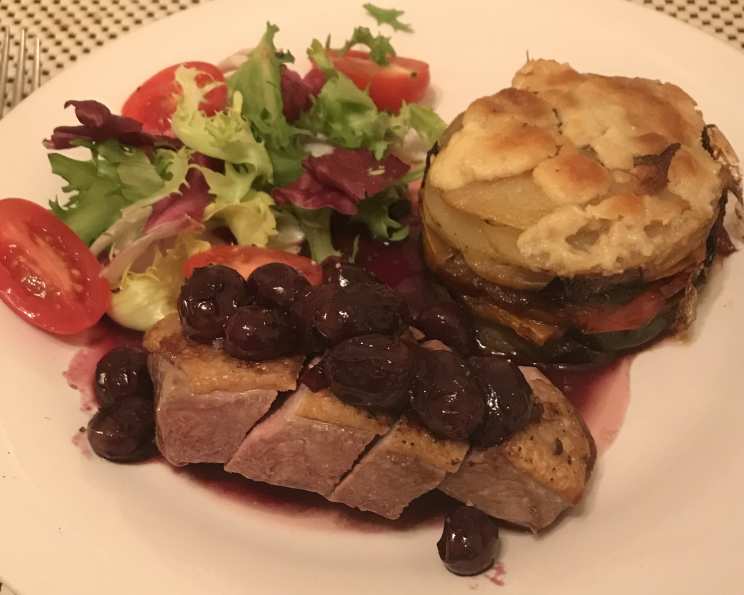
Gressingham Duck With Grape Sauce: A Symphony of Flavors
The memory of my first perfectly seared duck breast is etched in my mind. It was at a small bistro in the Loire Valley, the air thick with the aroma of roasting game and simmering sauces. The chef, a woman with hands that moved with balletic grace, presented a duck breast, its skin a mosaic of crispy brown, the flesh underneath blushing pink. One bite, and I was transported. The richness of the duck, the sweet-tart tang of the fruit sauce – it was an experience I’ve been chasing ever since. This Gressingham duck with grape sauce aims to recreate that moment, bringing a touch of French elegance to your table.
Recipe Overview
- Prep Time: 1 hour 15 minutes
- Cook Time: 15 minutes
- Total Time: 1 hour 30 minutes
- Servings: 2
- Yields: 2 Portions
- Dietary Type: None Specified
Ingredients
- 2 duck breasts
- 1 large shallot
- 100 ml red wine
- 70 ml ruby port
- 100 ml chicken stock
- 1 teaspoon olive oil
- 1 pinch salt and pepper
- 20 g unsalted butter
- 100 g grapes
Equipment Needed
- Medium pan
- Fine sieve
- Oven
- Frying pan
Instructions
-
Approximately one hour before you plan to cook the duck, score the skin of the duck breasts in a crosshatch pattern. This helps the fat render and creates crispy skin. Be careful not to cut into the flesh. Season the duck breasts generously with salt and pepper and set them aside.
-
Preheat your oven to 180°C (350°F). Make sure your oven rack is positioned in the center.
-
Now, it’s time to make the delicious grape sauce. Finely chop the shallot.
-
In a medium pan, heat the olive oil over medium heat. Add the chopped shallots and cook until softened and translucent, about 5-7 minutes. Stir frequently to prevent browning.
-
Add the grapes to the pan with the shallots and cook until the fruits start to burst, releasing their juices. This should take about 3-5 minutes.
-
Pour in the red wine and ruby port. Reduce the liquid by half, allowing the alcohol to evaporate and the flavors to concentrate. This typically takes around 8-10 minutes.
-
Add the chicken stock to the pan and bring the mixture back to a boil.
-
Strain the sauce through a fine sieve into a clean pan. Reserve half of the cooked grapes. Push the remaining grape pulp through the sieve to extract maximum flavor and thicken the sauce. Discard the solids remaining in the sieve.
-
Return the strained sauce to the pan and reduce until it reaches a syrupy consistency. This may take another 5-7 minutes, depending on your stove and the initial volume of the sauce. Watch carefully to avoid burning.
-
Finish the sauce by whisking in the unsalted butter. This will add richness and a glossy sheen to the sauce.
-
Return the reserved grapes to the sauce and keep it warm over very low heat until you are ready to serve.
-
Time to cook the duck breasts. Place the duck breast skin side down in a cold frying pan. Starting with a cold pan allows the fat to render slowly, resulting in crispier skin.
-
Turn the heat to medium and allow the fat to render and the skin to brown. This process can take about 8-10 minutes. Be patient and don’t be tempted to increase the heat too much, as this can burn the skin before the fat has rendered sufficiently. Pour off excess fat as it accumulates, reserving it for future cooking – duck fat is a culinary treasure!
-
Once the skin is beautifully browned and crispy, turn the duck breast over and place the pan in the preheated oven.
-
Cook for 8-9 minutes for medium-rare, or longer if you prefer your duck cooked to a higher temperature. The internal temperature should reach 54°C (130°F) for medium-rare.
-
Remove the duck breast from the oven and let it rest for 5-7 minutes before slicing. Resting allows the juices to redistribute throughout the meat, resulting in a more tender and flavorful result.
-
Slice the duck breast thinly against the grain and serve with your choice of vegetables and the warm grape sauce on the side.
Expert Tips & Tricks
- For extra crispy skin, after scoring the duck breast, leave it uncovered in the refrigerator overnight to dry out the skin.
- Don’t discard the rendered duck fat! Save it to roast potatoes or vegetables for an incredibly flavorful side dish.
- If your sauce is too thin after reducing, you can thicken it slightly with a cornstarch slurry (1 teaspoon cornstarch mixed with 1 tablespoon cold water). Add the slurry gradually to the simmering sauce until it reaches your desired consistency.
- To ensure even cooking, use an oven-safe skillet when transferring the duck from the stovetop to the oven.
Serving & Storage Suggestions
Serve the sliced duck breast immediately with the warm grape sauce spooned over the top or on the side. Accompany it with roasted vegetables like asparagus, Brussels sprouts, or potatoes. A simple green salad also makes a refreshing side dish.
Leftover duck breast can be stored in an airtight container in the refrigerator for up to 3 days. Reheat gently in a pan over low heat or in a microwave. The grape sauce can also be stored in the refrigerator for up to 3 days. Reheat gently in a saucepan before serving. It is not recommended to freeze the cooked duck breast, as it can become dry and lose its texture.
Nutritional Information
| Nutrient | Amount per Serving | % Daily Value |
|---|---|---|
| Calories | 744.1 kcal | N/A |
| Calories from Fat | 333 g | 45% |
| Total Fat | 37.1 g | 57% |
| Saturated Fat | 12.7 g | 63% |
| Cholesterol | 349.4 mg | 116% |
| Sodium | 283.1 mg | 11% |
| Total Carbohydrate | 19.5 g | 6% |
| Dietary Fiber | 0.5 g | 1% |
| Sugars | 12.1 g | 48% |
| Protein | 60.9 g | 121% |
Note: Nutritional information is an estimate and may vary based on specific ingredients and cooking methods.
Variations & Substitutions
- For a richer sauce, use duck or veal stock instead of chicken stock.
- Experiment with different types of grapes, such as Concord or Thompson seedless.
- Add a splash of balsamic vinegar to the sauce for a more complex flavor.
- For a festive twist, add a pinch of cinnamon or nutmeg to the sauce.
- If you don’t have ruby port, you can substitute it with another sweet dessert wine, such as Madeira or Marsala.
FAQs (Frequently Asked Questions)
Q: How do I know when the duck breast is cooked to medium-rare?
A: The best way to check for doneness is to use a meat thermometer. Insert the thermometer into the thickest part of the breast, avoiding the bone. For medium-rare, the internal temperature should reach 54°C (130°F).
Q: Can I make the grape sauce ahead of time?
A: Yes, the grape sauce can be made a day or two in advance and stored in the refrigerator. Simply reheat it gently before serving.
Q: What vegetables go well with Gressingham duck and grape sauce?
A: Roasted root vegetables like carrots, parsnips, and sweet potatoes are excellent choices. Green vegetables like asparagus, green beans, or Brussels sprouts also complement the dish well.
Q: Can I use frozen duck breasts for this recipe?
A: Yes, but make sure to thaw them completely in the refrigerator before cooking. Pat them dry with paper towels before scoring the skin.
Q: What wine pairs well with this dish?
A: A Pinot Noir or a Beaujolais would be a great choice, as their fruity notes complement the grape sauce and the richness of the duck.
Final Thoughts
This Gressingham duck with grape sauce is more than just a recipe; it’s an invitation to indulge in a moment of culinary bliss. The combination of crispy duck skin, tender meat, and the sweet-tart grape sauce is simply irresistible. Don’t be intimidated by the seemingly complex steps; with a little patience and attention to detail, you can create a restaurant-quality dish in your own kitchen. I encourage you to try this recipe and share your feedback. Serve it with a glass of your favorite wine and savor the symphony of flavors. Bon appétit!