
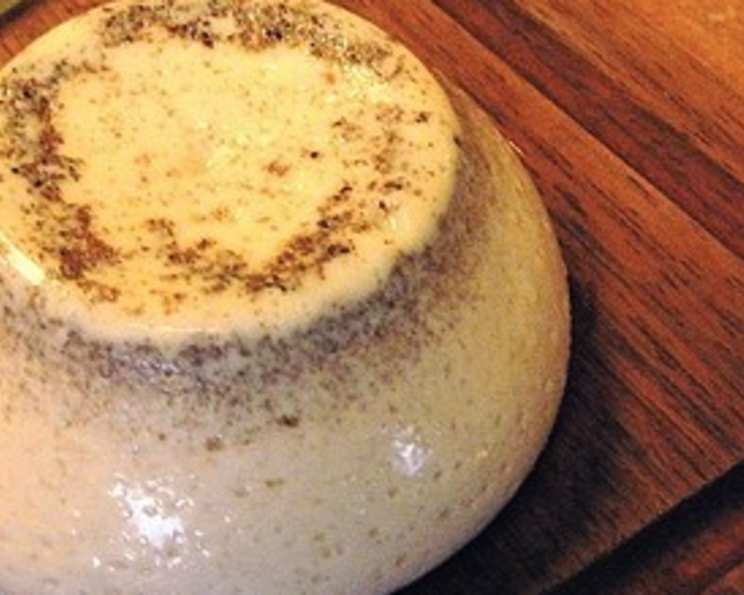
Delving into Delight: Crafting Hind’s Head Quaking Pudding
I remember the first time I encountered a Quaking Pudding. It wasn’t at Heston Blumenthal’s renowned Hind’s Head, unfortunately, but at a small historical reenactment event in the English countryside. A woman, dressed in period attire, offered me a spoonful of this wobbly, custardy creation. The texture was unlike anything I’d experienced – a delicate dance between solid and liquid, rich with the comforting warmth of cinnamon and nutmeg. It was a culinary time capsule, instantly transporting me to a simpler, more indulgent era. Since then, I’ve been on a quest to perfect this historical gem, and this recipe, inspired by Blumenthal’s take, brings me remarkably close to that initial, enchanting spoonful.
Recipe Overview
- Prep Time: 15 minutes
- Cook Time: 1 hour
- Total Time: 1 hour 15 minutes
- Servings: 4
- Yield: 4 puddings
- Dietary Type: Not Gluten-Free
Ingredients
- 4 egg yolks
- 1 whole egg
- 65g sugar
- 100ml whole milk
- 400ml whipping cream
- 1g ground cinnamon (a good pinch)
- 1g ground nutmeg (a good pinch)
- Butter, for greasing
- Flour, for dusting
Equipment Needed
- Mixing bowl
- Saucepan
- Whisk
- Four 150ml/ ¼ pint ramekins or moulds
- Deep baking dish
- Thermometer
Instructions
-
Begin by preparing the custard base. In a mixing bowl, whisk together the egg yolks, whole egg, and sugar until the mixture is light and pale. This incorporates air and ensures a smooth custard.
-
In a saucepan, combine the whole milk and whipping cream. Bring the mixture to a gentle boil over medium heat. Watch carefully to prevent it from boiling over.
-
Once the milk and cream mixture reaches a boil, immediately remove it from the heat. Gradually whisk the hot milk mixture into the egg mixture, tempering the eggs to prevent them from scrambling. Incorporate it slowly!
-
Add the aromatic spices. Stir in the ground cinnamon and ground nutmeg until evenly distributed throughout the custard base. These spices provide a warming depth of flavor that is characteristic of Quaking Pudding.
-
Prepare the ramekins. Generously grease the four 150ml ramekins with butter. Then, dust the inside of each ramekin with flour, tapping out any excess. This will help the puddings release easily after baking.
-
Preheat the oven. Heat your oven to its lowest setting. The key to a successful Quaking Pudding is gentle, even cooking.
-
Create a bain-marie. Place the prepared ramekins into a deep baking dish. Carefully pour hot water into the baking dish, ensuring that the water level reaches halfway up the sides of the ramekins. This creates a bain-marie, which helps to cook the custards gently and evenly.
-
Bake the puddings. Carefully transfer the baking dish with the ramekins to the preheated oven. Cook the puddings until the internal temperature reaches 90°C (194°F). This should take approximately 1 hour. Use a thermometer to check the temperature accurately. The puddings are ready when they have a slight wobble in the center; they will firm up further as they cool.
-
Cool and serve. Once the puddings are cooked, remove the baking dish from the oven and carefully remove the ramekins from the hot water bath. Allow the puddings to cool for at least 10 minutes before serving. This allows them to set properly.
Expert Tips & Tricks
- Low and Slow: The most crucial aspect of Quaking Pudding is the gentle cooking process. A low oven temperature and a bain-marie are essential to prevent the custard from curdling or becoming rubbery.
- Spice it Up: Feel free to adjust the amount of cinnamon and nutmeg to your liking. You could also experiment with other warm spices such as mace or ginger.
- Don’t Overbake: Overbaking will result in a dry, cracked pudding. The slight wobble in the center is the key indicator of doneness.
- Make-Ahead Magic: The custard base can be prepared a day in advance and stored in the refrigerator. This allows the flavors to meld together and saves time on the day of serving. Just give it a good whisk before pouring into the ramekins.
- Brioche Boost (Optional): While not part of the original recipe, incorporating 35g of brioche crumbs into the custard base can add a delightful richness and texture.
Serving & Storage Suggestions
Quaking Pudding is best served warm, allowing its delicate texture to be fully appreciated. For an elegant presentation, gently run a thin knife around the edge of each pudding to loosen it, then invert it onto a dessert plate.
- Serving: Dust with a touch of powdered sugar or a sprinkle of cinnamon for a simple yet elegant garnish.
- Storage: Leftover Quaking Pudding can be stored in the refrigerator for up to 2 days. Cover each pudding tightly with plastic wrap to prevent it from drying out.
- Reheating: Gently reheat the puddings in a warm oven or microwave until warmed through. Be careful not to overheat them, as this can affect the texture.
Nutritional Information
(Estimated per serving)
| Nutrient | Amount per Serving | % Daily Value |
|---|---|---|
| Calories | 320 kcal | 16% |
| Total Fat | 25g | 38% |
| Saturated Fat | 16g | 80% |
| Cholesterol | 200mg | 67% |
| Sodium | 40mg | 2% |
| Total Carbohydrate | 15g | 5% |
| Dietary Fiber | 0g | 0% |
| Sugars | 13g | – |
| Protein | 5g | 10% |
Variations & Substitutions
- Dairy-Free: Substitute the whole milk and whipping cream with full-fat coconut milk for a dairy-free version. Be aware that this will alter the flavor profile slightly.
- Spice Variations: Experiment with different spice combinations to create your own unique flavor profile. Cardamom, ginger, or even a hint of orange zest can add a delightful twist.
- Flavor Infusions: Infuse the milk and cream with vanilla bean or lemon zest for a more complex flavor.
- Sweeteners: If you prefer a less refined sugar, try using honey or maple syrup. Start with a smaller amount and adjust to taste.
FAQs (Frequently Asked Questions)
Q: Why is it called Quaking Pudding?
A: The name refers to the pudding’s characteristic wobble. The gentle cooking process creates a delicate, custardy texture that quivers when moved.
Q: Can I use different sized ramekins?
A: Yes, but you will need to adjust the cooking time accordingly. Smaller ramekins will cook faster, while larger ramekins will require a longer cooking time. Monitor the internal temperature closely.
Q: What if my pudding cracks on top?
A: Cracking usually indicates that the oven temperature is too high or that the puddings have been overbaked. Ensure your oven is set to its lowest setting and use a bain-marie to cook the puddings gently.
Q: Can I skip the bain-marie?
A: While you can technically bake the puddings without a bain-marie, the texture will be significantly different. The bain-marie provides a gentle, even heat that prevents the custard from curdling or becoming rubbery.
Q: How can I tell if the pudding is done without a thermometer?
A: Gently shake the ramekin. The pudding is ready when the edges are set, but the center still has a slight wobble. It will continue to firm up as it cools.
Final Thoughts
This Hind’s Head-inspired Quaking Pudding is more than just a dessert; it’s a culinary journey back in time. The delicate texture, the warm spices, and the simple elegance of this dish make it a true showstopper. I encourage you to embrace the challenge of creating this historical delight and to share the joy of its unique flavor with your loved ones. Experiment with variations, adjust the spices to your liking, and most importantly, savor every quivering spoonful. Let me know what your thoughts are once you have tried this delicious pudding!