
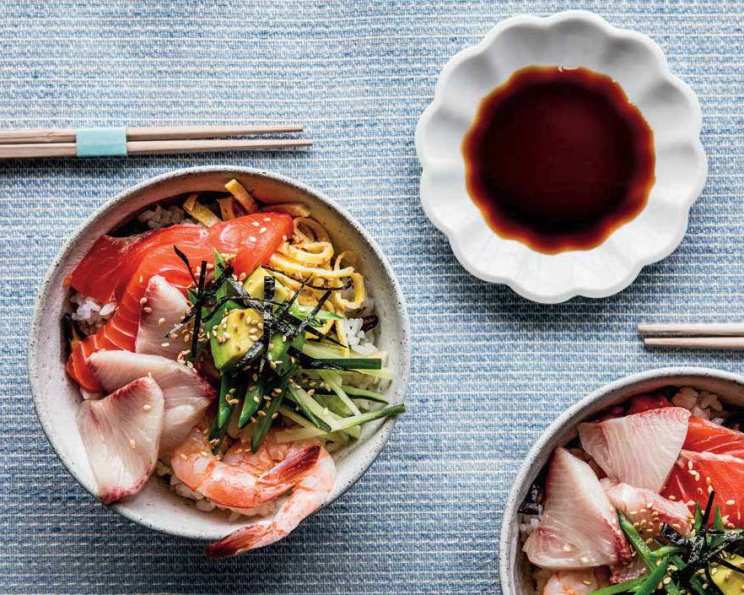
Home-Style “Sushi” over Rice (Chirashizushi)
The first time I had chirashizushi, I was a child visiting my aunt in Tokyo. I remember being utterly captivated by the vibrant colors and the delightful mix of flavors – sweet, savory, and briny all at once. It wasn’t just a meal; it was an edible work of art, a celebration of fresh ingredients arranged with care and precision. That single bowl sparked a lifelong love for Japanese cuisine and a constant pursuit of recreating that joyful experience in my own kitchen.
Recipe Overview
- Prep Time: 45 minutes
- Cook Time: 1 hour 5 minutes
- Total Time: 1 hour 50 minutes
- Servings: 4
- Yield: 4 bowls
- Dietary Type: Gluten-Free (if using gluten-free soy sauce)
Ingredients
FOR THE TOPPINGS
- 2 teaspoons sugar
- 6 ounces raw shrimp, peeled and deveined (or fresh, cooked crabmeat or cooked surimi, imitation crabmeat)
- Salt
- 1 small English cucumber
- 2 ripe avocados
- 12-20 snow peas, trimmed
- 2 large eggs
- 1 tablespoon canola oil (or any neutral oil)
- 2 ounces smoked salmon, cut into bite-sized strips (or fresh raw sushi-grade salmon) (optional)
- Rice vinegar
FOR THE MUSHROOMS
- 2 tablespoons soy sauce
- 1 teaspoon mirin
- 1 tablespoon sake
- 2 tablespoons sugar
- 6 fresh shiitake mushrooms, stems removed
FOR THE SUSHI RICE
- 1⁄4 cup rice vinegar
- 2 tablespoons sugar
- 3⁄4 teaspoon salt
- 3 cups hot cooked rice
- Shredded nori, torn into small pieces for garnish
- Toasted sesame seeds (to garnish)
- Soy sauce, for serving
- Wasabi, for serving (optional)
Equipment Needed
- Small saucepan
- Large saucepan
- Nonstick frying pan (10-inch)
- Several bowls
- Wooden rice spatula or wooden spoon
- Shallow bowl
Instructions
-
Prepare the Toppings: In a bowl, stir together 2 tablespoons of rice vinegar and 1 teaspoon of the sugar until the sugar is dissolved. This creates a quick marinade that will enhance the flavors of your seafood.
-
Cook the Shrimp (if using): If you’re using shrimp, fill a saucepan with salted water and bring to a boil. Add the shrimp and cook until they turn pink and begin to curl, about 3 minutes. Be careful not to overcook the shrimp, as they’ll become rubbery. Drain the shrimp and, when cool enough to handle, slice each in half lengthwise.
-
Marinate the Seafood: Add the shrimp to the vinegar mixture and marinate for up to 1 hour. If you are using crabmeat and/or surimi, marinate them in the vinegar mixture as well. The acidity in the rice vinegar will gently “cook” the shrimp and enhance its flavor.
-
Prepare the Cucumber: Cut the cucumber in half crosswise, then cut into paper-thin matchsticks 1–2 inches long. A mandoline can be helpful for achieving uniformly thin slices.
-
Prepare the Avocado: Cube the avocados, place in a bowl, and toss with rice vinegar to prevent browning. The rice vinegar not only prevents oxidation but also adds a subtle tanginess.
-
Blanch the Snow Peas: Have ready a bowl of ice water. Blanch the snow peas in boiling water for 1 minute. Drain them, immerse them in the ice water (this stops the cooking process and preserves their vibrant color), drain again, and slice diagonally into bite-sized pieces.
-
Prepare the Kinshi Tamago (Shredded Omelet): In a bowl, beat the eggs with a fork or chopsticks until well blended. Add the remaining 1 teaspoon sugar and a pinch of salt and stir until the sugar dissolves.
-
Cook the Omelet: In a 10-inch nonstick frying pan over medium-high heat, warm the oil. When the oil is hot, pour in the egg mixture and swirl to cover the bottom of the pan. Cook, gently lifting the edges to let the uncooked egg flow underneath, until the bottom is set but not browned and the top is relatively dry, 4–5 minutes.
-
Shred the Omelet: Carefully slide the eggs out of the pan onto a flat plate and blot with a paper towel to remove excess oil. Let it cool, then cut into fine bite-sized shreds, called kinshi tamago. Set aside.
-
Prepare the Mushrooms: In a small saucepan over medium-low heat, combine 2 cups of water, the soy sauce, mirin, sake, and sugar. Bring to a simmer, stirring to dissolve the sugar.
-
Simmer the Mushrooms: Add the mushrooms and cook until the liquid is greatly reduced and the mushrooms are thoroughly flavored but not burned, 15–20 minutes. Keep an eye on the pan and adjust the heat as needed to prevent scorching. The mushrooms should be deeply infused with the savory-sweet broth.
-
Cool and Slice the Mushrooms: Remove from the heat and let cool completely in the liquid. This allows the mushrooms to absorb even more flavor. Then, remove them from the liquid and thinly slice them. Set aside.
-
Prepare the Sushi Rice: In a small saucepan over low heat, combine the rice vinegar, sugar, and salt and stir until the sugar and salt are dissolved. This creates the essential sushi vinegar, which is crucial for flavoring the rice.
-
Season the Rice: Place the hot cooked rice in a large shallow bowl, spreading it evenly. Sprinkle the warm vinegar mixture evenly over the hot rice.
-
Mix the Rice: Using a wooden rice spatula or wooden spoon, mix in the vinegar, repeatedly cutting down into the rice, turning it over to season it evenly, and mixing until well combined. Avoid mashing the rice; you want to preserve the individual grains.
-
Cool the Rice: Let the seasoned rice cool to room temperature. This is essential for the correct texture. Chilling the rice will make it hard and unpalatable.
-
Incorporate the Mushrooms: Mix the mushrooms into the cooled rice, distributing them evenly.
-
Assemble the Chirashizushi: Divide the rice mixture among 4 bowls.
-
Arrange the Toppings: Divide evenly and decoratively arrange the seafood, omelet shreds, salmon (if using), cucumber, avocado, and snow pea toppings on the rice. The key is to create an appealing visual presentation.
-
Garnish and Serve: Garnish with shredded nori and sesame seeds. Serve at room temperature (chilling hardens the rice) with small individual bowls for soy sauce and wasabi (if using) into which to dip the toppings.
Expert Tips & Tricks
- Rice is Key: The quality of your rice significantly impacts the final dish. Use a good quality Japanese short-grain rice.
- Vinegar Ratio: Adjust the amount of sugar and salt in the rice vinegar mixture to suit your taste preferences.
- Fish Freshness: If using raw fish, ensure it is sushi-grade and sourced from a reputable vendor.
- Vegetable Prep: Uniformly cut vegetables not only look better but also provide a consistent texture.
Serving & Storage Suggestions
Serve chirashizushi immediately at room temperature for the best flavor and texture. Leftovers can be stored in the refrigerator in an airtight container for up to 24 hours. However, the rice may harden slightly. It is not recommended to freeze chirashizushi.
Nutritional Information
| Nutrient | Amount per Serving | % Daily Value |
|---|---|---|
| Calories | 537.5 kcal | N/A |
| Calories from Fat | 193 g | 36% |
| Total Fat | 21.5 g | 33% |
| Saturated Fat | 3.4 g | 16% |
| Cholesterol | 146.5 mg | 48% |
| Sodium | 1232.5 mg | 51% |
| Total Carbohydrate | 71.9 g | 23% |
| Dietary Fiber | 8.4 g | 33% |
| Sugars | 18.3 g | 73% |
| Protein | 16.4 g | 32% |
Variations & Substitutions
- Vegetarian Chirashizushi: Omit the seafood and increase the amount of mushrooms and vegetables. Consider adding tofu or tempeh for protein.
- Spicy Chirashizushi: Add a dash of sriracha or chili oil to the rice vinegar mixture for a spicy kick.
- Seasonal Variations: Use seasonal vegetables like asparagus in the spring or butternut squash in the fall.
FAQs (Frequently Asked Questions)
Q: Can I use brown rice instead of white rice?
A: While traditional chirashizushi uses white rice, you can substitute brown rice for a healthier option. Be sure to adjust the cooking time accordingly.
Q: Can I prepare the sushi rice in advance?
A: Yes, you can prepare the sushi rice a few hours in advance. Cover it with a damp cloth to prevent it from drying out.
Q: What is mirin and can I substitute it?
A: Mirin is a sweet Japanese rice wine. If you can’t find mirin, you can substitute it with a mixture of sake and sugar.
Q: Can I use frozen shrimp?
A: Yes, you can use frozen shrimp. Thaw it completely before cooking.
Q: How can I make this recipe gluten-free?
A: To make this recipe gluten-free, use tamari, which is a gluten-free type of soy sauce.
Final Thoughts
Chirashizushi is more than just a meal; it’s an experience, a celebration of flavors and textures. Don’t be intimidated by the list of ingredients or the detailed instructions. Take your time, enjoy the process, and don’t be afraid to get creative with your toppings. I encourage you to try this recipe and share your creations with friends and family. Pair it with a chilled glass of sake or a refreshing green tea for the ultimate Japanese dining experience.