
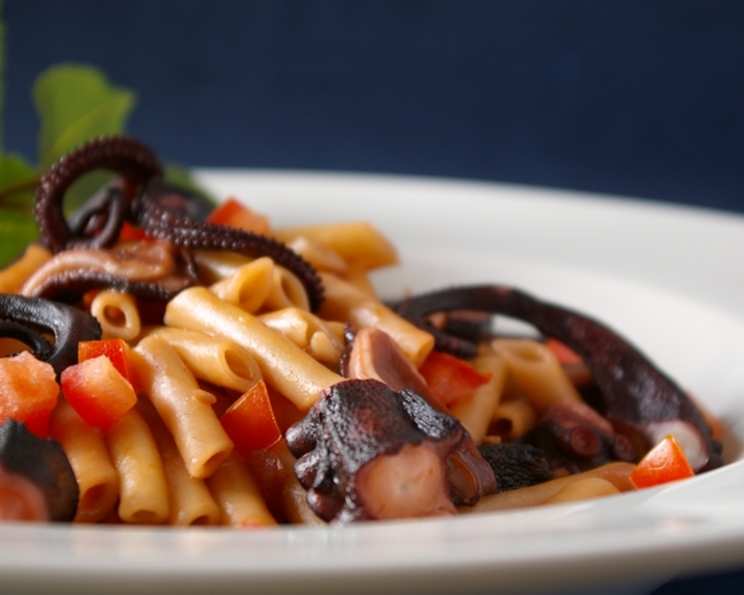
Htapodi Me Makaronaki Kofto: A Taste of the Aegean
The first time I tasted Htapodi Me Makaronaki Kofto, I was perched on a sun-drenched terrace overlooking the turquoise waters of Mykonos. The salty air mingled with the aroma of simmering tomatoes and oregano, a siren song that drew me to a humble taverna. One bite of the tender octopus, embraced by the perfectly cooked pasta and the bright, flavorful sauce, and I was transported. It wasn’t just a meal; it was an edible postcard, a taste of pure Greek summer that I’ve been chasing ever since.
Recipe Overview
- Prep Time: 20 minutes
- Cook Time: 1 hour
- Total Time: 1 hour 20 minutes
- Servings: 4
- Dietary Type: Mediterranean
Ingredients
- 2 lbs octopus, thawed if frozen
- 1 cup red wine
- 1 garlic clove, minced
- 1 medium onion, chopped fine
- 1 bay leaf
- ½ cinnamon stick (or ½ tsp ground cinnamon)
- 3 cups diced fresh tomatoes or 3 cups canned diced tomatoes
- ¼ cup olive oil
- ½ lb ditali pasta (or similar small pasta shape like ziti or penne)
- 1 ½ tablespoons butter
Equipment Needed
- Large pot with lid
- Cutting board
- Knife
Instructions
- Begin by thoroughly rinsing the octopus under cold, running water. Place the wet octopus into a large pot. It’s crucial not to dry the octopus, as the moisture is essential for the cooking process.
- Add the red wine, minced garlic, finely chopped onion, bay leaf, and cinnamon stick (or ground cinnamon) to the pot with the octopus.
- Cover the pot securely with a lid.
- Bring the mixture to a boil over low heat. Cooking at a low temperature is key to tenderizing the octopus.
- Simmer gently until the octopus is tender. The exact time will vary depending on the size and type of octopus, so rely on testing for doneness rather than strict timing. The octopus is ready when it can be easily pierced with a fork.
- Once tender, remove the octopus from the pot and allow it to cool until it’s comfortable to handle.
- While the octopus is cooling, add the diced fresh or canned tomatoes and olive oil to the pot in which the octopus was cooked (the delicious broth from the octopus!).
- Bring the tomato mixture to a boil and let it simmer for 8-10 minutes, allowing the sauce to thicken and the flavors to meld together.
- Meanwhile, cut the cooled octopus into bite-sized pieces.
- Stir the cut octopus and the uncooked ditali pasta into the tomato sauce.
- Simmer the mixture for the remaining 3-4 minutes, or until the pasta is cooked al dente. If the mixture appears too dry during this final cooking stage, add some pasta cooking water (reserved from a previous pasta cooking session if you have some on hand, or just plain water). The consistency should be moist but not soupy.
- Once the pasta is cooked, stir in the butter to enrich the sauce and add a touch of silkiness.
- Before serving, remove the bay leaf and cinnamon stick (if using whole).
Expert Tips & Tricks
- Tenderizing the Octopus: Patience is key when cooking octopus. Low and slow cooking is essential to breaking down the tough fibers and achieving a tender, melt-in-your-mouth texture. Don’t be tempted to rush the process by increasing the heat.
- Octopus Broth: The broth created during the initial cooking of the octopus is liquid gold. It’s packed with flavor and should not be discarded. It forms the base of the delicious tomato sauce.
- Pasta Shape: While ditali pasta is traditionally used, other small pasta shapes like ziti or penne can be substituted if ditali is unavailable. The key is to choose a pasta that will readily absorb the flavorful sauce.
- Tomato Quality: The quality of the tomatoes significantly impacts the flavor of the dish. If using canned tomatoes, opt for high-quality diced tomatoes in juice, not puree. Fresh, ripe tomatoes are ideal when in season.
- Acid Adjustment: Depending on the sweetness of the tomatoes, you may need to add a touch of acidity to balance the flavors. A squeeze of lemon juice or a splash of red wine vinegar can work wonders.
- Spice Level: For an extra kick, consider adding a pinch of red pepper flakes to the sauce along with the tomatoes.
Serving & Storage Suggestions
Serve Htapodi Me Makaronaki Kofto immediately while it’s hot and the flavors are at their peak. Garnish with a sprinkle of fresh parsley or a drizzle of olive oil for added visual appeal. This dish pairs beautifully with a simple Greek salad and a crisp, dry white wine like Assyrtiko.
Leftovers can be stored in an airtight container in the refrigerator for up to 3 days. To reheat, gently warm the octopus and pasta in a saucepan over low heat, adding a splash of water or broth if needed to prevent drying out. Microwaving is also an option, but it may affect the texture of the pasta. Freezing is not recommended, as it can compromise the texture of the octopus and pasta.
Nutritional Information
| Nutrient | Amount per Serving | % Daily Value |
|---|---|---|
| Calories | 480 kcal | 24% |
| Total Fat | 18g | 28% |
| Saturated Fat | 6g | 30% |
| Cholesterol | 105mg | 35% |
| Sodium | 450mg | 19% |
| Total Carbohydrate | 50g | 17% |
| Dietary Fiber | 4g | 16% |
| Sugars | 7g | – |
| Protein | 30g | 60% |
Note: Nutritional information is an estimate and may vary based on specific ingredients and preparation methods.
Variations & Substitutions
- Gluten-Free: Use gluten-free pasta to adapt this recipe for those with gluten sensitivities. Ensure all other ingredients are also gluten-free.
- Seafood Medley: Add other seafood, such as shrimp or calamari, to create a more complex seafood stew. Adjust cooking times accordingly.
- Vegetarian Option: While traditionally made with octopus, a vegetarian version can be created using meaty mushrooms, like portobellos, to mimic the texture.
- Spicy Version: Increase the amount of red pepper flakes or add a chopped jalapeño pepper for a spicier dish.
- Herby Delight: Experiment with different herbs to complement the tomatoes and octopus. Oregano, thyme, and rosemary are all excellent choices.
FAQs (Frequently Asked Questions)
Q: How do I know when the octopus is cooked properly?
A: The octopus is cooked properly when it is easily pierced with a fork. It should be tender and not rubbery. Cooking time will vary depending on the size and age of the octopus.
Q: Can I use dried oregano instead of fresh?
A: Yes, you can substitute dried oregano for fresh, but use about half the amount. Dried herbs have a more concentrated flavor.
Q: Can I use canned tomatoes instead of fresh?
A: Absolutely! Canned diced tomatoes are a perfectly acceptable substitute for fresh tomatoes, especially when fresh tomatoes are not in season or of high quality.
Q: What kind of red wine should I use?
A: A dry red wine, such as a Merlot or Cabernet Sauvignon, works well in this recipe. Avoid sweet wines.
Q: Can I make this dish ahead of time?
A: While it’s best served fresh, you can make the octopus stew (before adding the pasta) ahead of time and store it in the refrigerator for up to 2 days. Add the pasta just before serving.
Final Thoughts
Htapodi Me Makaronaki Kofto is more than just a recipe; it’s an invitation to experience the vibrant flavors and warm hospitality of the Greek islands. Don’t be intimidated by the octopus – with a little patience and the right techniques, you can create a truly memorable dish that will transport you to the sun-drenched shores of the Aegean. So, gather your ingredients, embrace the process, and prepare to savor a taste of Greece in your own kitchen. Kali Orexi!