
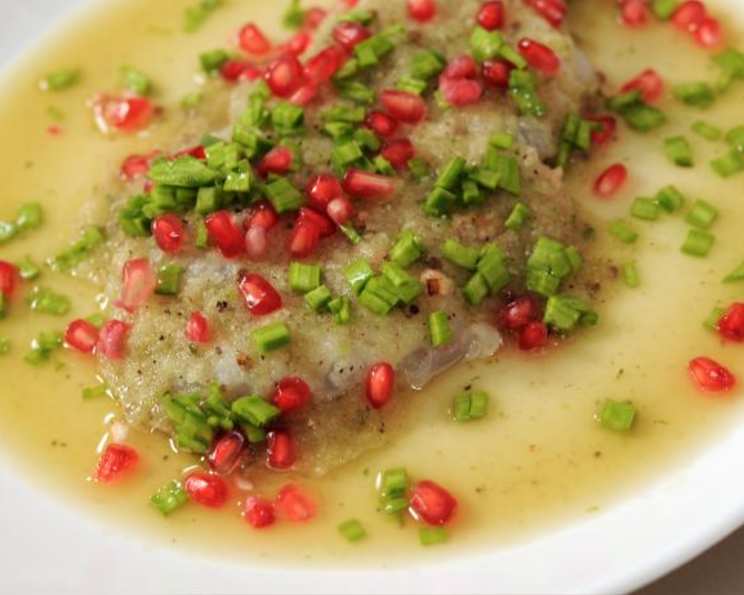
Marco’s Shrimp Aguachile: A Culinary Dive into Freshness
There are certain dishes that instantly transport you, and for me, aguachile does just that. I remember the first time I tasted it; I was a young cook working a pop-up in Baja. The vibrant green sauce, the glistening shrimp, the subtle kick of the chili – it was a revelation. That initial bite awakened my senses, a refreshing wave crashing over my palate. It was a culinary poem, highlighting the beauty of fresh, simple ingredients.
Recipe Overview
- Prep Time: 14 minutes
- Serves: 4
- Dietary Type: Gluten-Free
Ingredients
-
Grilled Cactus Leaves:
- 1 teaspoon/5 ml kosher salt
- 5 cactus leaves (nopales)
-
Aguachile:
- 8 choconostle fruit, peeled (See note below about substitutions)
- 4 limes, juice of
- 1 English cucumber, peeled, seeded and chopped
- 1 serrano chili, seeded and diced
- Salt & freshly ground black pepper
-
Serving:
- 16 large shrimp, shelled, deveined and sliced in half lengthwise
- Pomegranate seeds
Ingredient Note: Choconostle is a small, acidic and slightly sweet fruit shaped like a lychee. If you cannot find choconostle, you can substitute with Asian pears, mango, or honeydew. You can also skip it completely and add herbs like cilantro, chives, and parsley to the aguachile.
Equipment Needed
- Cast-iron pan
- Blender
- Cutting board
- Sharp knife
- Plates for serving
Instructions
-
Heat a cast-iron pan over high heat.
-
Put the salt directly on the pan and grill the cactus leaves until golden brown on both sides, about 5 minutes. This process helps to tame the somewhat slimy texture of the cactus and imparts a subtle smoky flavor. Make sure to turn them frequently for even cooking.
-
Dice 1 grilled cactus leaf and reserve for garnish. This adds a delightful textural contrast and a burst of freshness to the finished dish.
-
In a blender, blend the choconostle, lime juice, cucumber, and chili to a coarse puree. You don’t want it completely smooth; a little texture is key. Pulse the blender rather than running it continuously to maintain that texture. If you’re using a substitute for choconostle, adjust the amount to taste, aiming for a balance of sweet and sour.
-
Season with salt and pepper. Taste the aguachile and adjust the seasoning as needed. The balance of flavors is crucial – it should be tart, slightly sweet, and have a pleasant kick from the serrano chili.
-
Set aside the aguachile.
-
To assemble the dish, divide the grilled cactus leaves among 4 plates.
-
Lay the shrimp on the cactus leaves. Arrange them attractively, ensuring each piece has contact with the cactus leaf.
-
Top with the aguachile. Don’t be shy; you want the shrimp to be nicely coated in the flavorful sauce.
-
Garnish with pomegranate seeds and diced grilled cactus leaves. The pomegranate seeds add a pop of color and a burst of sweet-tart flavor.
Expert Tips & Tricks
- Shrimp Quality is Key: Use the freshest shrimp you can find. The flavor of the aguachile relies heavily on the quality of the seafood. If possible, buy shrimp that is wild-caught and has a firm texture.
- Control the Heat: Serrano chilies can vary in heat. Start with a small amount and add more to taste. Remember, you can always add more heat, but it’s hard to take it away. If you’re sensitive to spice, consider using a jalapeño pepper instead.
- Pre-Grill the Cactus: Grilling the cactus ahead of time can save you time when assembling the dish. Store the grilled cactus leaves in the refrigerator until ready to use.
- Don’t Over-Blend: Over-blending the aguachile will result in a less desirable, overly smooth texture. Pulsing the blender is the best approach to achieve the ideal coarse puree.
- Lime Juice Freshness: Use freshly squeezed lime juice for the best flavor. Bottled lime juice often has a metallic taste that can detract from the overall dish.
- Make it Ahead (Partially): The aguachile sauce can be made a few hours ahead of time and stored in the refrigerator. However, don’t add the shrimp until just before serving, as the lime juice will “cook” the shrimp over time, potentially affecting its texture.
Serving & Storage Suggestions
Serve Marco’s Shrimp Aguachile immediately after assembling. The dish is best enjoyed while the shrimp is still incredibly fresh and the flavors are vibrant. Arrange the shrimp attractively on the plates, making sure each piece is coated in the aguachile sauce and garnished with pomegranate seeds and diced cactus. A chilled Mexican beer or a crisp white wine, like Sauvignon Blanc, would be a perfect accompaniment.
Because this dish features raw seafood, leftovers are not recommended for storage. If you absolutely must store it, keep it in an airtight container in the refrigerator for no more than 24 hours. However, be aware that the texture of the shrimp will likely change, and the flavors may become overly acidic.
Nutritional Information
Note: Nutritional information is an estimate and can vary based on specific ingredients and portion sizes.
| Nutrient | Amount per Serving | % Daily Value |
|---|---|---|
| Calories | 150 kcal | 8% |
| Total Fat | 5g | 6% |
| Saturated Fat | 1g | 5% |
| Cholesterol | 85mg | 28% |
| Sodium | 200mg | 9% |
| Total Carbohydrate | 8g | 3% |
| Dietary Fiber | 2g | 7% |
| Sugars | 4g | N/A |
| Protein | 18g | 36% |
Variations & Substitutions
- Spicier Aguachile: For a more intense kick, use habanero peppers instead of serrano, but be cautious, as habaneros are significantly hotter.
- Vegetarian Aguachile: Substitute the shrimp with grilled halloumi cheese or firm tofu for a vegetarian option.
- Fruit Variations: Experiment with different fruits in the aguachile. Watermelon or pineapple can add a unique sweetness and flavor profile.
- Herb Variations: Add fresh herbs like mint or basil to the aguachile for a refreshing twist.
- Vegan Aguachile: Instead of shrimp, use hearts of palm, thinly sliced and marinated in lime juice for a similar texture. Ensure no animal products are used.
FAQs (Frequently Asked Questions)
Q: Can I use frozen shrimp for this recipe?
A: While fresh shrimp is highly recommended for the best flavor and texture, you can use frozen shrimp. Make sure to thaw it completely before using, and pat it dry to remove any excess moisture.
Q: How can I tell if the shrimp is cooked enough in the lime juice?
A: The lime juice “cooks” the shrimp through a process called denaturation. The shrimp is ready when it turns opaque and firm.
Q: What if I can’t find cactus leaves?
A: If you cannot find cactus leaves, you can still serve the shrimp aguachile without them. Consider serving the shrimp with thinly sliced avocado or cucumber instead.
Q: Can I make this ahead of time?
A: It’s best to assemble the dish right before serving. You can prepare the aguachile sauce ahead of time, but add the shrimp just before serving to prevent it from becoming overly “cooked” by the lime juice.
Q: Is this dish safe to eat if I’m pregnant?
A: Due to the use of raw seafood, it’s best to avoid this dish during pregnancy.
Final Thoughts
Marco’s Shrimp Aguachile is a vibrant and refreshing dish that’s perfect for a warm day or any occasion where you want to impress your guests. Don’t be intimidated by the simplicity of the ingredients. The key is to use the freshest, highest-quality ingredients you can find and to balance the flavors carefully. I encourage you to try this recipe and experiment with different variations to create your own signature aguachile. Share your feedback and any exciting flavor combinations you discover!