
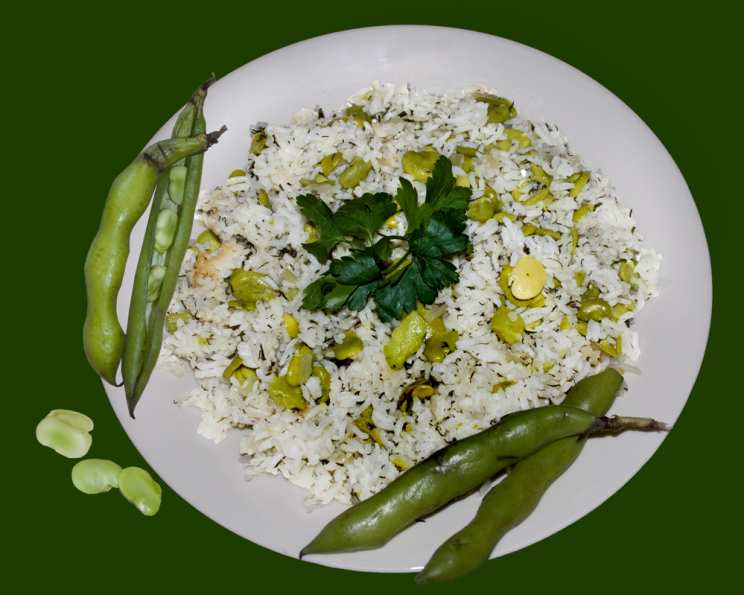
Iraqi Layered Fresh Fava Bean & Rice (M’tubuq)
The first time I tasted this dish, I was sitting in my aunt Hana’s sun-drenched kitchen in Baghdad. The air was thick with the scent of dill and something earthy, something wonderfully green. She placed a steaming bowl of rice and fava beans before me, a simple offering that held the warmth of her home and the deep roots of our family. It wasn’t just a meal; it was a story whispered in flavors, a connection to a heritage I was just beginning to understand. That first bite, the creamy fava beans against the fluffy rice, transported me, and it’s a taste I’ve chased ever since.
Recipe Overview
- Prep Time: 45 minutes
- Cook Time: 30 minutes
- Total Time: 1 hour 15 minutes
- Servings: 4
- Dietary Type: Vegan (Optional: Can be made with lamb)
Ingredients
- 1 1/2 lbs fresh fava beans, before cleaning
- 1 cup rice
- 1 – 1 1/2 tablespoons chopped fresh dill
- 1 medium onion, chopped
- 2-3 tablespoons oil
- Salt, to taste
- Yogurt or date syrup (dibis), for serving
Equipment Needed
- Large pot or rice cooker
- Sharp knife
- Cutting board
Instructions
- Prepare the Fava Beans: This is the most labor-intensive part, but it’s worth it! Begin by shelling the fava beans from their large outer pods. Once shelled, you’ll notice that each bean is still encased in a thick, opaque skin. This skin can be bitter, so we’re going to double-peel. Briefly blanch the shelled beans in boiling water for about 1 minute. This will loosen the skins.
- Double Peel: Drain the blanched fava beans and rinse them under cold water to stop the cooking process. Now, gently pinch each bean to pop it out of its individual skin. This can be a little time-consuming, but the resulting tenderness and flavor are well worth the effort.
- Sauté the Onion: In a large pot or rice cooker, heat the oil over medium heat. Add the chopped onion and sauté until softened and translucent, about 5-7 minutes. Be careful not to burn the onions, as this will affect the final flavor of the dish.
- Combine Ingredients: Add the rice, double-peeled fava beans, chopped fresh dill, and salt to the pot with the sautéed onions.
- Cook the Rice:
- Using a Rice Cooker: Measure the amount of water you would normally use for cooking 1 cup of rice in your rice cooker. Pour the water into the rice cooker, ensuring it covers the rice and other ingredients. Mix everything together gently. Close the rice cooker and set it to cook.
- Using a Conventional Pot: Mix all the ingredients together in the pot. Add enough water to cover the ingredients by about one finger’s width above the rice line. Bring the mixture to a boil over high heat, then reduce the heat to low, cover the pot tightly, and allow it to steam for about 30 minutes.
- Layering (Traditional Method): When the rice is about halfway cooked (after approximately 15 minutes of steaming), carefully divide the rice mixture in half. Remove half of the rice and set it aside. On the bottom half of the rice remaining in the pot, arrange the cooked onions and fava beans in an even layer. Then, gently spread the reserved half of the rice back over the top, creating a layered effect. This layering gives the dish its name, m’tubuq.
- Continue Steaming: Cover the pot tightly again and continue to steam for the remaining time (about 15 minutes), or until the rice is fully cooked and the fava beans are tender. Check for doneness by tasting the rice and beans. If the rice is still too firm or the beans are still hard, add a little more water (a tablespoon or two at a time) and continue steaming until they reach the desired consistency.
- Fluff and Serve: Once the rice is cooked, gently fluff it with a fork to separate the grains. Be careful not to mash the fava beans. Serve the Iraqi Layered Fresh Fava Bean & Rice hot, topped with dollops of plain yogurt or drizzled with date syrup (dibis) for a touch of sweetness.
Expert Tips & Tricks
- Fava Bean Prep: If you find double-peeling too tedious, you can skip the blanching and simply peel the skins off the raw beans. However, blanching makes the process much easier.
- Enhance the Flavor: For a richer flavor, try using vegetable broth instead of water to cook the rice.
- Lamb Option: If you prefer to include lamb, brown cubed lamb with the onions before adding the rice and fava beans. Adjust cooking time as needed to ensure the lamb is cooked through.
- Rice Variety: Long-grain rice works best for this dish, as it tends to stay fluffy and separate. However, you can experiment with other rice varieties, such as basmati or jasmine, depending on your preference.
- Don’t Overcook: Be careful not to overcook the rice, as it will become mushy. Keep an eye on the water level and adjust the cooking time accordingly.
Serving & Storage Suggestions
Serve the Iraqi Layered Fresh Fava Bean & Rice hot as a main course or a hearty side dish. It pairs well with a simple salad of cucumbers, tomatoes, and herbs dressed with lemon juice and olive oil.
Leftovers can be stored in an airtight container in the refrigerator for up to 3 days. To reheat, gently warm the rice in a saucepan over low heat with a splash of water or broth to prevent it from drying out. You can also reheat it in the microwave, but be careful not to overheat it. Reheating in the oven is also an option; just add a little water to the dish and cover it with foil before baking at a low temperature (around 300°F) until warmed through.
While it’s best enjoyed fresh, you can freeze leftovers for up to 1 month. Thaw completely in the refrigerator before reheating. The texture of the rice may change slightly after freezing, but the flavor will still be delicious.
Nutritional Information
| Nutrient | Amount per Serving | % Daily Value |
|---|---|---|
| Calories | 434.5 kcal | N/A |
| Total Fat | 7.8 g | 11% |
| Saturated Fat | 1.1 g | 5% |
| Cholesterol | 0 mg | 0% |
| Sodium | 9.9 mg | 0% |
| Total Carbohydrate | 74.9 g | 24% |
| Dietary Fiber | 10.3 g | 41% |
| Sugars | 4.3 g | N/A |
| Protein | 16.4 g | 32% |
Note: Nutritional information is an estimate and may vary based on specific ingredients and portion sizes.
Variations & Substitutions
- Lima Bean Substitution: If fresh fava beans are unavailable, you can substitute with baby lima beans, though the flavor will be slightly different. Frozen lima beans can also be used.
- Spice It Up: Add a pinch of red pepper flakes or a dash of cumin to the onion while sautéing for a touch of heat and complexity.
- Herb Variations: Experiment with different herbs, such as parsley, mint, or cilantro, in addition to or instead of dill.
- Lemon Zest: Grate a little lemon zest into the rice mixture for a bright, citrusy flavor.
- Vegan Yogurt Alternative: Use a plant-based yogurt alternative, such as coconut yogurt or almond yogurt, for a dairy-free option.
FAQs (Frequently Asked Questions)
Q: Why do I need to double-peel the fava beans?
A: Double-peeling removes the tough outer skin, resulting in a more tender and flavorful bean. While it adds extra work, the difference in texture is significant.
Q: Can I use dried fava beans for this recipe?
A: While possible, using dried fava beans will require soaking them overnight and cooking them separately before adding them to the rice. Fresh fava beans offer a superior flavor and texture.
Q: How can I prevent the rice from sticking to the bottom of the pot?
A: Ensure that the pot is properly greased with oil before adding the ingredients. Also, keep the heat low and the lid tightly sealed to prevent excessive moisture loss.
Q: What if I don’t have date syrup (dibis)?
A: If you don’t have date syrup, you can use honey, maple syrup, or even a sprinkle of sugar as a substitute, though the flavor profile will be different.
Q: Can I add other vegetables to this dish?
A: Yes! Feel free to add other vegetables, such as chopped carrots, peas, or spinach, to the rice mixture. Just be sure to adjust the cooking time as needed to ensure that all the vegetables are cooked through.
Final Thoughts
This Iraqi Layered Fresh Fava Bean & Rice is more than just a recipe; it’s a taste of home, a connection to tradition, and a celebration of simple, fresh ingredients. Don’t be intimidated by the fava bean preparation – it’s a labor of love that yields a truly rewarding dish. Gather your ingredients, put on some music, and let the aroma of dill and fava beans fill your kitchen. I encourage you to try this recipe and share your experiences with friends and family. Consider pairing it with a refreshing cucumber and tomato salad for a complete and satisfying meal. Sahtein! (Bon appétit!)