
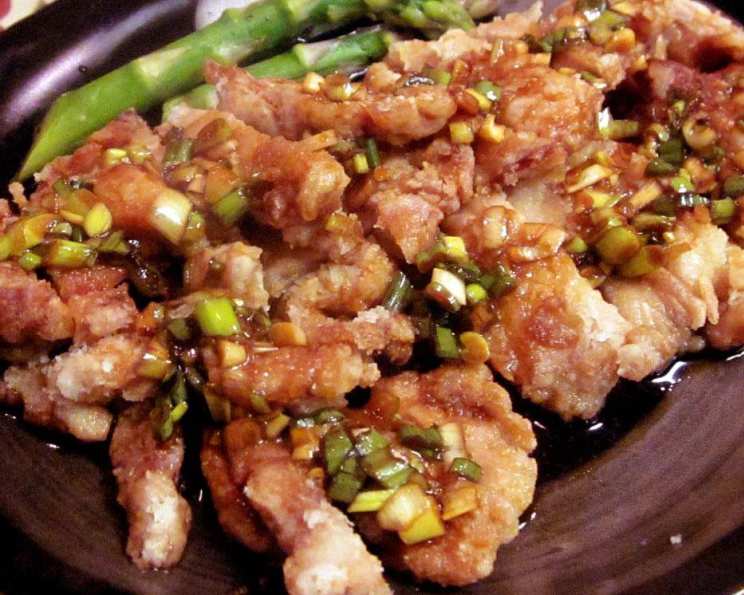
Crispy Japanese Fried Chicken Karaage with Zesty Onion-Ginger Relish
The first time I had truly exceptional karaage, I was crammed into a tiny izakaya in Tokyo, the air thick with the aroma of soy sauce and grilling fish. The chef, a wizened man with hands that moved like lightning, slid a small mountain of glistening, golden-brown chicken across the counter. Each bite was an explosion of juicy tenderness and shatteringly crisp skin, a symphony of savory and umami that I still dream about. It wasn’t just the perfectly fried chicken; it was the accompanying relish, a bright and pungent blend of ginger and scallions that cut through the richness and elevated the dish to something truly special. This recipe captures that memory, that perfect balance of textures and flavors, bringing a taste of that Tokyo izakaya into my own kitchen.
Recipe Overview
- Prep Time: 45 minutes
- Cook Time: 30-40 minutes (bone-in), 15-20 minutes (boneless)
- Total Time: 1 hour 15 minutes
- Servings: 6
- Yield: 6 servings
- Dietary Type: Not Gluten-Free
Ingredients
- 4 chicken legs (drumstick and thigh section) or 6 boneless chicken thighs
- ½ teaspoon salt (to taste)
Marinade or Coating:
- 1 egg, lightly beaten
- ½ teaspoon salt (to taste)
- Black pepper (to taste)
- 3 tablespoons sesame oil
- 3-4 tablespoons flour
- 3-4 tablespoons cornstarch
- Oil (for frying)
Vinegar Sauce:
- 1 tablespoon rice vinegar
- 1 tablespoon Chinese black vinegar or 1 tablespoon balsamic vinegar
- 2 tablespoons sugar
- 2 tablespoons soy sauce
- 2 tablespoons water
Relish:
- 6 tablespoons minced green onions
- 2 tablespoons minced ginger
- 2 tablespoons minced parsley
Equipment Needed
- Large bowl
- Wok or deep fryer
- Cleaver or kitchen knife
- Platter
Instructions
-
Begin by prepping the chicken. Massage the chicken pieces with ½ teaspoon of salt to help remove any unpleasant odors. Rinse them thoroughly under cold running water and pat them completely dry with paper towels. Ensuring the chicken is dry is crucial for achieving a crispy coating.
-
If you’re using bone-in chicken legs, make several shallow cuts into the thigh meat (avoid cutting the skin). This will help the leg sections lay flatter and cook more evenly. Use the dull side of a knife to gently pound the chicken, further flattening it. If using boneless chicken thighs, pound them lightly to flatten them slightly, which will promote quicker frying.
-
In a large bowl, combine the lightly beaten egg, ½ teaspoon of salt, a generous pinch of black pepper, and 3 tablespoons of sesame oil. Whisk thoroughly to ensure everything is well combined.
-
Next, add 3-4 tablespoons of flour and 3-4 tablespoons of cornstarch to the marinade. Mix well to create a thick coating. The combination of flour and cornstarch is what gives the karaage its signature crispiness. Use your hands to thoroughly coat the chicken pieces with the marinade, ensuring every nook and cranny is covered. This thick coating acts as both a marinade and a protective layer during frying, imparting flavor and promoting a crispy exterior. Marinate the chicken for at least 30 minutes.
-
While the chicken is marinating, prepare the vinegar sauce. In a small bowl, combine 1 tablespoon of rice vinegar, 1 tablespoon of Chinese black vinegar (or balsamic vinegar), 2 tablespoons of sugar, 2 tablespoons of soy sauce, and 2 tablespoons of water. Stir until the sugar is dissolved and set aside.
-
Prepare the relish by combining 6 tablespoons of minced green onions, 2 tablespoons of minced ginger, and 2 tablespoons of minced parsley in a separate bowl. Mix well and set aside. The relish adds a refreshing and vibrant element to the dish.
-
Now it’s time to fry the chicken. Pour ample oil (about 1 inch in depth) into a wok or deep fryer. Heat the oil to medium-high heat. Be careful not to overheat the oil, as this will cause the chicken to burn on the outside while remaining undercooked inside.
-
Carefully add the marinated chicken pieces to the hot oil, ensuring not to overcrowd the wok or fryer. Fry the chicken, turning them occasionally to ensure even cooking. Adjust the heat as needed to maintain a steady frying temperature.
-
The chicken is done when it’s nicely browned and crunchy, and the internal temperature reaches 165°F (74°C). For bone-in leg sections, this will take approximately 30-40 minutes. For boneless thigh sections, it will take about 15-20 minutes. The cooking time will depend on the oil temperature and the size of the chicken pieces.
-
Once the chicken is cooked through, remove it from the oil and let it rest briefly on a wire rack to drain excess oil.
-
If using bone-in chicken, cut each piece into bite-sized portions using a cleaver. For boneless chicken, use a regular kitchen knife to cut it into similar-sized pieces. Usually, one leg section will yield 4 to 5 cut sections.
-
Arrange the cut chicken pieces on a large platter. Drizzle the vinegar sauce evenly over the chicken. Finally, arrange a generous mound of the prepared relish on top. Serve immediately and enjoy the explosion of flavors and textures!
Expert Tips & Tricks
- For extra crispy skin, try double-frying the chicken. Fry it once at a lower temperature (about 325°F or 160°C) for a longer period to cook it through, then fry it again at a higher temperature (about 375°F or 190°C) for a short time to crisp up the skin.
- If you don’t have Chinese black vinegar, you can use balsamic vinegar or even a splash of Worcestershire sauce for a similar depth of flavor in the sauce.
- Don’t discard the oil after frying. Once cooled and strained, it can be reused for other frying purposes.
Serving & Storage Suggestions
Serve the karaage immediately while it’s hot and crispy. The zesty onion-ginger relish is best enjoyed fresh. Leftover karaage can be stored in an airtight container in the refrigerator for up to 3 days. Reheat in an oven or air fryer to restore some of the crispiness. While the texture won’t be quite the same as freshly fried, the flavor will still be delicious. I do not recommend freezing karaage, as it will significantly affect the texture.
Nutritional Information
| Nutrient | Amount per Serving | % Daily Value |
|---|---|---|
| Calories | 333.5 kcal | N/A |
| Calories from Fat | 190 g | 57% |
| Total Fat | 21.2 g | 32% |
| Saturated Fat | 5 g | 25% |
| Cholesterol | 123.4 mg | 41% |
| Sodium | 825.1 mg | 34% |
| Total Carbohydrate | 12.1 g | 4% |
| Dietary Fiber | 0.4 g | 1% |
| Sugars | 4.5 g | 18% |
| Protein | 22.5 g | 44% |
Note: Nutritional information is an estimate and may vary depending on specific ingredients and portion sizes.
Variations & Substitutions
- Gluten-Free Karaage: Substitute the flour with a gluten-free flour blend and use gluten-free soy sauce (tamari) for a gluten-free version.
- Spicy Karaage: Add a pinch of red pepper flakes to the marinade for a touch of heat.
- Citrus Glaze: Instead of the vinegar sauce, try a citrus glaze made with orange juice, lemon juice, soy sauce, and honey.
- Vegetarian “Karaage”: Use firm tofu, pressed and cut into bite-sized pieces, instead of chicken. Marinate and fry as directed in the recipe.
FAQs (Frequently Asked Questions)
Q: Why is it important to dry the chicken before marinating?
A: Drying the chicken helps the marinade adhere better and promotes a crispier coating during frying. Excess moisture can lead to soggy chicken.
Q: Can I use other types of vinegar for the sauce?
A: Yes, you can experiment with different vinegars, such as apple cider vinegar or white vinegar, but the flavor profile will be slightly different.
Q: How do I prevent the chicken from sticking to the wok or fryer?
A: Make sure the oil is hot enough before adding the chicken, and avoid overcrowding the wok or fryer. Fry in batches if necessary.
Q: Can I prepare the relish in advance?
A: Yes, you can prepare the relish a few hours in advance, but it’s best served fresh to maintain its vibrant flavor and texture.
Q: How do I know when the oil is at the right temperature for frying?
A: Use a deep-fry thermometer to monitor the oil temperature. If you don’t have a thermometer, you can test the oil by dropping a small piece of chicken into it. If it sizzles immediately and turns golden brown within a few minutes, the oil is ready.
Final Thoughts
Now that you have all the secrets to crafting perfect Japanese Fried Chicken Karaage, I urge you to give it a try! Don’t be intimidated by the seemingly long ingredient list; the result is well worth the effort. This dish is not just food, it’s an experience, a journey to a bustling izakaya in Tokyo, all from the comfort of your own kitchen. Share your creations with friends and family, experiment with different variations, and most importantly, savor every delicious bite! Pair it with a cold Japanese beer or a refreshing glass of iced green tea for the complete experience.