
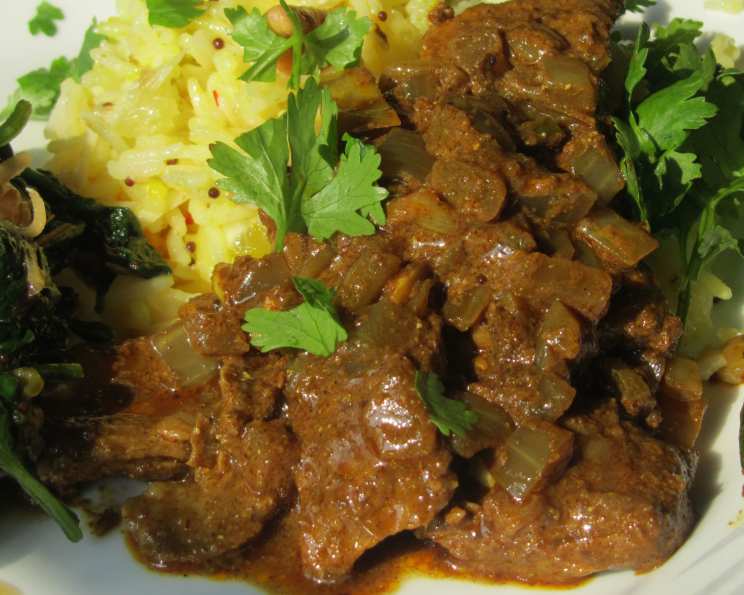
Kerala Beef Fry: A Taste of God’s Own Country
My grandmother, a phenomenal cook hailing from the lush landscapes of Kerala, always had a special way of making simple ingredients sing. I remember the aroma of spices sizzling in coconut oil, a scent that would fill her entire house and beckon us all to the kitchen. Kerala Beef Fry, or Beef Ularthiyathu as she called it, was a particular favorite. The tender beef, infused with aromatic spices and the gentle heat of green chilies, always brought a smile to my face – a taste of home and her unwavering love.
Recipe Overview
- Prep Time: 30 minutes
- Cook Time: 30 minutes
- Total Time: 1 hour
- Servings: 4
- Dietary Type: Not Gluten-Free
Ingredients
- 2 tablespoons minced garlic
- 1 tablespoon minced fresh ginger
- ½ tablespoon chili powder
- Salt, to taste
- 1 lb beef tenderloin, cut into 1 ½-inch strips
- ¾ tablespoon tamarind paste
- 3 tablespoons coconut oil
- ¼ teaspoon mustard seeds
- 5 fresh curry leaves
- 3 medium red onions, finely chopped
- 2 green chilies, seeded and finely chopped
- 2 tablespoons garam masala
- 1 tablespoon ground coriander
- ¼ teaspoon ground turmeric
- ½ teaspoon powdered black pepper
- 3 tablespoons whole milk yogurt
- Freshly chopped cilantro, to garnish
Equipment Needed
- Medium bowl
- Small bowl
- Large skillet
- Second skillet
- Tongs
Instructions
- In a medium bowl, combine the minced garlic, minced fresh ginger, chili powder, and ½ teaspoon of salt.
- Thoroughly rub this spice mixture into the beef strips. Ensure each piece is well coated. Let the beef marinate for at least 20 minutes. This allows the flavors to penetrate the meat, resulting in a richer, more flavorful dish.
- In a small bowl, combine the tamarind paste with 3 tablespoons of boiling water. Stir until the tamarind paste is completely dissolved, creating a tamarind concentrate. Set this aside. The tamarind will add a crucial tangy dimension to the final dish.
- Place 2 tablespoons of coconut oil in a large skillet over medium heat. Allow the oil to heat up until it shimmers.
- Once the oil is hot, add the mustard seeds and curry leaves. Let them simmer for about 1 minute. The mustard seeds should start to pop, releasing their aromatic oils. The curry leaves will sizzle, filling your kitchen with a delightful fragrance.
- Add the finely chopped red onions and seeded and finely chopped green chilies to the skillet. Cook, stirring occasionally, until the onions begin to soften, about 5 minutes. Keep a close eye on the heat to prevent the onions from burning.
- Now, add the garam masala, ground coriander, ground turmeric, powdered black pepper, and the remaining ½ teaspoon of salt to the onions. Note that the mixture may become quite dry at this point. Don’t worry; this is normal.
- Continue to cook for another 5 minutes, stirring occasionally. This allows the spices to bloom, releasing their full potential.
- Reduce the heat to low and stir in the prepared tamarind concentrate and yogurt. The yogurt will add creaminess and a slight tang to the gravy.
- Cook for 3 to 5 minutes, or until the liquid is almost completely evaporated. Stir frequently to prevent the yogurt from curdling.
- In a second skillet, heat the remaining 1 tablespoon of coconut oil over high heat. This hot skillet is crucial for searing the beef properly.
- Add the marinated beef strips to the hot skillet and sear them for 30 seconds per side, turning once. Searing the beef locks in the juices and adds a beautiful color to the meat.
- Using tongs, carefully transfer the seared beef strips to the skillet containing the onion mixture.
- Gently fold the beef into the onion mixture, ensuring all the pieces are coated in the flavorful gravy.
- Let the mixture simmer for 3 to 5 minutes, stirring occasionally, until the beef is tender and cooked through.
- Discard the curry leaves before serving. They have imparted their flavor and are no longer needed.
- Taste and adjust the seasoning, adding more salt if necessary. Every palate is different, so don’t hesitate to adjust the seasoning to your liking.
- Garnish generously with freshly chopped cilantro before serving.
Expert Tips & Tricks
- For even more tender beef, marinate it overnight in the refrigerator. The longer the marination, the more flavorful and tender the beef will become.
- If you prefer a spicier dish, increase the amount of green chilies or add a pinch of cayenne pepper.
- If you don’t have tamarind paste, you can substitute it with lime juice, but the flavor will be slightly different.
- Don’t overcrowd the skillet when searing the beef. Sear the beef in batches to ensure proper browning.
- For a richer flavor, use homemade garam masala.
- Make sure not to overcook the beef, or it will become tough. The beef should be tender and juicy.
Serving & Storage Suggestions
Kerala Beef Fry is best served hot. Traditionally, it is served as a side dish with rice, parotta (flaky flatbread), or appam (fermented rice pancakes). It also makes a fantastic appetizer. You can store leftovers in an airtight container in the refrigerator for up to 3 days. To reheat, gently warm it in a skillet over medium heat, adding a splash of water if needed to prevent it from drying out. You can also freeze leftovers for up to 2 months. Thaw overnight in the refrigerator before reheating.
Nutritional Information
| Nutrient | Amount per Serving | % Daily Value |
|---|---|---|
| Calories | 436 kcal | – |
| Calories from Fat | 285 g | 66% |
| Total Fat | 31.8 g | 48% |
| Saturated Fat | 17.5 g | 87% |
| Cholesterol | 97.8 mg | 32% |
| Sodium | 84.9 mg | 3% |
| Total Carbohydrate | 14.4 g | 4% |
| Dietary Fiber | 3 g | 11% |
| Sugars | 6.1 g | – |
| Protein | 24.7 g | 49% |
Variations & Substitutions
- Vegan Variation: Substitute the beef with mushrooms or jackfruit for a vegetarian or vegan version. Adjust cooking times accordingly.
- Gluten-Free: Ensure your garam masala is gluten-free, as some blends may contain wheat flour. Serve with rice or gluten-free flatbread.
- Coconut Milk: For a richer and creamier sauce, substitute the whole milk yogurt with coconut milk. This also makes the dish dairy-free.
- Regional Variations: In some regions, they may add ginger-garlic paste instead of freshly minced. Some add a touch of vinegar for extra tang.
FAQs (Frequently Asked Questions)
Q: Can I use a different cut of beef?
A: While beef tenderloin is preferred for its tenderness, you can use other cuts like sirloin or chuck. However, these cuts will require longer cooking times to become tender.
Q: Can I make this dish ahead of time?
A: Yes, you can prepare the Kerala Beef Fry a day ahead. Store it in the refrigerator and reheat it before serving. The flavors will meld even further overnight.
Q: Is it necessary to seed the green chilies?
A: Seeding the green chilies reduces the heat. If you prefer a spicier dish, you can leave the seeds in.
Q: Can I use dried curry leaves instead of fresh?
A: While fresh curry leaves are preferred, you can use dried curry leaves if fresh ones are not available. Use about half the amount of dried leaves, as they have a more concentrated flavor.
Q: What do I do if the sauce is too dry?
A: If the sauce becomes too dry during cooking, add a splash of water or beef broth to thin it out.
Final Thoughts
Kerala Beef Fry is more than just a dish; it’s a culinary journey to the heart of Kerala. The symphony of spices, the tender beef, and the subtle tang of tamarind create a truly unforgettable experience. Don’t be intimidated by the list of ingredients – the process is simpler than it seems. I encourage you to try this recipe and bring a little piece of Kerala into your own kitchen. Share your creations and variations with others. Enjoy the process, savor the flavors, and let the aromas transport you to the sun-kissed shores of India. Pair it with a cool glass of lime juice or a spicy Indian beer for the complete experience.