
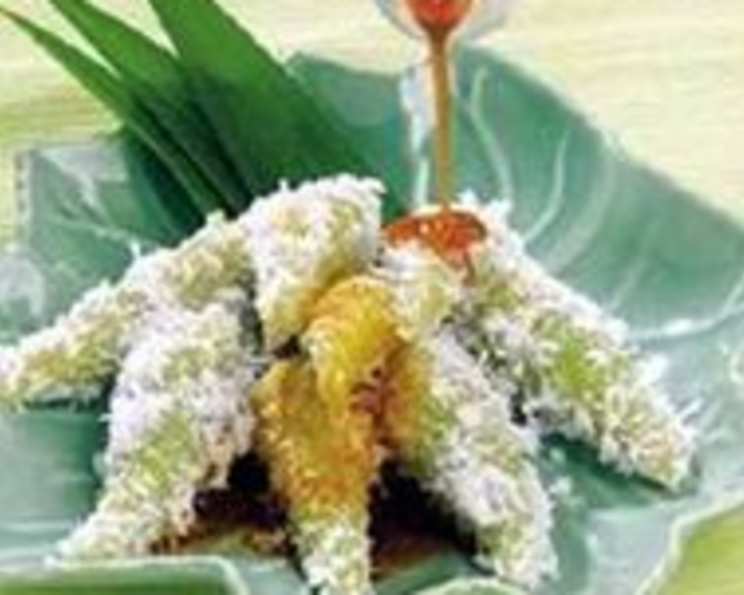
Kue Lupis: Sweet Nostalgia in a Sticky Rice Dumpling
The scent of banana leaves always transports me back to my grandmother’s kitchen. It was a place filled with warmth, laughter, and the comforting aroma of steamed sweets. Among the many Indonesian delicacies she lovingly prepared, Kue Lupis, those delightful little pyramids of sticky rice, always held a special place in my heart. Watching her deftly fold the banana leaves, a skill passed down through generations, was a magic trick in itself. The anticipation of biting into the perfectly cooked rice, coated in freshly grated coconut and drizzled with rich palm sugar syrup, was pure bliss. Now, I want to share that magic with you.
Recipe Overview
- Prep Time: 24 hours (includes soaking time)
- Cook Time: 3 hours 10 minutes
- Total Time: 27 hours 10 minutes
- Servings: 20
- Yield: 20 dumplings
- Dietary Type: Gluten-Free
Ingredients
- Sticky Rice Dumplings
- 500 g sticky rice, washed, soaked in water overnight, and rinsed
- 500 ml water
- Banana leaves
- Coconut Coating
- 225 g coconut, grated
- 1/4 teaspoon salt
- Palm Sugar Syrup
- 300 g palm sugar
- 3 tablespoons granulated sugar
- 125 ml water
Equipment Needed
- Large pot for boiling
- Steamer
- Mixing bowl
- Small plates
- Rope or toothpicks
Instructions
- Prepare the Sticky Rice: Begin by thoroughly washing 500 g of sticky rice until the water runs clear. This removes excess starch and helps achieve the desired texture.
- Soak the Rice: Submerge the washed rice in 500 ml of water and let it soak overnight (approximately 24 hours). Soaking is crucial for the rice to cook evenly and become wonderfully sticky. After soaking, drain and rinse the rice again.
- Shape the Dumplings: Cut the banana leaves into squares large enough to form a triangular cone. Take two pieces of banana leaf. Form a cone shape.
- Fill the Cones: Spoon approximately 1 tablespoon of the soaked sticky rice into each banana leaf cone.
- Seal the Dumplings: Close the cone tightly to form a triangular pyramid. Secure the banana leaf package with rope or toothpicks to prevent it from unraveling during cooking.
- Boil the Dumplings: Place the wrapped sticky rice dumplings into a large pot. Cover them completely with water.
- Cook the Dumplings: Bring the water to a boil, then reduce the heat to a simmer. Cook for approximately 3 hours until the rice is fully cooked and tender. Replenish the water as needed to ensure the dumplings remain submerged.
- Cool and Unwrap: Once cooked, remove the dumplings from the pot and rinse them under cold water. Let them cool slightly before carefully unwrapping the banana leaves. Set aside.
- Prepare the Coconut Coating: In a mixing bowl, combine 225 g of grated coconut with 1/4 teaspoon of salt. Mix well to distribute the salt evenly.
- Steam the Coconut: Steam the salted grated coconut for 10 minutes. Steaming helps to prevent the coconut from spoiling quickly.
- Make the Palm Sugar Syrup: In a saucepan, combine 300 g of palm sugar, 3 tablespoons of granulated sugar, and 125 ml of water.
- Cook the Syrup: Bring the mixture to a boil over medium heat, stirring occasionally. Reduce the heat and simmer until the sugar is completely dissolved and the syrup has thickened slightly. This should take about 10-15 minutes.
- Assemble the Kue Lupis: Roll each cooked sticky rice dumpling in the steamed grated coconut, ensuring it is evenly coated.
- Serve: Arrange the coconut-covered dumplings on small plates. Drizzle generously with the warm palm sugar syrup. Serve immediately.
Expert Tips & Tricks
- Banana Leaf Preparation: Before using the banana leaves, lightly wilt them over an open flame or by briefly steaming them. This makes them more pliable and easier to fold.
- Sticky Rice Quality: Use high-quality sticky rice for the best results. Look for grains that are opaque and uniform in size.
- Doneness Check: To ensure the sticky rice is cooked through, remove one dumpling from the pot after 2.5 hours of boiling and unwrap it. Taste the rice. If it’s still firm, continue cooking for another 30 minutes.
- Syrup Consistency: The palm sugar syrup should be thick enough to coat the dumplings but not too thick that it becomes hard when cooled. Adjust the cooking time accordingly. If the syrup is too thin, simmer for a few more minutes. If it’s too thick, add a tablespoon or two of water.
- Make-Ahead Tip: The sticky rice dumplings can be cooked ahead of time and stored in the refrigerator for up to 2 days. Steam briefly before coating with coconut and serving.
Serving & Storage Suggestions
Kue Lupis is best served fresh, while the sticky rice is still warm and the palm sugar syrup is luscious. Arrange a few dumplings on a small plate and drizzle generously with syrup. The grated coconut adds a delightful textural contrast.
- Room Temperature: Kue Lupis can be stored at room temperature for a few hours, but the coconut may spoil quickly, especially in warm climates.
- Refrigerator: For longer storage, keep the uncoated dumplings and the palm sugar syrup separately in airtight containers in the refrigerator for up to 2 days. Steam or microwave the dumplings briefly before serving. Reheat the syrup gently on the stovetop or in the microwave.
- Freezer: While not ideal, you can freeze the cooked (but uncoated) dumplings. Wrap them individually in plastic wrap, then place them in a freezer-safe bag. Thaw completely before steaming and coating with fresh coconut and warm syrup.
Nutritional Information
Please note that these values are estimates and may vary based on specific ingredients and preparation methods.
| Nutrient | Amount per Serving | % Daily Value |
|---|---|---|
| Calories | 250 kcal | 13% |
| Total Fat | 8g | 12% |
| Saturated Fat | 6g | 30% |
| Cholesterol | 0 mg | 0% |
| Sodium | 40 mg | 2% |
| Total Carbohydrate | 45g | 15% |
| Dietary Fiber | 2g | 8% |
| Sugars | 25g | – |
| Protein | 3g | 6% |
Variations & Substitutions
- Vegan Variation: This recipe is already vegan-friendly! Just ensure your palm sugar is sourced ethically.
- Sweet Potato Variation: Add some mashed sweet potato to the sticky rice for a natural sweetness and a beautiful orange hue. Use about 100g of cooked and mashed sweet potato per 500g of sticky rice.
- Pandan Infusion: Tie a knot of pandan leaves and add it to the water while boiling the sticky rice dumplings. This will infuse the rice with a fragrant aroma.
- Different Sugars: If you can’t find palm sugar, you can substitute it with dark brown sugar, although the flavor will be slightly different.
- Coconut Milk Reduction: A rich coconut milk reduction can be used as a drizzle instead of the palm sugar syrup. Simmer coconut milk with a little salt until it thickens to a syrupy consistency.
FAQs (Frequently Asked Questions)
Q: Can I use a different type of rice?
A: While you can technically use other types of rice, sticky rice (also known as glutinous rice) is essential for achieving the characteristic texture of Kue Lupis. It’s what makes them sticky and slightly chewy.
Q: Is it necessary to soak the rice overnight?
A: Yes, soaking the rice is crucial. It allows the rice to absorb moisture, which ensures it cooks evenly and becomes properly sticky. Skipping this step will result in harder, less cohesive dumplings.
Q: How do I know when the palm sugar syrup is ready?
A: The syrup is ready when it has thickened slightly and coats the back of a spoon. Be careful not to overcook it, as it will harden as it cools.
Q: Can I make these without banana leaves?
A: Banana leaves impart a unique flavor and aroma to the dumplings, but if you can’t find them, you can use parchment paper or food-grade plastic wrap as a substitute. However, the flavor will be different.
Q: Why is my grated coconut turning sour quickly?
A: Grated coconut spoils easily. Steaming it before using it helps to kill bacteria and extend its shelf life. Make sure to store it in the refrigerator if not using it immediately.
Final Thoughts
Making Kue Lupis might seem like a labor of love, but the results are well worth the effort. Each bite is a taste of tradition, a connection to my heritage, and a reminder of the simple pleasures in life. Don’t be intimidated by the long cooking time; it’s mostly hands-off. So gather your ingredients, embrace the process, and share these sweet, sticky treasures with your loved ones. I encourage you to try this recipe and experience the magic of Kue Lupis for yourself. Let me know how it turns out, and feel free to experiment with your own variations! Perhaps enjoy it with a strong cup of Indonesian coffee for the perfect pairing.