
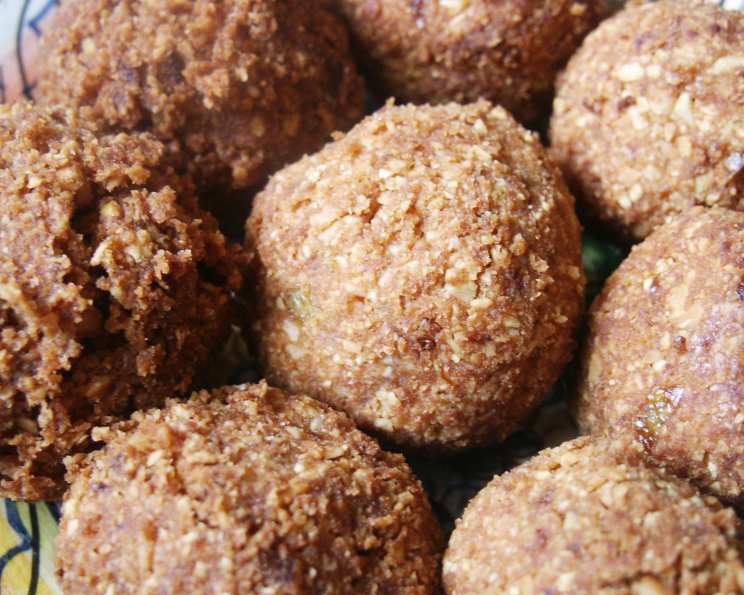
Kulikuli: A Taste of West Africa in Every Bite
The scent of roasting peanuts always takes me back to my grandmother’s kitchen. As a child, I’d sit mesmerized as she transformed humble groundnuts into golden, crispy spheres of kulikuli. The rhythmic pounding, the spicy aroma of cayenne, and the final, satisfying crunch were a symphony of flavors and textures that defined my childhood summers. This recipe is my attempt to recapture that magic, to share a taste of home and heritage with you.
Recipe Overview
- Prep Time: 20 minutes
- Cook Time: 2-3 minutes
- Total Time: Approximately 25 minutes
- Servings: 4
- Yield: Varies depending on ball size, approximately 20-30 balls
- Dietary Type: Vegan (naturally gluten-free)
Ingredients
- 1 lb roasted peanuts
- ¼ cup peanut oil (or more, to taste)
- 1 small onion, finely chopped
- 1 teaspoon cayenne pepper
- 1 teaspoon salt
- Oil for frying (vegetable or peanut)
Equipment Needed
- Food processor or mortar and pestle
- Large bowl
- Large skillet or deep fryer
- Slotted spoon or spider
- Paper towels
Instructions
-
Grind the peanuts: Using a food processor or a traditional mortar and pestle, grind the roasted peanuts into a smooth paste. Add peanut oil gradually, a tablespoon at a time, until the mixture starts to bind together but isn’t overly greasy. You might not need the full ¼ cup. The goal is a pliable, smooth peanut butter-like consistency.
-
Remove excess oil: This step is crucial for achieving the right texture. Place the peanut paste in a large bowl. Using your hands (wetting them slightly can help), squeeze the mixture firmly to extract any excess oil. Collect the oil; you can reuse it for frying later. The paste should now feel drier and more compact.
-
Sauté the aromatics: Heat about a tablespoon of oil in a skillet over medium heat. Add the finely chopped onion, cayenne pepper, and salt. Sauté until the onions are golden brown and fragrant, about 5-7 minutes. Be careful not to burn the onions. The cayenne will release its spicy aroma, so ensure good ventilation.
-
Combine the paste and aromatics: Add the sautéed onion mixture to the peanut paste in the bowl. Knead thoroughly until evenly distributed. The mixture should now be fragrant and slightly spicy.
-
Shape the kulikuli: Take small portions of the mixture and shape them into 1-inch diameter balls. If the mixture seems too dry and crumbly, add a few drops of water at a time, kneading until it holds together. The water helps to bind the mixture, but add it sparingly to avoid a sticky texture. Alternatively, you can flatten the mixture into small patties instead of making balls.
-
Fry the kulikuli: Heat enough oil in a deep fryer or skillet to fully submerge the kulikuli. The oil should be hot but not smoking (around 350°F or 175°C). Carefully drop the balls (or flattened patties) into the hot oil, being careful not to overcrowd the pan.
-
Cook until golden and crispy: Fry for 2 to 3 minutes, or until the outsides are crisp and golden brown. Use a slotted spoon or spider to remove the kulikuli from the oil and place them on paper towels to drain excess oil.
-
Cool and Enjoy: Allow the kulikuli to cool slightly before serving.
Expert Tips & Tricks
- Roasting the peanuts: If you’re starting with raw peanuts, roast them in a preheated oven at 350°F (175°C) for 15-20 minutes, or until golden brown and fragrant. Let them cool completely before grinding. Roasting enhances their flavor and makes them easier to grind.
- Spice level: Adjust the amount of cayenne pepper to your preference. For a milder flavor, use half a teaspoon or omit it altogether. For a spicier kick, add more!
- Texture control: The key to perfect kulikuli is controlling the amount of oil. Squeezing out the excess oil after grinding prevents the balls from becoming greasy. Adding water sparingly during shaping ensures they hold together without becoming sticky.
- Even frying: Maintain a consistent oil temperature while frying to ensure even cooking and avoid soggy kulikuli. Use a thermometer to monitor the temperature and adjust the heat as needed.
- Make ahead: The peanut paste mixture can be made ahead of time and stored in the refrigerator for up to 3 days. Bring to room temperature before shaping and frying.
Serving & Storage Suggestions
Kulikuli is delicious enjoyed on its own as a snack or appetizer. It can also be served with spicy dips or sauces for added flavor.
- Serving: Serve kulikuli warm or at room temperature. Arrange them attractively on a platter or in a bowl.
- Storage: Store leftover kulikuli in an airtight container at room temperature for up to 3 days. They can also be stored in the refrigerator for up to a week, but they may lose some of their crispness.
- Reheating: To reheat kulikuli, bake them in a preheated oven at 350°F (175°C) for a few minutes until warmed through and slightly crisp. You can also reheat them in an air fryer for a similar result. Avoid microwaving, as this will make them soggy.
Nutritional Information
(Estimated values per serving, based on 4 servings)
| Nutrient | Amount per Serving | % Daily Value |
|---|---|---|
| Calories | 575 kcal | 29% |
| Total Fat | 43.7g | 67% |
| Saturated Fat | 6.3g | 32% |
| Cholesterol | 0mg | 0% |
| Sodium | 376mg | 16% |
| Total Carbohydrate | 16.5g | 6% |
| Dietary Fiber | 5.9g | 21% |
| Sugars | 3.4g | N/A |
| Protein | 17g | 34% |
Variations & Substitutions
- Spicy Kulikuli: Add more cayenne pepper or include other spices like ginger or cloves for a more complex flavor.
- Sweet Kulikuli: Add a tablespoon or two of sugar or honey to the peanut paste for a slightly sweet version.
- Ginger Kulikuli: Add 1-2 teaspoons of ground ginger to the peanut mixture for a warm, spicy flavor.
- Different Nuts: While traditionally made with peanuts, you could experiment with other nuts like cashews or almonds. The flavor profile will change, but the basic process remains the same.
- Vegan Kulikuli: This recipe is naturally vegan.
FAQs (Frequently Asked Questions)
Q: Why is it important to squeeze out the excess oil from the peanut paste?
A: Removing the excess oil prevents the kulikuli from becoming greasy and ensures a crispy texture when fried.
Q: How can I prevent the kulikuli from falling apart while frying?
A: Make sure the peanut paste is not too dry. Add a few drops of water at a time until it holds together. Also, avoid overcrowding the pan when frying.
Q: Can I bake the kulikuli instead of frying them?
A: Yes, you can bake them at 350°F (175°C) for 15-20 minutes, or until golden brown. However, the texture will be slightly different (less crispy) compared to frying.
Q: How long can I store kulikuli?
A: Kulikuli can be stored in an airtight container at room temperature for up to 3 days or in the refrigerator for up to a week.
Q: What kind of oil is best for frying kulikuli?
A: Peanut oil is ideal for frying kulikuli because it complements the peanut flavor. However, any neutral-flavored oil with a high smoke point, such as vegetable or canola oil, can be used.
Final Thoughts
Kulikuli is more than just a snack; it’s a celebration of flavor, culture, and tradition. This recipe is an invitation to experience the authentic taste of West Africa in your own kitchen. I encourage you to try this recipe and share your creations. Whether you enjoy it as a simple snack or serve it as part of a larger meal, kulikuli is sure to be a crowd-pleaser. Feel free to experiment with different spices and variations to create your own unique version. And most importantly, enjoy the process of creating something delicious and meaningful.