
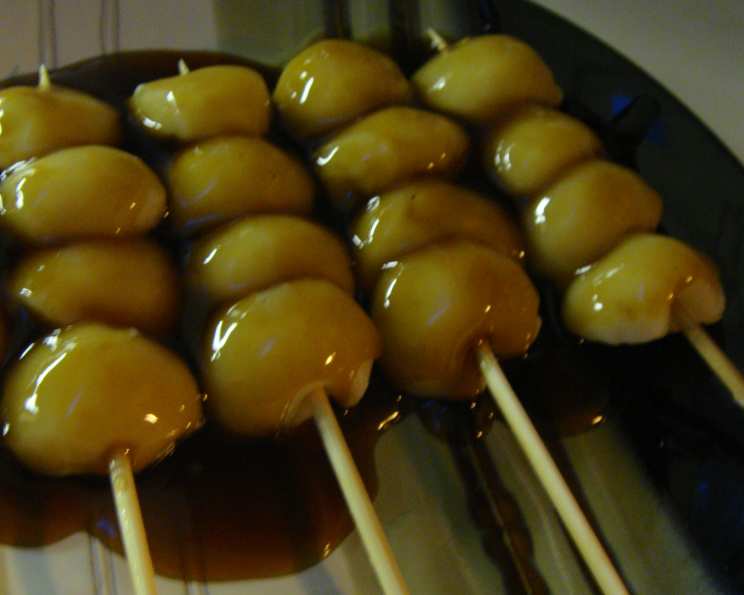
Kushi-dango: Sweet Skewered Dumplings
The first time I tasted kushi-dango, I was wandering through a small street festival in Kyoto. The sweet, slightly savory aroma wafted through the air, beckoning me towards a vendor with a small charcoal grill. The glistening dumplings, perched neatly on bamboo skewers and brushed with a dark, glossy sauce, looked almost too perfect to eat. One bite, and I was hooked! The chewy texture and the complex dance of sweet and savory flavors made an instant and lasting impression. Ever since then, I have been trying to recreate the magic of that first bite, and now, I want to share my perfected recipe with you.
Recipe Overview
- Prep Time: 20 minutes
- Cook Time: 20 minutes
- Total Time: 40 minutes
- Servings: 4
- Dietary Type: Vegetarian
Ingredients
- 1 cup glutinous-rice flour
- ¾ cup warm water
For Sauce
- ¾ – 1 cup water
- ½ cup sugar
- 2 tablespoons soy sauce
- 1 ½ tablespoons potato starch or 1 ½ tablespoons cornstarch
- 1 ½ tablespoons water
- Bamboo skewers
Equipment Needed
- Mixing Bowl
- Steamer
- Saucepan
- Small bowl or cup
- Grill or Broiler (optional)
Instructions
-
In a mixing bowl, combine the glutinous-rice flour and warm water.
-
Knead the mixture well until a smooth and pliable dough forms. If the dough is too dry, add a teaspoon of water at a time until it reaches the desired consistency. If it’s too sticky, add a little more glutinous rice flour.
-
Pinch off small pieces of dough and roll them into small, round dumplings. Aim for a size that’s easy to eat in one or two bites.
-
Place the dumplings in a steamer, ensuring they are not overcrowded. You may need to steam them in batches.
-
Steam the dumplings on high heat for 10 minutes, or until they are cooked through and have a slightly translucent appearance.
-
Remove the dumplings from the steamer and let them cool slightly. This will make them easier to handle.
-
Thread the dumplings onto the bamboo skewers, using 3-4 dumplings per skewer.
-
Prepare the sauce by mixing water, sugar, and soy sauce in a saucepan.
-
Place the saucepan over medium heat and bring the mixture to a simmer, stirring occasionally to dissolve the sugar.
-
In a separate small bowl or cup, mix the potato starch (or cornstarch) with the 1 ½ tablespoons of water to create a slurry. This will prevent lumps from forming in the sauce.
-
Once the sauce in the saucepan is simmering, add the starch slurry and mix quickly and continuously to prevent lumps. The sauce will thicken rapidly.
-
Continue to cook the sauce for about 1-2 minutes, or until it reaches a smooth and glossy consistency. Remove from heat.
-
This step is optional, but it adds a lovely char and slightly smoky flavor. Lightly grill the skewered dumplings over a low heat, or under a broiler, turning frequently to prevent burning. Be careful, as the sugars in the dumplings can burn quickly. If you don’t have a grill or broiler, you can skip this step.
-
Brush the dumplings generously with the sauce, ensuring they are well coated. Serve immediately.
Expert Tips & Tricks
- Dough Consistency: Achieving the right dough consistency is key. The dough should be smooth, pliable, and slightly sticky. If it’s too dry, the dumplings will be hard and crack. If it’s too wet, they will be difficult to shape. Add water or flour a little at a time until you get the right texture.
- Steaming: Do not overcrowd the steamer, as this can prevent the dumplings from cooking evenly.
- Sauce Thickness: If the sauce is too thin, add a little more starch slurry (mix a small amount of starch with water) and cook for another minute or two. If it’s too thick, add a little water to thin it out.
- Grilling (Optional): If grilling, use a low heat and watch the dumplings carefully to prevent burning. You can also use a kitchen torch to lightly caramelize the sauce.
- Make-Ahead: You can prepare the dumplings ahead of time and store them in the refrigerator until ready to steam. The sauce can also be made in advance and reheated when needed.
Serving & Storage Suggestions
Kushi-dango is best served warm, right after the sauce is brushed on. Garnish with a sprinkle of sesame seeds for added flavor and visual appeal.
- Room Temperature: Kushi-dango is best enjoyed fresh. At room temperature, it is best to consume it within a few hours, as the texture can become sticky.
- Refrigerator: Leftover kushi-dango can be stored in an airtight container in the refrigerator for up to 2 days.
- Reheating: To reheat, gently steam the dumplings for a few minutes until warmed through. You can also microwave them for a short time, but be careful not to overcook them, as this can make them tough. Reheat the sauce separately in a saucepan or microwave, adding a little water if it has thickened too much. Re-brush the dumplings with the sauce before serving.
Nutritional Information
| Nutrient | Amount per Serving | % Daily Value |
|---|---|---|
| Calories | 260 kcal | 13% |
| Total Fat | 0.6g | 1% |
| Saturated Fat | 0.2g | 1% |
| Cholesterol | 0mg | 0% |
| Sodium | 508mg | 21% |
| Total Carbohydrate | 60g | 20% |
| Dietary Fiber | 1.2g | 4% |
| Sugars | 25g | 50% |
| Protein | 3.5g | 7% |
Note: Nutritional information is an estimate and can vary based on specific ingredients and portion sizes.
Variations & Substitutions
- Gluten-Free: Ensure your soy sauce is gluten-free (tamari is a good option). The glutinous rice flour is naturally gluten-free.
- Sweetness Level: Adjust the amount of sugar in the sauce to your preference. You can also use brown sugar or maple syrup for a different flavor profile.
- Flavor Enhancements: Add a pinch of grated ginger or a dash of mirin to the sauce for extra depth of flavor.
- Regional Variations: In some regions of Japan, kushi-dango is coated with kinako (roasted soybean flour) instead of a sweet soy sauce glaze.
- Savory Version: For a savory twist, omit the sugar from the sauce and add a bit of dashi (Japanese soup stock) for umami flavor.
FAQs (Frequently Asked Questions)
Q: Can I use regular rice flour instead of glutinous rice flour?
A: No, glutinous rice flour is essential for the chewy texture of kushi-dango. Regular rice flour will result in a drier, less elastic dumpling.
Q: How do I prevent the dumplings from sticking together while steaming?
A: Make sure the steamer basket is well greased or lined with parchment paper. Also, don’t overcrowd the steamer, and make sure the dumplings aren’t touching each other.
Q: Can I freeze kushi-dango?
A: It is not recommended to freeze kushi-dango after it has been cooked as the texture can change significantly upon thawing. The dumplings may become gummy or lose their elasticity.
Q: What if I don’t have bamboo skewers?
A: You can use wooden skewers as a substitute, but bamboo skewers are traditionally used and impart a slight woody flavor.
Q: Can I make the sauce spicier?
A: Yes, you can add a pinch of red pepper flakes or a dash of chili oil to the sauce for a spicy kick.
Final Thoughts
Kushi-dango is more than just a sweet treat; it’s a taste of Japanese culture and a celebration of simple ingredients transformed into something special. Don’t be intimidated by the unfamiliar ingredients or techniques. This recipe is easy to follow, and the results are well worth the effort. Gather your ingredients, roll up your sleeves, and embark on a culinary adventure. I encourage you to try this recipe and let me know how it turns out. Perhaps serve it with a cup of green tea for an authentic Japanese experience!