
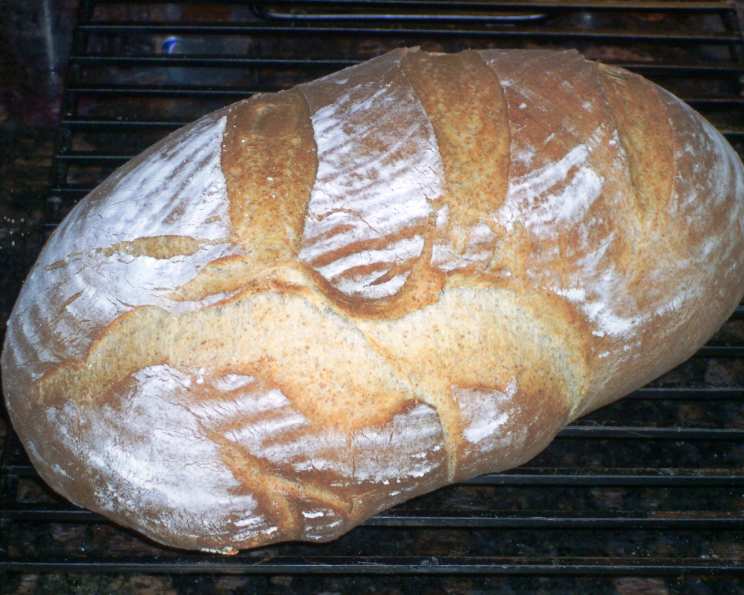
Light Wheat, Vienna Style Bread: A Baker’s Journey
The aroma of baking bread, especially a slightly sweet, wheaty loaf, always transports me back to my grandmother’s kitchen. She wasn’t a fancy baker, but she had a knack for making simple, honest bread that filled the house with warmth and a sense of home. Her “everyday bread,” as she called it, wasn’t exactly Vienna bread, but it shared that same comforting quality—a golden crust, a soft crumb, and a flavor that begged to be slathered with butter and jam. That memory is what inspires me to bake, and to share this particular take on Vienna bread, which captures a similar essence.
Recipe Overview
- Prep Time: 30 minutes
- Cook Time: 35 minutes
- Total Time: 11 hours 5 minutes (including overnight sponge)
- Servings: 15
- Yield: 1 large oblong loaf
- Dietary Type: Vegetarian
Ingredients
For the Sponge:
- 9 ounces water
- 3 tablespoons butter (in pieces, softened)
- 2 tablespoons sugar
- 1 cup whole wheat flour
- 1/4 cup bread flour
- 1/2 teaspoon yeast (instant or machine yeast)
For the Dough:
- 1 3/4 cups bread flour
- 3 tablespoons powdered milk (optional)
- 1 tablespoon gluten (optional)
- 1 1/2 teaspoons salt (table salt)
- 1 1/2 teaspoons yeast (instant or machine yeast)
Equipment Needed
- Large mixing bowl
- Plastic wrap
- Clean kitchen cloth
- Dough scraper or spatula
- Dough hook (optional, if using a stand mixer)
- Oiled bowl
- Large measuring cup or straight-sided container
- Baking paper or parchment paper
- Sharp knife or razor blade
- Baking stone or baking sheet
- Empty pan for water
- Cooling rack
Instructions
- Prepare the Sponge: The night before you plan to bake, in a large bowl, combine all the sponge ingredients: water, softened butter, sugar, whole wheat flour, bread flour, and yeast.
- Mix the Sponge: Mix these ingredients thoroughly until a smooth batter forms.
- Rest the Sponge: Cover the bowl tightly with plastic wrap, then drape a clean kitchen cloth over it. Let the sponge sit at room temperature overnight, or for up to 12 hours. This allows the yeast to work its magic and develop the complex flavors that are characteristic of Vienna bread.
- Combine Sponge and Dough Ingredients: The next day, add all of the dough ingredients (remaining bread flour, powdered milk (if using), gluten (if using), salt, and yeast) to the bowl containing the overnight sponge.
- Initial Mixing: Mix the sponge and dough ingredients until everything is well combined. The dough will likely be shaggy at this point.
- First Knead: Knead the dough by hand on a lightly floured surface, or using a dough hook in a stand mixer, until all the ingredients are fully incorporated. Continue kneading for about 5 minutes more.
- Rest Again: Cover the dough with a clean cloth and let it rest for 15 to 20 minutes. This allows the gluten to relax, making it easier to shape later.
- Second Knead: After the rest, knead the dough again for another 5 to 7 minutes, until it becomes smooth and elastic.
- First Rise: Move the dough to a lightly oiled bowl, turning to coat. Cover the bowl tightly and let the dough rise until it has doubled in volume. Using a straight-sided, clean container or a large graduated measuring cup makes it easy to monitor the rise. This process will be best at room temperature but can take 1 1/2 hours or more. To speed up the rise, you can proof it in a warm oven or microwave using hot water as the heat source, which can take about 45 minutes at 90°F.
- Shape the Loaf: Once the dough has doubled, gently deflate it. On a lightly floured surface, stretch and dimple the dough to form a rectangle. Then, roll the rectangle tightly back toward yourself, forming an oblong shape.
- Second Rise: Place the shaped loaf on baking paper or parchment paper to rise. Alternatively, you can use an oblong brotform (a specialized bread-rising basket). Cover the loaf loosely with plastic wrap that has been sprayed with oil to prevent sticking.
- Preheat Oven: While the loaf is rising for the second time, preheat your oven to 375°F (190°C). Place a baking stone or baking sheet in the oven to preheat as well. Also, put an empty pan in the bottom of the oven to hold water for steam.
- Score the Loaf: When the loaf has doubled in volume again, use a sharp knife or razor blade to score the top diagonally in several places. This allows the bread to expand properly in the oven.
- Bake with Steam: Carefully transfer the loaf (on its baking paper) to the preheated baking stone or baking sheet in the oven. Immediately pour 1 cup of hot water into the empty pan to generate steam. The steam helps create a beautiful, crusty exterior.
- Bake to Perfection: Bake the bread for 35 minutes, or until it reaches an internal temperature of 180 to 210°F (82-99°C). Use a reliable thermometer to check the temperature.
- Cool: Once baked, remove the bread from the oven and let it cool completely on a wire rack before slicing and serving.
Expert Tips & Tricks
- Sponge Temperature: The temperature of the sponge is crucial. If your kitchen is particularly warm, you may want to reduce the amount of yeast in the sponge slightly to prevent it from over-proofing.
- Gluten Boost: The addition of gluten is optional, but it can help improve the structure and chewiness of the bread, especially if you’re using a lower-protein flour.
- Steam is Key: Don’t skip the steam! It’s essential for achieving that characteristic Vienna bread crust. If you don’t have an extra pan, you can also spray the inside of the oven with water several times during the first 10 minutes of baking.
- Bread Machine Adaptation: This recipe can be adapted for a bread machine. Simply combine the sponge ingredients on the dough cycle, unplug the machine, and close the lid to allow the sponge to sit overnight. The next day, either cook the dough on a basic cycle or remove it, hand-form the loaf, and bake it in the oven as described above.
Serving & Storage Suggestions
Vienna bread is delicious served warm with butter, jam, or your favorite spread. It also makes excellent toast and is perfect for sandwiches.
To store the bread, wrap it tightly in plastic wrap or place it in a bread bag at room temperature. It will stay fresh for 2-3 days. For longer storage, you can freeze the bread for up to 2 months. Thaw it completely before slicing and serving. To refresh the crust, you can briefly reheat the bread in a 350°F (175°C) oven for a few minutes.
Nutritional Information
| Nutrient | Amount per Serving | % Daily Value |
|---|---|---|
| Calories | 116.2 kcal | N/A |
| Calories from Fat | N/A | 20% |
| Total Fat | 2.6 g | 4% |
| Saturated Fat | 1.5 g | 7% |
| Cholesterol | 6.1 mg | 2% |
| Sodium | 250.2 mg | 10% |
| Total Carbohydrate | 20.4 g | 6% |
| Dietary Fiber | 1.5 g | 6% |
| Sugars | 1.8 g | N/A |
| Protein | 3 g | 6% |
Variations & Substitutions
- Whole Wheat Vienna Bread: Increase the amount of whole wheat flour for a heartier loaf. You may need to adjust the amount of water slightly.
- Seeded Vienna Bread: Before the second rise, brush the loaf with an egg wash and sprinkle with sesame seeds, poppy seeds, or sunflower seeds.
- Herb-Infused Vienna Bread: Add 1-2 tablespoons of chopped fresh herbs, such as rosemary, thyme, or oregano, to the dough for a savory twist.
- Sweet Vienna Bread: Increase the amount of sugar to 4 tablespoons and add a pinch of cinnamon for a sweeter loaf, perfect for breakfast.
FAQs (Frequently Asked Questions)
Q: Why is a sponge used in this recipe?
A: The sponge, a pre-ferment, allows the yeast to develop a more complex flavor and also contributes to a lighter, more airy texture in the final bread.
Q: Can I skip the overnight sponge?
A: While you can, the overnight sponge significantly enhances the flavor. A shorter sponge (4 hours) is a compromise, but the best results come from the full overnight fermentation.
Q: What if I don’t have a baking stone?
A: A baking stone helps create a crispier crust, but a regular baking sheet will work just fine. Just preheat the baking sheet along with the oven.
Q: Can I use all-purpose flour instead of bread flour?
A: Bread flour has a higher protein content, which results in a chewier texture. All-purpose flour will work, but the bread may be slightly softer.
Q: How do I know when the bread is done?
A: The best way to determine doneness is to use a thermometer. The internal temperature should be between 180 and 210°F (82-99°C). The crust should also be golden brown.
Final Thoughts
Vienna bread, with its simple ingredients and elegant shape, is a testament to the power of traditional baking. The overnight sponge transforms humble flour, water, and yeast into a flavorful, satisfying loaf that’s perfect for any occasion. So, gather your ingredients, embrace the process, and enjoy the rewarding experience of baking your own delicious Light Wheat, Vienna Style Bread. Don’t be afraid to experiment with variations, and please, share your baking successes (and maybe even your learning curves!) with fellow bakers. After all, the best part of baking is sharing the love, one slice at a time.