
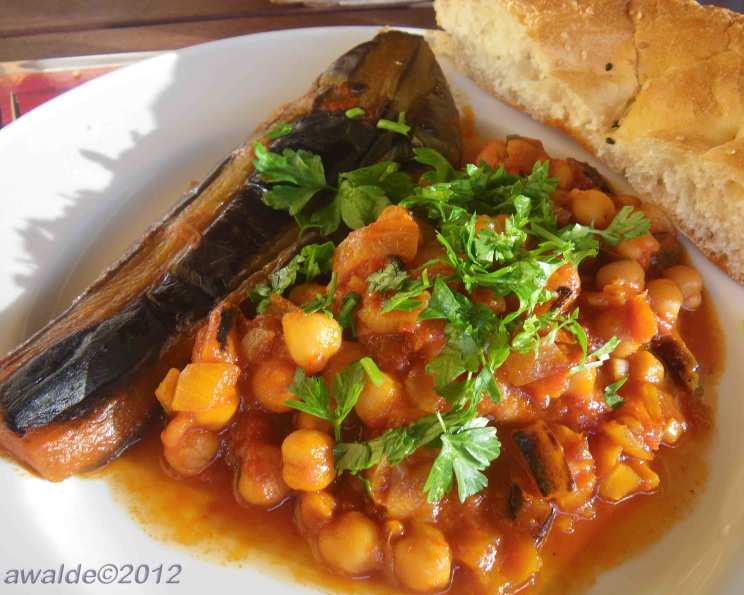
Maghmour: A Lebanese Eggplant Masterpiece (Vegan)
The scent of my grandmother’s kitchen always transported me back to sun-drenched afternoons in Beirut. Among the tapestry of familiar aromas, one stood out: eggplant simmering in rich tomato sauce, a dish she called Maghmour. It wasn’t just a meal; it was a symbol of home, family, and the simple joys of Lebanese cooking. Every bite was a warm hug, a taste of tradition passed down through generations. Now, I’m thrilled to share this vegan version of her beloved recipe, allowing everyone to experience the magic of Maghmour.
Recipe Overview
- Prep Time: 20 minutes
- Cook Time: 45 minutes
- Total Time: 1 hour 5 minutes
- Servings: 6
- Yield: 1 large skillet
- Dietary Type: Vegan
Ingredients
- 6 small eggplants (slender Japanese-style) or 3 larger eggplants, halved
- 2 onions, diced
- 2 garlic cloves, minced
- 1 1/2 cups cooked chickpeas
- 4 cups good quality canned tomatoes
- Extra virgin olive oil
- Sea salt
- Fresh ground black pepper
- Chopped flat leaf parsley, for serving
Equipment Needed
- Large wide skillet (9-inch cast iron or ceramic pan recommended)
- Knife
- Cutting board
- Paper towels
- Lid for skillet
Instructions
-
Begin by preparing the eggplant. Trim the tops and bottoms off. Using a vegetable peeler, peel the eggplants in alternating strips, leaving strips of the dark skin. This not only adds visual appeal but also helps the eggplant retain some texture.
-
Select a large, wide skillet, such as a 9-inch cast iron or ceramic pan. This will ensure even cooking. Pour a generous amount of extra virgin olive oil into the skillet – approximately ¼ cup – and heat over medium heat.
-
Add the eggplants to the skillet. Cook over medium heat until browned in spots but not entirely cooked through. You’re aiming for a slightly softened texture, not fully cooked. Work in batches if necessary, ensuring not to overcrowd the pan. This will allow the eggplant to properly brown. Remove the browned eggplant from the skillet and place on paper towels to drain excess oil.
-
Take two of the eggplants (or eggplant halves, depending on the size of eggplants used) and dice them into small pieces. This diced eggplant will contribute to the flavorful sauce.
-
Add more extra virgin olive oil to the skillet, ensuring there is about a ¼ cup in the pan. Add the diced onions and garlic to the skillet and sauté until softened and fragrant, about 5-7 minutes.
-
Add the cooked chickpeas to the skillet with the onions and garlic, and sauté for another 2-3 minutes. Stir in the diced eggplant that you set aside earlier.
-
Pour in the canned tomatoes. Season generously with sea salt and freshly ground black pepper. The amount of seasoning will depend on the quality of your tomatoes, so taste and adjust accordingly. Bring the sauce to a simmer.
-
Carefully nestle the remaining four whole eggplants (or eggplant halves) into the skillet, arranging them evenly within the tomato sauce.
-
Cover the skillet with a tight-fitting lid. This helps to steam the eggplant and meld all the flavors together. Cook for 25 minutes, flipping the eggplants once halfway through the cooking time to ensure even cooking on all sides.
-
After 25 minutes, test the eggplants for doneness. They should be tender and easily pierced with a fork. If the tomatoes begin to dry out during cooking, add a little water or vegetable broth to maintain a saucy consistency.
-
Continue cooking until the eggplant is completely tender. The total cooking time may vary depending on the size and type of eggplant used.
-
Once the eggplant is tender, remove from heat. Sprinkle generously with chopped flat-leaf parsley before serving.
Expert Tips & Tricks
- Eggplant Salting: While this recipe doesn’t call for it, if you have the time, salting the eggplant before cooking can help draw out excess moisture and reduce bitterness. Simply slice or dice the eggplant, sprinkle with salt, and let it sit for 30 minutes before rinsing and patting dry.
- Tomato Quality: The quality of your canned tomatoes significantly impacts the final flavor. Opt for high-quality, whole peeled tomatoes for the best results. You can crush them by hand or use an immersion blender to achieve your desired sauce consistency.
- Spice it Up: For a little extra kick, add a pinch of red pepper flakes to the sauce.
- Make Ahead: Maghmour is even more delicious the next day, as the flavors have more time to meld. You can prepare the dish a day in advance and store it in the refrigerator.
Serving & Storage Suggestions
Serve Maghmour warm, garnished with a generous sprinkle of fresh chopped parsley. It’s delicious on its own or served with crusty bread for dipping into the flavorful tomato sauce. It’s also a great accompaniment to rice or quinoa.
Leftovers can be stored in an airtight container in the refrigerator for up to 3-4 days. To reheat, gently warm on the stovetop over low heat, or in the microwave. If the sauce has thickened too much, add a splash of water or vegetable broth.
While freezing is not recommended due to the texture of the eggplant changing, it is possible. Freeze in an airtight container for up to 2 months. Thaw completely before reheating.
Nutritional Information
| Nutrient | Amount per Serving | % Daily Value |
|---|---|---|
| Calories | 246 kcal | N/A |
| Calories from Fat | 153 kcal | N/A |
| Total Fat | 17 g | 7% |
| Saturated Fat | 0.3 g | 1% |
| Cholesterol | 0 mg | 0% |
| Sodium | 421 mg | 17% |
| Total Carbohydrate | 55 g | 18% |
| Dietary Fiber | 24 g | 94% |
| Sugars | 18 g | 73% |
| Protein | 10 g | 20% |
Note: Nutritional information is an estimate and may vary based on specific ingredients and preparation methods.
Variations & Substitutions
- Gluten-Free: This recipe is naturally gluten-free!
- Herbs: Experiment with different herbs! Fresh mint or basil would be delicious additions.
- Other Vegetables: Feel free to add other vegetables like bell peppers or zucchini to the sauce for added flavor and nutrients.
- Spices: Cumin, coriander, or smoked paprika could add depth to the dish.
FAQs (Frequently Asked Questions)
Q: Can I use dried chickpeas instead of canned?
A: Yes, you can use dried chickpeas. Just remember to soak them overnight and cook them until tender before adding them to the recipe. You’ll need about 1/2 cup of dried chickpeas to yield 1 1/2 cups cooked.
Q: What if I don’t have a cast iron skillet?
A: Any large, wide skillet with a lid will work. A ceramic or stainless-steel pan is a great alternative.
Q: Can I make this recipe without peeling the eggplant in strips?
A: Absolutely! You can peel the eggplant completely or leave the skin on entirely. Leaving the skin on will add more fiber to the dish.
Q: How do I know when the eggplant is cooked through?
A: The eggplant is done when it is tender and easily pierced with a fork. It should have a slightly soft and creamy texture.
Q: Can I add lentils to this dish?
A: Yes, adding cooked lentils would be a great way to increase the protein and fiber content of the dish. Add about 1 cup of cooked lentils along with the chickpeas.
Final Thoughts
Maghmour is more than just a recipe; it’s a culinary journey to the heart of Lebanese flavors. From the earthy sweetness of eggplant to the vibrant tang of tomatoes, every ingredient plays a crucial role in creating this comforting and satisfying dish. I encourage you to try this recipe, embrace the simplicity of its ingredients, and share the warmth of Maghmour with your loved ones. And, most importantly, don’t hesitate to make it your own – adjust the seasonings, add your favorite vegetables, and create a version that truly reflects your personal taste. I’d love to hear about your experience and any variations you try! Sahtein! (Bon appétit!)