
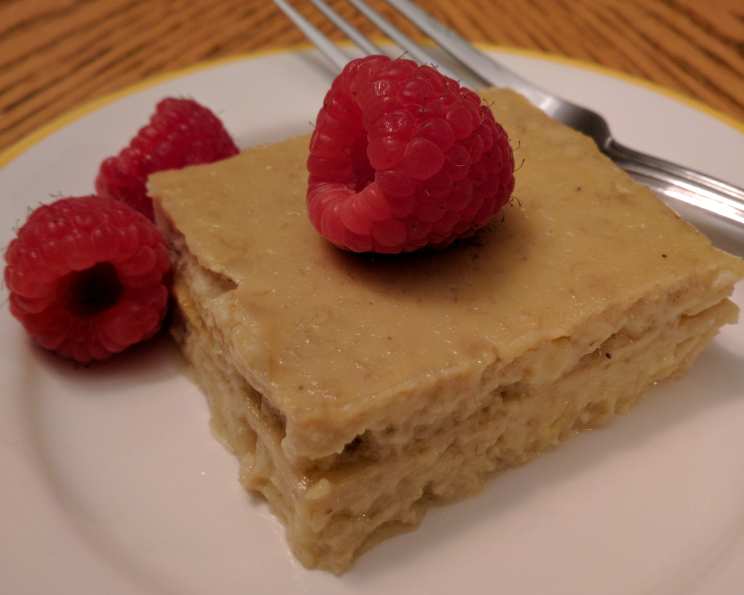
Malagasy Cake: A Taste of Madagascar
The scent of vanilla always takes me back to a small, bustling market in Antananarivo. The air was thick with the aroma of spices, tropical fruits, and something subtly sweet that I couldn’t quite place. A local woman, noticing my curiosity, offered me a slice of warm, golden cake from a tin. It was unlike anything I’d ever tasted – a creamy, comforting blend of banana, vanilla, and a hint of spice that perfectly captured the warmth and vibrancy of Madagascar. This Malagasy Cake, or kobakoba akondro, is my attempt to recreate that unforgettable experience, a taste of adventure baked into every bite.
Recipe Overview
- Prep Time: 15 minutes
- Cook Time: 15 minutes
- Total Time: 30 minutes
- Servings: 4
- Dietary Type: Not specified (contains dairy and eggs)
Ingredients
- 2 cups milk
- 1 vanilla pod
- 4 tablespoons granulated sugar
- 1 pinch nutmeg, grated
- 1 pinch clove, crushed
- 5 tablespoons tapioca
- 2 tablespoons cream
- 4 very ripe bananas
- 1/2 ounce (1 tablespoon) butter
- 4 eggs
Equipment Needed
- Saucepan
- Wooden spoon
- Fork
- Ovenproof round mold
- Oven
Instructions
- In a saucepan, combine the milk, vanilla pod, granulated sugar, grated nutmeg, and crushed clove. Bring the mixture to a boil over medium heat.
- Once boiling, remove the saucepan from the heat. Gradually whisk in the tapioca to prevent lumps from forming.
- Return the saucepan to low heat and cook for 10 minutes, stirring frequently with a wooden spoon to prevent sticking and ensure the tapioca thickens the mixture.
- Preheat your oven to 350°F (175°C). This temperature should provide even baking without burning the top of the cake.
- Remove the saucepan from the heat again. Discard the vanilla pod. Stir in the cream.
- In a separate bowl, mash the very ripe bananas thoroughly with a fork until they are almost a puree.
- Incorporate the mashed bananas into the tapioca mixture, stirring well to combine.
- Butter an ovenproof round mold generously with the butter. This will prevent the cake from sticking and help it release easily after baking.
- Incorporate the eggs one at a time into the banana-tapioca mixture, mixing well after each addition to ensure they are fully incorporated. The mixture should be smooth and well combined.
- Pour the mixture into the buttered ovenproof round mold.
- Place the mold in the preheated oven and bake for 15 minutes. The cake is ready when it’s lightly golden on top and set around the edges, but still slightly soft in the center. A toothpick inserted into the center may come out with moist crumbs attached.
- Remove the cake from the oven and let it cool slightly before serving.
Expert Tips & Tricks
- Vanilla Infusion: For a more intense vanilla flavor, slit the vanilla pod lengthwise and scrape out the seeds before adding it to the milk. Add both the pod and seeds to the milk, then remove the pod after infusing.
- Banana Ripeness: The riper the bananas, the sweeter and more flavorful the cake will be. Overripe bananas with brown spots are ideal.
- Preventing Lumps: Whisk the tapioca thoroughly into the cold milk before heating to prevent lumps from forming. If lumps do occur, try using an immersion blender to smooth the mixture.
- Oven Calibration: Ovens can vary in temperature. Use an oven thermometer to ensure accurate baking temperature. If your cake is browning too quickly, lower the temperature slightly or cover the top loosely with foil.
- Even Baking: Rotate the cake halfway through baking to ensure even browning.
Serving & Storage Suggestions
Malagasy Cake is best served warm or tepid, straight from the dish it was baked in. Its rustic presentation adds to its charm. You can garnish it with a sprinkle of powdered sugar or a dollop of whipped cream for an extra touch of indulgence.
Leftovers can be stored in the refrigerator in an airtight container for up to 3 days. Reheat gently in the microwave or oven before serving. The texture may change slightly upon refrigeration, becoming a bit firmer.
This cake is not ideal for freezing, as the tapioca and bananas can become watery upon thawing.
Nutritional Information
| Nutrient | Amount per Serving | % Daily Value |
|---|---|---|
| Calories | 393 kcal | Not specified |
| Total Fat | 14.8 g | 22% |
| Saturated Fat | 7.8 g | 38% |
| Cholesterol | 219 mg | 73% |
| Sodium | 160.1 mg | 6% |
| Total Carbohydrate | 56.4 g | 18% |
| Dietary Fiber | 3.2 g | 12% |
| Sugars | 27.6 g | Not specified |
| Protein | 11.8 g | 23% |
Note: Nutritional information is an estimate and may vary based on specific ingredients and serving sizes.
Variations & Substitutions
- Dairy-Free: Substitute the milk with unsweetened almond milk or coconut milk. Use a dairy-free cream alternative.
- Spice Variations: Experiment with different spices, such as cardamom, ginger, or cinnamon, to create unique flavor profiles.
- Fruit Additions: Add other tropical fruits like mango or pineapple to the banana mixture for added flavor and texture.
- Sweetener Options: Replace granulated sugar with honey or maple syrup for a natural sweetener.
- Citrus Zest: Add a teaspoon of lemon or orange zest to brighten the flavor.
FAQs (Frequently Asked Questions)
Q: Can I use a different type of starch instead of tapioca?
A: Yes, you can substitute tapioca with cornstarch or arrowroot starch. Use the same amount as the tapioca called for in the recipe.
Q: How do I know when the cake is done baking?
A: The cake is done when it’s lightly golden on top and set around the edges, but still slightly soft in the center. A toothpick inserted into the center may come out with moist crumbs attached.
Q: Can I make this cake ahead of time?
A: While best served warm, you can bake the cake a few hours in advance and keep it at room temperature. Reheat gently before serving.
Q: Why is my cake watery?
A: This could be due to using bananas that weren’t ripe enough or not cooking the tapioca mixture long enough. Ensure your bananas are very ripe and that the tapioca mixture thickens properly before adding the bananas.
Q: Can I add nuts to this cake?
A: Absolutely! Chopped nuts like almonds or macadamia nuts would add a lovely textural contrast. Stir them into the batter before baking.
Final Thoughts
This Malagasy Cake is more than just a recipe; it’s a culinary journey to the heart of Madagascar. The simple yet captivating blend of flavors will transport you to a world of vibrant markets, lush landscapes, and warm hospitality. I encourage you to try this recipe and share the taste of Madagascar with your loved ones. Whether enjoyed as a comforting dessert or a delightful snack, this cake is sure to become a treasured favorite. Don’t hesitate to experiment with variations and let your creativity shine. Mazotoa homana! (Enjoy your meal!)