
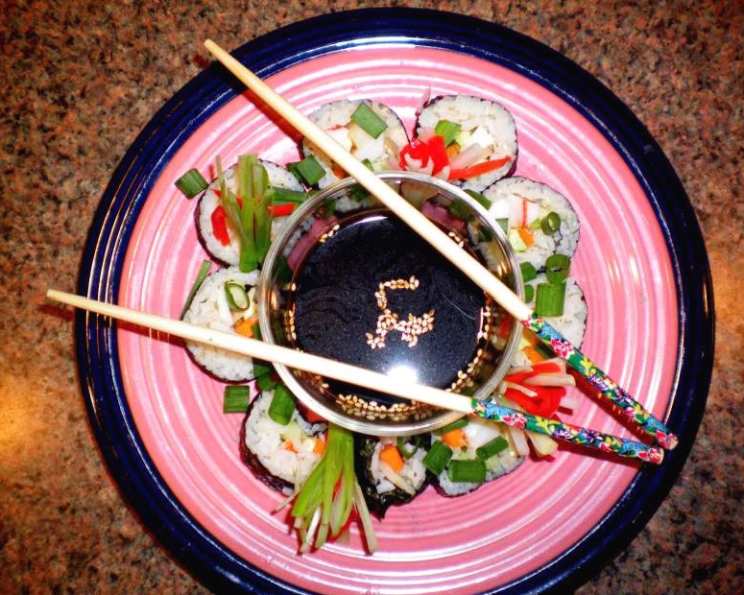
Max’s Hoisin and Vegetable Sushi Roll
The first time I ever attempted sushi, it was a disaster. A sticky, rice-covered disaster. My nori tore, my fillings spilled, and the resulting “roll” resembled something more like a lumpy, seaweed-clad burrito. But despite the comical outcome, the experience sparked a lifelong love for the art of sushi making, and a healthy respect for the simplicity and finesse it requires. Over the years, I’ve refined my technique, experimenting with different fillings and flavors, always striving for that perfect balance of texture and taste. And every time I prepare a new variation, I’m transported back to that messy but joyful first attempt, a reminder that even culinary mishaps can lead to delicious discoveries.
Recipe Overview
- Prep Time: 15 minutes
- Cook Time: 5 minutes (for rice)
- Total Time: 20 minutes
- Servings: 2
- Yield: 8-10 pieces
- Dietary Type: Vegan
Ingredients
- 1 sheet nori
- 1 cup sushi rice, cooked according to package directions and cooled to room temperature
- ½ teaspoon rice wine vinegar
- 1 teaspoon sesame seeds
- 1 small carrot, julienned
- ½ cucumber, julienned
- ½ avocado, sliced
- 5 slices water chestnuts
- 1 teaspoon hoisin sauce
Equipment Needed
- Sushi rolling mat (optional, but recommended)
- Sharp knife
- Cutting board
- Small bowl with water
Instructions
-
In a bowl, gently sprinkle the cooled sushi rice with rice wine vinegar and mix lightly to combine. This will add a subtle tang and help the rice stick together.
-
Prepare your work surface. If using a sushi rolling mat, place it on a clean surface.
-
Place the nori sheet, shiny side down, on the sushi rolling mat or directly on your clean work surface.
-
Moisten your fingers with water to prevent the rice from sticking. Take a handful of the seasoned sushi rice and gently spread it evenly over the nori sheet. Leave approximately 1 inch of the nori uncovered at the far end (this will act as the seal). The layer of rice should be thin and consistent, covering the entire surface except for that 1-inch strip.
-
Sprinkle the rice evenly with the sesame seeds.
-
Along the width of the rice-covered nori, at the end closest to you, spread a ½-inch wide line of hoisin sauce. This flavorful sauce will act as a delicious base for the vegetables.
-
Arrange the julienned carrots, cucumbers, sliced avocado, and water chestnuts in a neat row on top of the hoisin sauce. Ensure the vegetables are aligned end-to-end along the width of the nori sheet.
-
Moisten your fingers again with water. Lightly wet the exposed 1-inch strip of nori at the far end. This will act as a natural “glue” to seal the roll.
-
Using the sushi rolling mat (if using) or your hands, begin to tightly roll the sushi, starting from the end with the fillings. Lift the edge of the mat (or nori) and fold it over the fillings, pressing gently to secure. Continue rolling firmly and evenly until the entire roll is formed.
-
Once rolled, let the sushi roll sit for 5-10 minutes. This allows the nori to fully adhere and makes it easier to cut.
-
Use a sharp, serrated bread knife to slice the roll into 8-10 even sections. It is important to clean your knife between each slice with a wet cloth to prevent the rice from sticking and creating a mess.
-
Serve immediately with soy sauce, pickled ginger, and wasabi (optional).
Expert Tips & Tricks
- Rice is Key: The quality of your sushi rice will significantly impact the final product. Use short-grain sushi rice and follow the package instructions carefully. Properly cooked sushi rice should be sticky but not mushy.
- Water is Your Friend: Keep a small bowl of water nearby and frequently moisten your fingers. This prevents the rice from sticking to your hands and makes it easier to work with.
- Don’t Overfill: Resist the urge to overfill the sushi roll. Too many fillings will make it difficult to roll tightly and the roll will likely fall apart.
- Sharp Knife Matters: A dull knife will tear the nori and crush the sushi roll. A sharp, serrated knife is essential for clean, even slices.
- Hoisin Hack: For an extra layer of flavor, try adding a drizzle of sriracha to the hoisin sauce before spreading it on the rice.
Serving & Storage Suggestions
Serve Max’s Hoisin and Vegetable Sushi Roll immediately after slicing for the best texture and flavor. Arrange the slices on a plate with a small bowl of soy sauce, pickled ginger, and wasabi for a complete sushi experience.
Leftover sushi can be stored in an airtight container in the refrigerator for up to 24 hours. However, the texture and flavor will degrade over time, especially the rice, which can become hard and dry. It is not recommended to freeze sushi rolls, as the texture will be significantly altered upon thawing.
Nutritional Information
| Nutrient | Amount per Serving | % Daily Value |
|---|---|---|
| Calories | 540.8 kcal | N/A |
| Calories from Fat | 146 g | 27% |
| Total Fat | 16.2 g | 24% |
| Saturated Fat | 2.4 g | 12% |
| Cholesterol | 0.1 mg | 0% |
| Sodium | 60.7 mg | 2% |
| Total Carbohydrate | 91.3 g | 30% |
| Dietary Fiber | 10.4 g | 41% |
| Sugars | 4 g | N/A |
| Protein | 9.7 g | 19% |
Note: Nutritional information is an estimate and can vary based on specific ingredients and preparation methods.
Variations & Substitutions
- Gluten-Free: Ensure your hoisin sauce and soy sauce are gluten-free. Tamari is a great substitute for soy sauce.
- Spicy Kick: Add a few slices of pickled jalapeños or a dash of chili oil to the fillings for a spicy twist.
- Protein Boost: Add cooked tofu or edamame for a protein-rich variation.
- Seasonal Vegetables: Feel free to swap out the listed vegetables for other seasonal options like bell peppers, asparagus, or snap peas.
- Sweet and Savory: Incorporate mango or pineapple for a tropical twist.
FAQs (Frequently Asked Questions)
Q: Can I make this sushi roll ahead of time?
A: While it’s best served immediately, you can make the roll a few hours in advance. Wrap it tightly in plastic wrap and refrigerate. Slice just before serving to prevent the rice from drying out.
Q: What can I use if I don’t have sushi rice?
A: While sushi rice is ideal, you can use other short-grain rice varieties as a substitute. Ensure it’s cooked until sticky and seasoned with rice vinegar.
Q: Is a sushi rolling mat necessary?
A: While not essential, a sushi rolling mat makes the process much easier and helps you create a tighter, more uniform roll.
Q: How do I prevent the rice from sticking to the knife when slicing?
A: Moisten the knife with water between each slice. You can also lightly oil the blade for even better results.
Q: Can I use different sauces instead of hoisin sauce?
A: Yes, you can substitute with other sauces like peanut sauce, teriyaki sauce, or even a spicy mayo.
Final Thoughts
Max’s Hoisin and Vegetable Sushi Roll is a delightful and healthy meal that’s both fun to make and satisfying to eat. Don’t be intimidated by the process – with a little practice, you’ll be rolling like a pro in no time! Feel free to experiment with different fillings and sauces to create your own signature sushi roll. And most importantly, enjoy the process of creating something delicious and beautiful. I’d love to hear about your experience making this recipe and any creative variations you come up with. Perhaps pair it with a crisp cucumber salad and a chilled glass of sake for a truly authentic experience. Happy rolling!