
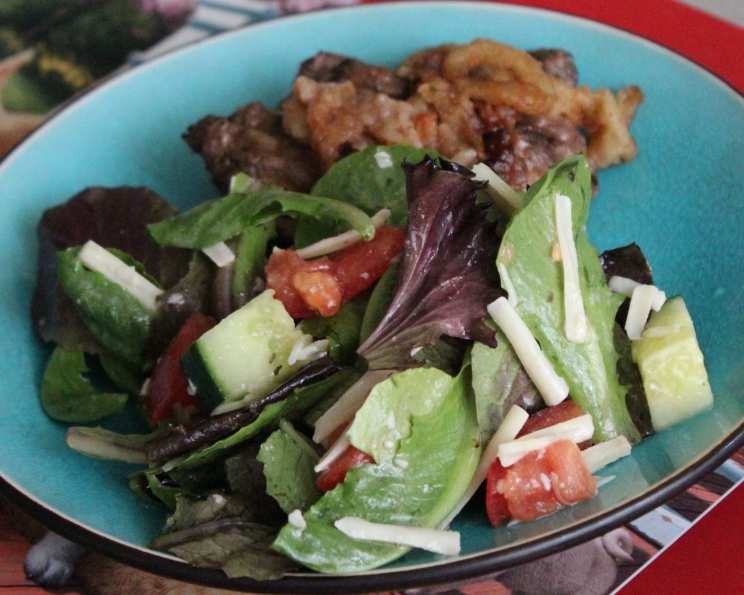
Mediterranean Salad With Homemade Dressing
The scent of lemon and herbs always transports me back to my grandmother’s sun-drenched kitchen in Cyprus. She had a small garden overflowing with fragrant thyme and oregano, and her salads were legendary. The simplest ingredients, tossed with love and a bright, zesty dressing, were transformed into something truly special. This recipe is my attempt to capture a little bit of that Mediterranean magic.
Recipe Overview
- Prep Time: 5 minutes
- Cook Time: 0 minutes
- Total Time: 5 minutes
- Servings: 1
- Yield: 1 serving
- Dietary Type: Gluten-Free
Ingredients
For the Dressing:
- 1 tablespoon olive oil
- 1 tablespoon fresh squeezed lemon juice
- 1 teaspoon onion powder
- ½ teaspoon salt
- 1 dash thyme
- 1 dash oregano
For the Salad:
- 2 cups lettuce
- ½ cup cherry tomatoes
- 1 small cucumber
- ¼ cup shredded cheddar cheese
Equipment Needed
- Small Bowl
- Whisk or Fork
- Cutting board
- Knife
Instructions
- First, prepare the dressing. In a small bowl, combine the olive oil, fresh squeezed lemon juice, onion powder, salt, thyme, and oregano.
- Use a whisk or a fork to mix the dressing ingredients together thoroughly until well combined. The mixture should emulsify slightly.
- Next, prepare the salad. Wash and dry the lettuce.
- Wash the cherry tomatoes and cut them in half.
- Wash the cucumber and slice it into thin rounds or half-moons. If using a larger cucumber with tough skin, you may wish to peel it first.
- In a salad bowl, toss together the lettuce, cherry tomatoes, and cucumber.
- Pour the prepared dressing over the salad.
- Gently toss the salad to ensure all the ingredients are evenly coated with the dressing.
- Finally, sprinkle the shredded cheddar cheese over the salad.
- Serve immediately.
Expert Tips & Tricks
- Freshness is key: Use the freshest ingredients possible for the best flavor. Opt for locally grown produce whenever available.
- Dressing variations: Experiment with different herbs and spices in the dressing. A pinch of red pepper flakes can add a touch of heat, or a clove of minced garlic can deepen the flavor.
- Emulsification: For a creamier dressing, whisk the ingredients vigorously or use an immersion blender to fully emulsify the oil and lemon juice.
- Lemon Zest: Add a touch of lemon zest to the dressing for extra citrusy brightness.
- Cheese Alternatives: Feel free to substitute the cheddar cheese with feta cheese for a more traditional Mediterranean flavor, or omit it entirely for a dairy-free version.
- Add Protein: Grilled chicken, chickpeas, or white beans can be added to transform this salad into a complete meal.
- Make-Ahead Tip: The dressing can be made ahead of time and stored in an airtight container in the refrigerator for up to 3 days.
Serving & Storage Suggestions
Serve the Mediterranean salad immediately after dressing it to prevent the lettuce from wilting. It pairs perfectly with grilled fish, chicken, or lamb. A side of crusty bread is also a great addition for soaking up the flavorful dressing.
Leftover salad is best consumed within a few hours, as the lettuce will become soggy over time. If you have leftover dressing, store it in an airtight container in the refrigerator for up to 3 days. The cheese will keep in the salad, but you may want to omit or add to each fresh serving. The salad itself is not suitable for freezing.
Nutritional Information
| Nutrient | Amount per Serving | % Daily Value |
|---|---|---|
| Calories | 250 kcal | 13% |
| Total Fat | 18g | 28% |
| Saturated Fat | 6g | 30% |
| Cholesterol | 20mg | 7% |
| Sodium | 400mg | 17% |
| Total Carbohydrate | 10g | 3% |
| Dietary Fiber | 2g | 8% |
| Sugars | 5g | |
| Protein | 8g | 16% |
Note: Nutritional information is an estimate and may vary based on specific ingredients and serving sizes.
Variations & Substitutions
- Vegan Option: Omit the shredded cheddar cheese or substitute with a vegan cheese alternative.
- Greek Salad Variation: Add Kalamata olives, feta cheese (if not vegan), and red onion for a classic Greek salad twist.
- Italian Salad Variation: Add sun-dried tomatoes, fresh mozzarella, and basil for an Italian-inspired salad.
- Grain Addition: Add cooked quinoa or couscous to the salad for extra heartiness and fiber.
- Seasonal Variations: Adapt the salad with seasonal vegetables. In the fall, add roasted butternut squash or apples. In the spring, add asparagus or peas.
- Herb Swaps: Experiment with different herbs in the dressing, such as dill, mint, or parsley.
FAQs (Frequently Asked Questions)
Q: Can I use dried herbs instead of fresh?
A: While fresh herbs are preferable for their vibrant flavor, dried herbs can be used in a pinch. Use about 1/3 the amount of dried herbs as you would fresh herbs, as dried herbs are more concentrated.
Q: Can I make this salad ahead of time?
A: It’s best to dress the salad right before serving to prevent the lettuce from wilting. You can prepare the dressing and chop the vegetables in advance and store them separately.
Q: What kind of lettuce is best for this salad?
A: Any type of lettuce will work, but crisp varieties like romaine or iceberg hold up well to the dressing.
Q: Can I use a different type of oil?
A: While olive oil is traditional for Mediterranean dressing, you can substitute with avocado oil or another neutral-flavored oil if preferred.
Q: How long does the dressing last?
A: The dressing will last for up to 3 days in the refrigerator in an airtight container. The lemon juice helps to preserve it.
Final Thoughts
This Mediterranean salad is a celebration of fresh, simple ingredients, bursting with bright flavors. Don’t be afraid to experiment with different vegetables, herbs, and cheeses to create your own unique version. I hope this recipe brings a little sunshine to your table! I encourage you to share your creations and feedback – and maybe even pair it with a crisp glass of rosé for the full Mediterranean experience.