
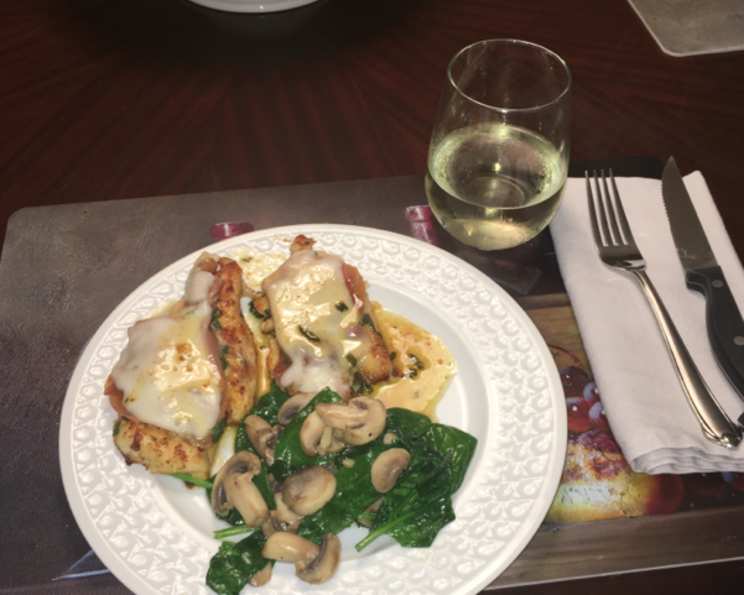
The Best Chicken Saltimbocca
The aroma alone transports me back to a tiny trattoria in Rome, hidden down a cobblestone alley. It was there, amidst the lively chatter and the clinking of glasses, that I first experienced the magic of Saltimbocca. The simplicity of the dish, the perfect marriage of savory prosciutto, creamy mozzarella, and fragrant sage against the tender chicken, was a revelation. I’ve spent years trying to recreate that experience, and I think I’ve finally cracked it with this recipe. It’s a taste of Italy, right in your own kitchen.
Recipe Overview
- Prep Time: 15 minutes
- Cook Time: 20 minutes
- Total Time: 35 minutes
- Servings: 4
- Dietary Type: Not Gluten-Free
Ingredients
- 4 (6 ounce) boneless skinless chicken breasts (lightly pounded to an even thickness)
- Salt & freshly ground black pepper, to taste
- 1/3 cup all-purpose flour
- 2 tablespoons unsalted butter
- 1 tablespoon extra virgin olive oil
- 2 teaspoons fresh sage, chopped or 1 teaspoon dried sage
- 4 sage leaves, for garnish (optional)
- 2 slices prosciutto, large slices not paper-thin, trimmed to fit chicken breasts
- 1/4 lb fresh mozzarella cheese, thinly sliced and trimmed to fit chicken breasts
- 3/4 cup dry white wine, such as Pinot Grigio-Sauvignon Blanc
Equipment Needed
- Large fry pan or sauté pan
- Plate
- Serving Platter
- Aluminum Foil
Instructions
- Begin by preparing the chicken breasts. Season them generously with salt and freshly ground black pepper to your liking.
- Place the flour on a plate. Dredge each chicken breast in the flour, ensuring it’s coated evenly. Shake off any excess flour – this will help the chicken brown beautifully. Set aside the floured chicken.
- In a large fry pan or sauté pan, over medium-high heat, add 1 tablespoon of the butter along with the olive oil. Allow the butter to melt completely and the oil to heat up until very hot. This is crucial for achieving a golden-brown sear.
- Carefully add the chicken breasts to the hot pan, ensuring they aren’t overcrowded. Cook the chicken until the undersides are golden brown, approximately 5 to 6 minutes. Avoid moving the chicken around too much during this time, as this will prevent proper browning.
- Once the first side is beautifully browned, turn the chicken breasts over. Continue to cook until the chicken feels firm when pressed in the centers, another 4 to 6 minutes. The internal temperature should reach 165°F (74°C).
- Reduce the heat to very low. Sprinkle the chopped fresh sage (or dried sage) evenly over the chicken breasts.
- Top each chicken breast with a slice of prosciutto, carefully trimming it to fit the size of the breast. Then, divide the mozzarella cheese slices evenly among the chicken breasts, ensuring each is adequately covered.
- Cover the pan tightly with a lid. This will trap the heat and allow the cheese to melt quickly and evenly. Cook until the cheese is completely melted and gooey, about 1 1/2 minutes.
- Carefully transfer the cooked chicken Saltimbocca to a serving platter. Tent the platter with aluminum foil, being careful not to let the foil touch the melted cheese, as it will stick.
- Increase the heat in the pan to high. Add the white wine to the pan and deglaze the pan, stirring vigorously to scrape up any browned bits that are stuck to the bottom. These browned bits are full of flavor and will add depth to the sauce.
- Boil the wine until it has reduced to about 1/4 cup, approximately 3 minutes. This concentrates the flavor and creates a lovely sauce consistency.
- Remove the pan from the heat. Whisk in the remaining 1 tablespoon of butter until it is fully incorporated and the sauce is smooth and glossy.
- Spoon an equal amount of the sauce over each chicken breast. Finally, garnish each serving with a fresh sage leaf for an elegant presentation (optional).
- Serve the Chicken Saltimbocca immediately while it’s hot and the cheese is still melted and stringy.
Expert Tips & Tricks
- Pounding the chicken: Ensure the chicken breasts are pounded to an even thickness. This guarantees even cooking and prevents some parts from being overcooked while others are still raw. Use a meat mallet and gently pound the chicken between two sheets of plastic wrap.
- Sage Substitution: While fresh sage is ideal, dried sage can be used. However, use only half the amount as dried sage has a more concentrated flavor.
- Prosciutto Quality: Opt for high-quality prosciutto with a good fat marbling for the best flavor and texture.
- Melting the Mozzarella: If your mozzarella isn’t melting quickly enough, you can place the pan under a preheated broiler for a minute or two, keeping a close eye to prevent burning.
- Sauce Consistency: If your sauce is too thin, you can thicken it slightly by adding a small amount of cornstarch slurry (1 teaspoon cornstarch mixed with 1 tablespoon cold water) to the pan while it’s boiling.
Serving & Storage Suggestions
Serve the Chicken Saltimbocca immediately after cooking for the best flavor and texture. It pairs beautifully with a simple side of roasted vegetables, such as asparagus or broccoli, or a light salad with a vinaigrette dressing. Consider serving it alongside a creamy polenta or a bowl of pasta tossed with olive oil and garlic.
Leftovers can be stored in an airtight container in the refrigerator for up to 3 days. To reheat, gently warm the chicken in a skillet over low heat or in a preheated oven at 350°F (175°C) until heated through. Avoid microwaving, as this can make the chicken rubbery and the cheese tough.
While freezing is not recommended due to the texture of the cheese and the potential for the chicken to dry out, it can be done. Ensure the chicken is completely cool before wrapping it tightly in plastic wrap and then placing it in a freezer-safe bag. Thaw it completely in the refrigerator before reheating.
Nutritional Information
| Nutrient | Amount per Serving | % Daily Value |
|---|---|---|
| Calories | 435 kcal | N/A |
| Calories from Fat | 180 kcal | 41% |
| Total Fat | 20 g | 30% |
| Saturated Fat | 8.8 g | 44% |
| Cholesterol | 146.6 mg | 48% |
| Sodium | 378.7 mg | 15% |
| Total Carbohydrate | 9.9 g | 3% |
| Dietary Fiber | 0.4 g | 1% |
| Sugars | 0.8 g | N/A |
| Protein | 43.6 g | 87% |
Note: Nutritional information is an estimate and may vary based on specific ingredients and portion sizes.
Variations & Substitutions
- Gluten-Free: Substitute the all-purpose flour with a gluten-free all-purpose flour blend for a gluten-free version. Ensure the blend contains xanthan gum for proper binding.
- Vegetarian (Sort Of): While saltimbocca translates to “jumps in your mouth”, and traditionally contains meat, if you are looking for a chicken substitute you could use thick slices of grilled halloumi cheese, marinated in lemon juice and herbs, for a vegetarian-ish alternative. Use the same toppings and sauce as with the chicken.
- Cheese Variations: If you’re not a fan of mozzarella, you can substitute it with provolone or fontina cheese. These cheeses offer a similar creamy texture and melt beautifully.
- Herb Variations: While sage is the traditional herb, you can experiment with other herbs such as rosemary or thyme for a different flavor profile.
FAQs (Frequently Asked Questions):
Q: Can I make this ahead of time?
A: While it’s best served immediately, you can prep the ingredients in advance. Pound the chicken, slice the cheese, and chop the sage ahead of time. Assemble just before cooking.
Q: What is the best white wine to use?
A: A dry white wine like Pinot Grigio or Sauvignon Blanc works best. Avoid wines that are too sweet or oaky, as they can overpower the other flavors.
Q: How do I prevent the prosciutto from becoming too salty?
A: Opt for a high-quality prosciutto that is not overly salty. Also, avoid adding too much salt to the chicken initially, as the prosciutto will add saltiness to the dish.
Q: Can I use dried sage instead of fresh sage?
A: Yes, but use only half the amount, as dried sage has a more concentrated flavor. 1 teaspoon of dried sage will be sufficient.
Q: How do I know when the chicken is cooked through?
A: The chicken is cooked through when it feels firm to the touch and the internal temperature reaches 165°F (74°C). Use a meat thermometer to ensure accuracy.
Final Thoughts
I sincerely hope you will give this Chicken Saltimbocca recipe a try. It’s more than just a dish; it’s an experience, a little piece of Italy that you can create in your own kitchen. Don’t be afraid to experiment with variations and make it your own. Once you master this classic, you’ll find yourself craving it time and again. And remember, cooking is all about sharing, so gather your loved ones, pour a glass of wine, and enjoy the fruits (or rather, the chicken!) of your labor. Buon appetito!