
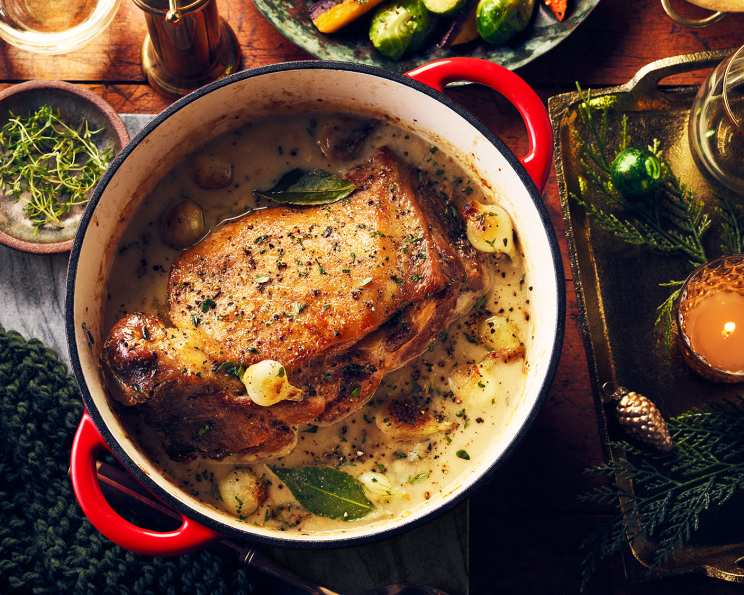
The Silkiest, Most Tender Pork Shoulder You’ll Ever Make: Milk-Braised Perfection
I remember the first time I tasted pork shoulder braised in milk. I was a young cook, working a busy Sunday brunch service. The aroma alone, a comforting blend of sweet milk, savory pork, and herbs, pulled me in. But it was the first bite that truly captivated me. The pork, impossibly tender, practically melted on my tongue. The sauce, rich and slightly sweet, was the perfect counterpoint. It was a revelation that transformed my understanding of braising forever, and I’ve been chasing that same perfect bite ever since. This recipe is the closest I’ve come, and I’m thrilled to share it with you.
Recipe Overview
- Prep Time: 20 minutes
- Cook Time: 1 hour 55 minutes
- Total Time: 2 hours 15 minutes
- Servings: 8
- Dietary Type: Not Gluten-Free
Ingredients
- 15 white pearl onions
- 1 kg (approximately 2.2 lbs) boneless pork shoulder
- 1 teaspoon salt
- 1 teaspoon fresh ground black pepper
- 2 tablespoons pure first-pressed canola oil
- 2 garlic cloves, peeled
- 2 bay leaves
- 2 sprigs fresh thyme
- 1 small onion, thinly sliced
- ½ cup dry vermouth
- 2 cups homogenized milk
- 1 tablespoon Dijon mustard (PC – President’s Choice brand suggestion)
- 1 tablespoon fresh lemon juice
- 1 tablespoon finely chopped fresh parsley
Equipment Needed
- Small saucepan
- Bowl
- Dutch oven (or oven-safe pot with a tight-fitting lid)
- Large plate
- Slotted spoon
- Chef’s knife
- Cutting board
- Aluminum foil
- Blender
Instructions
- Preheat your oven to 325°F (160°C).
- Prepare the pearl onions: Bring a small saucepan of water to a boil. Add the pearl onions and return to a boil. Cook for 30 to 60 seconds. Immediately transfer the pearl onions with a slotted spoon to a bowl of ice water to chill. This quick blanching helps loosen the skins.
- Drain the chilled pearl onions and peel off their skins. Set the peeled pearl onions aside.
- Season the pork shoulder generously with salt and pepper. Make sure to coat all sides evenly.
- Heat the canola oil in a Dutch oven over medium heat. The oil should be shimmering but not smoking.
- Add the seasoned pork shoulder to the hot Dutch oven and cook, turning often, until browned on all sides. This should take approximately 10 minutes. Browning the pork is crucial for developing a rich, deep flavor.
- Once the pork shoulder is browned, transfer it to a large plate and set aside.
- Heat the same Dutch oven (with the remaining oil) over medium heat. Add the prepared pearl onions and cook, stirring occasionally, until they are golden brown, about 5 minutes. This adds a layer of sweetness to the dish.
- Transfer the golden pearl onions with a slotted spoon to a small bowl and set aside.
- Smash the garlic cloves with the flat side of your chef’s knife. This releases their aroma and flavor more effectively than mincing.
- Heat the same Dutch oven over medium heat. Add the smashed garlic, bay leaves, thyme sprigs, and thinly sliced onion. Cook, stirring occasionally, until the onion is softened, about 2 to 3 minutes. Be careful not to burn the garlic.
- Add the dry vermouth to the Dutch oven and cook, stirring and scraping up any browned bits from the bottom of the pot. This process, known as deglazing, adds depth of flavor to the sauce. Continue cooking until the liquid is reduced by half, about 3 minutes.
- Return the browned pork shoulder to the Dutch oven.
- Add the homogenized milk to the Dutch oven, ensuring the pork shoulder is mostly submerged.
- Bring the mixture to a gentle simmer over medium heat.
- Cover the Dutch oven with its lid and transfer it to the preheated oven.
- Bake, flipping the pork shoulder once halfway through, until an instant-read thermometer inserted in the center of the pork reads 160°F (71°C). This should take approximately 40 to 45 minutes. The exact cooking time may vary depending on your oven.
- Remove the Dutch oven from the oven and discard the bay leaves and thyme sprigs.
- Transfer the pork shoulder to a cutting board. Cover it loosely with aluminum foil and let it rest for 15 minutes. This allows the juices to redistribute, resulting in a more tender and flavorful roast.
- While the pork shoulder is resting, carefully transfer the milk mixture from the Dutch oven to a blender. Add the Dijon mustard.
- Remove the plastic stopper from the blender lid (to allow steam to escape) and cover the lid with a kitchen towel. Purée the mixture until smooth. Be very careful when blending hot liquids to avoid splattering.
- Return the puréed milk mixture to the Dutch oven and stir in the reserved pearl onions.
- Bring the mixture to a gentle simmer over medium heat. Cook, stirring occasionally, until the sauce is thick enough to coat the back of a spoon, about 10 minutes. The sauce will thicken as it reduces.
- Stir in the fresh lemon juice. This brightens the flavor of the sauce and adds a touch of acidity.
- Thinly slice the rested pork shoulder against the grain.
- Arrange the sliced pork shoulder on a large serving platter.
- Spoon the creamy milk mixture with pearl onions generously over the sliced pork.
- Sprinkle with the finely chopped fresh parsley for a pop of color and freshness. Serve immediately.
Expert Tips & Tricks
- Browning is Key: Don’t skimp on the browning step. A deep, rich sear on the pork shoulder is essential for developing flavor.
- Temperature Matters: Using a reliable instant-read thermometer is crucial for ensuring the pork is cooked to the correct internal temperature.
- Low and Slow: The low oven temperature and slow cooking time are what make this pork shoulder so incredibly tender. Resist the urge to rush the process.
- Don’t Over-Reduce: Be careful not to over-reduce the sauce, as it can become too salty. Aim for a consistency that coats the back of a spoon.
- Milk Choice: While homogenized milk works beautifully, you can experiment with whole milk for an even richer sauce or 2% milk for a slightly lighter version.
- Herbs: Feel free to experiment with other herbs, such as rosemary or sage, in addition to thyme.
Serving & Storage Suggestions
Serve the milk-braised pork shoulder immediately for the best flavor and texture. It pairs beautifully with creamy polenta, mashed potatoes, roasted vegetables, or a simple green salad.
Leftovers can be stored in an airtight container in the refrigerator for up to 3 days. To reheat, gently warm the pork and sauce in a saucepan over low heat, or in the microwave. You may need to add a splash of milk or water to prevent the sauce from drying out.
While freezing is not recommended due to the milk-based sauce potentially separating upon thawing, if you must freeze it, ensure it’s cooled completely, stored in an airtight container, and used within 1-2 months. Thaw in the refrigerator overnight and reheat gently.
Nutritional Information
| Nutrient | Amount per Serving | % Daily Value |
|---|---|---|
| Calories | 445.9 kcal | N/A |
| Calories from Fat | 278 g | 62% |
| Total Fat | 30.9 g | 47% |
| Saturated Fat | 10.2 g | 51% |
| Cholesterol | 94.8 mg | 31% |
| Sodium | 429 mg | 17% |
| Total Carbohydrate | 14.7 g | 4% |
| Dietary Fiber | 2.1 g | 8% |
| Sugars | 8.1 g | 32% |
| Protein | 24.2 g | 48% |
Note: Nutritional information is an estimate and may vary based on specific ingredients and cooking methods.
Variations & Substitutions
- Wine Substitution: If you don’t have dry vermouth, a dry white wine such as Sauvignon Blanc or Pinot Grigio can be substituted.
- Dairy-Free Option: While it will alter the flavor significantly, you could attempt a dairy-free version using full-fat coconut milk. Be mindful of the sweetness and adjust seasonings accordingly.
- Vegetable Additions: Consider adding carrots and celery to the Dutch oven along with the onions for added depth of flavor and texture.
- Spice it Up: Add a pinch of red pepper flakes to the sauce for a subtle kick.
- Herb Variations: Rosemary and sage are excellent alternatives to thyme, offering a different aromatic profile.
FAQs (Frequently Asked Questions)
Q: Why braise pork in milk?
A: Braising in milk tenderizes the pork beautifully and creates a unique, slightly sweet, and incredibly rich sauce. The milk proteins break down the tough connective tissues in the pork, resulting in a melt-in-your-mouth texture.
Q: Can I use a different cut of pork?
A: While pork shoulder is ideal, you can also use pork butt (Boston butt), which is another cut from the shoulder area. Avoid leaner cuts like pork loin, as they will become dry during the long braising process.
Q: How do I know when the pork is done?
A: The pork is done when an instant-read thermometer inserted into the thickest part registers 160°F (71°C). It should also be easily pierced with a fork and feel very tender.
Q: Can I make this ahead of time?
A: Yes, you can make the milk-braised pork shoulder a day or two in advance. Store the pork and sauce separately in the refrigerator. Reheat gently before serving.
Q: The sauce is too thin. How can I thicken it?
A: If the sauce is not thick enough after simmering, you can whisk together a tablespoon of cornstarch with a tablespoon of cold water and stir it into the sauce. Simmer for a few more minutes until the sauce thickens. Alternatively, continue simmering uncovered to reduce the liquid further.
Final Thoughts
This milk-braised pork shoulder is more than just a recipe; it’s an experience. It’s an invitation to slow down, savor the process, and create something truly extraordinary. Don’t be intimidated by the seemingly long cooking time – the result is well worth the effort. Gather your ingredients, put on some music, and embark on this culinary adventure. I encourage you to try this recipe, share your feedback, and perhaps pair it with a robust Italian red wine for the ultimate comforting meal. Enjoy!