
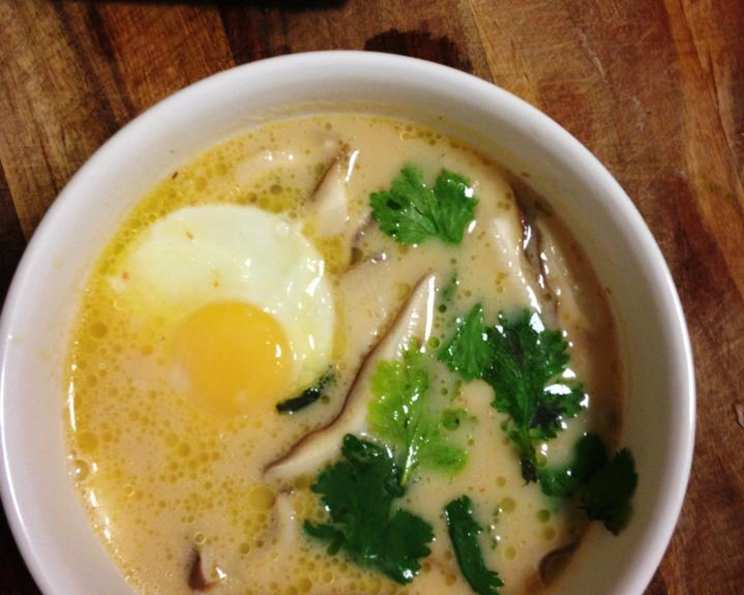
Miso Coconut Curry Soup – Creamy Zen Tropical Masterpiece
The first time I tasted a soup like this, I was backpacking through Thailand, a downpour had soaked me to the bone, and a tiny street vendor offered me a steaming bowl. The creamy coconut milk, the zing of lemongrass, and the subtle heat of chili peppers – it was a revelation. It warmed me from the inside out, not just physically, but emotionally. I knew right then I needed to recreate that comforting magic at home, eventually leading to this Miso Coconut Curry Soup, a dish that combines the best of Thai flavors with the umami depth of Japanese cuisine.
Recipe Overview
- Prep Time: 20 minutes
- Cook Time: 1 hour
- Total Time: 1 hour 20 minutes
- Servings: 4-6
- Yield: About 8 cups of soup
- Dietary Type: Adaptable to Vegan/Vegetarian, Gluten-Free (use gluten-free Udon noodles)
Ingredients
- 8 cups water
- 2 tablespoons sea salt (Pink Himalayan)
- 3 teaspoons powdered bonito
- 3 green onions, sliced
- 16 ounces white miso (mellow white miso paste organic)
- 2 (14 ounce) cans coconut milk
- 1 tablespoon panang curry paste (red panang curry paste)
- 2 Thai red chili peppers (whole, do NOT cut)
- 1 inch fresh galangal root (finely grated)
- 8 kaffir lime leaves (small)
- 1 stalk lemongrass (fine minced)
- 7 ounces shiitake mushrooms (fresh)
- 1 (15 ounce) can straw mushrooms (only if you can’t find fresh)
- 1/2 fresh lime juice (half of one juicy lime)
- 1 teaspoon raw brown sugar
- 1 tablespoon butter (to poach the quail eggs in)
- 2 (8 ounce) packages fresh udon noodles
- 1 cup fresh cilantro (de-stemmed, leaves only)
- 12 quail eggs
Equipment Needed
- Large stainless steel soup pot with lid
- Ladle
- Wooden spoon
- Fine grater
- Sharp knife
- Egg poacher (or small pan)
Instructions
- In a large stainless steel soup pot with a lid, bring 8 cups of water and 2 tablespoons of Pink Himalayan sea salt to a boil over high heat. Ensure the pot has at least 3-4 inches of space at the top to prevent overflow. A pot with a clear lid is helpful for monitoring the soup’s progress.
- Once the water boils, turn off the heat, allowing the bubbling to subside. This prevents the bonito from scorching.
- As the bubbles settle, add 3 teaspoons of powdered bonito soup stock to the water.
- Gently stir the bonito into the hot water. Cover the pot and let it steep for 2-3 minutes to infuse the stock. Taste a small sip to assess the flavor. This is your foundational dashi.
- Add 3 thinly sliced green onions (scallions) to the stock.
- Stir gently, cover, and allow the green onions to steep for another 2-3 minutes. Taste again. This is your basic stock.
- Turn the heat back on and slowly raise it to just below medium. It is crucial never to let the soup bubble from this point forward. Watch it closely to avoid burning. Do not exceed medium heat.
- Add 3-4 tablespoons of mellow white miso paste (organic). Using a large ladle and wooden spoon, slowly mash the miso into the soup. Cream the miso just under the surface to ensure it dissolves smoothly. This forms the base of your creamy miso soup.
- Stir gently, cover, and let it simmer for 2-3 minutes. Taste a sip – you should already appreciate the emerging flavors.
- Keep the heat below the bubbling point, as this soup is delicate.
- Add 2 cans of coconut milk, shaking them vigorously before opening to ensure proper emulsification.
- Stir gently, cover, and simmer for 2-3 minutes. Taste – you might experience what some call a “mouthgasm!”
- Add 1 large tablespoon of red panang curry paste. Again, slowly mash the curry paste into the coconut milk and miso base, using the ladle to cream it just under the surface for even distribution.
- Stir gently, cover, and simmer for 2-3 minutes. Taste again. The layers of flavor continue to build.
- Ensure the soup remains below the bubbling point, maintaining low to just below medium heat.
- Add two whole Thai red hot peppers, stem and all, without cutting them. This allows them to infuse the soup with a gentle heat.
- Stir gently, cover, and simmer for 2-3 minutes. Taste – patience is key!
- Add the fresh galangal root, finely grated (about an inch).
- Add 8 small kaffir lime leaves (whole).
- Stir gently, cover, and simmer for 2-3 minutes. Taste how the soup evolves with each addition.
- Now, prepare the lemongrass stalk. Chop off the white root end, about an inch up, leaving some white. Chop off the top green part where it begins to split. The usable portion should be about 4 inches long from the bottom upwards. Unwrap a layer or two until you have only the middle part. Smash it with a coffee cup or the flat side of a knife to release its aromatic oils. Finely chop the lemongrass several times until it is thinly minced.
- Add the minced lemongrass stalk to the soup.
- Stir gently, cover, and simmer for 2-3 minutes.
- Add the fresh shiitake mushrooms, cut into thin strips (use only the caps, discard the stems).
- Add the canned straw mushrooms, drained of their water. If possible, use fresh straw mushrooms instead. Allow the mushrooms to fully incorporate into the soup.
- Stir gently, cover, and simmer for 2-3 minutes.
- Add 1 teaspoon of coarse brown sugar.
- Add the juice of 1/2 lime (squeeze it directly into the soup). Do not add the whole lime.
- Stir gently, cover, and simmer for 2-3 minutes. The lime adds a tropical brightness.
- Add the fresh udon noodles, preferably freshly frozen. You can add the whole frozen udon square directly to the soup. Use one or two squares from a frozen multi-pack.
- Stir gently, cover, and simmer for 2-3 minutes, allowing the noodles to cook through.
- Lightly poach the quail eggs. These can be found in many Asian markets. They are delicate to crack, so use a very sharp chef’s knife to make a small chop on the side near the fattest part. Use an egg poacher with non-stick bowls that float above hot water. Place a tiny dab of butter in each bowl, then add the egg once the butter has melted. Use low to medium heat; quail eggs cook quickly, about 30 seconds for a sunny, runny yolk.
- The soup is now ready to serve.
- Serve garnished with fresh cilantro leaves (de-stemmed) and a few lightly poached quail eggs on top.
Expert Tips & Tricks
- Miso quality matters: Using a high-quality, mellow white miso will give the best flavor. Avoid darker, stronger miso pastes unless you specifically want a more intense flavor.
- Don’t boil: Overheating the soup after adding the miso or coconut milk can cause it to separate. Keep the heat low and gentle.
- Spice control: The Thai red chili peppers are added whole to infuse a subtle heat. If you prefer a spicier soup, you can lightly crush them before adding, but be cautious, as they can quickly make the soup very hot.
- Udon noodle substitution: For a gluten-free option, use rice noodles or sweet potato glass noodles instead of udon.
- Make it vegetarian/vegan: Omit the bonito flakes for a vegetarian version. For a fully vegan version, ensure the curry paste does not contain fish sauce. Many brands offer vegan curry pastes.
Serving & Storage Suggestions
Serve this Miso Coconut Curry Soup hot, garnished with fresh cilantro leaves and lightly poached quail eggs. The soup is best enjoyed immediately.
Leftovers can be stored in an airtight container in the refrigerator for up to 3 days. Reheat gently over low heat, stirring occasionally. Freezing is not recommended, as the coconut milk can separate and the udon noodles can become mushy.
Nutritional Information
Note: Nutritional information is an estimate and may vary based on specific ingredients and portion sizes.
| Nutrient | Amount per Serving | % Daily Value |
|---|---|---|
| Calories | 680 kcal | 34% |
| Total Fat | 50g | 64% |
| Saturated Fat | 40g | 200% |
| Cholesterol | 200mg | 67% |
| Sodium | 1200mg | 50% |
| Total Carbohydrate | 50g | 18% |
| Dietary Fiber | 8g | 29% |
| Sugars | 12g | – |
| Protein | 20g | 40% |
Variations & Substitutions
- Seafood addition: Add shrimp or scallops during the last few minutes of cooking for a seafood-rich version.
- Vegetable boost: Incorporate other vegetables like bok choy, snap peas, or bell peppers for added nutrients and texture.
- Different curry paste: Experiment with green or yellow curry paste for variations in flavor profile.
- Lemon juice: Add a touch of lemon juice instead of lime for a different citrus note.
FAQs (Frequently Asked Questions)
Q: Can I make this soup ahead of time?
A: Yes, you can prepare the soup base (everything except the noodles and quail eggs) up to 2 days in advance. Add the noodles and quail eggs just before serving.
Q: What if I can’t find galangal root?
A: You can substitute with ginger, but the flavor will be slightly different. Galangal has a more citrusy, peppery taste compared to ginger.
Q: Can I use dried kaffir lime leaves?
A: Fresh kaffir lime leaves are preferred, but you can use dried ones. Use about half the amount and rehydrate them in warm water before adding to the soup.
Q: How do I prevent the coconut milk from separating?
A: Keep the heat low and do not boil the soup after adding the coconut milk. Stir gently and consistently.
Q: Can I make this soup spicier?
A: Yes, you can add more Thai red chili peppers or a pinch of red pepper flakes for extra heat. Start with a small amount and taste as you go.
Final Thoughts
This Miso Coconut Curry Soup is more than just a recipe; it’s an invitation to slow down, to savor each step, and to create a truly unforgettable bowl of comfort. Don’t be afraid to experiment with the ingredients and adjust the flavors to your liking. I encourage you to try this recipe and share your creations with me. Pair it with a side of jasmine rice or a crisp Asian slaw for a complete and satisfying meal. Enjoy the zen-like process of making this soup, and let the tropical flavors transport you to a warmer, more peaceful place.