
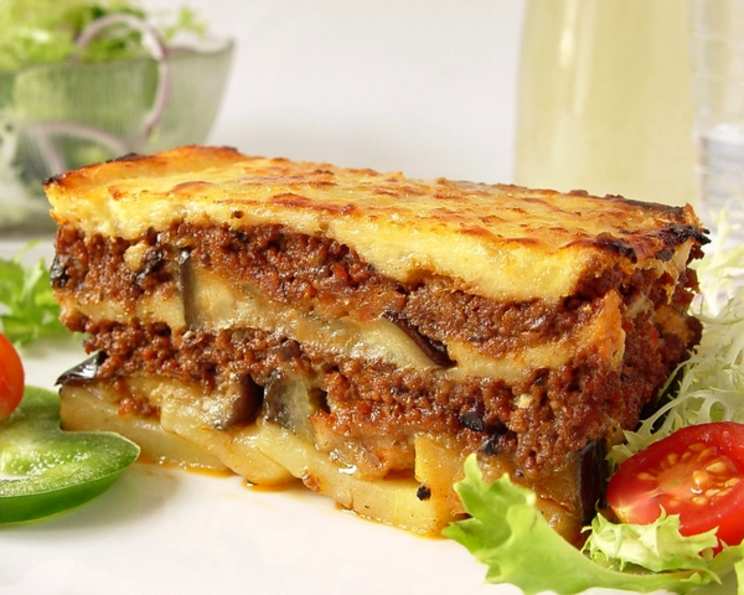
Mastering Moussaka: A Culinary Journey to the Heart of Greece
The first time I tasted moussaka, I was a wide-eyed student backpacking through the Greek islands. I remember sitting at a taverna overlooking the Aegean Sea, the air thick with the scent of oregano and grilled seafood. The moussaka arrived, a golden-brown tower of layered perfection. One bite, and I was hooked – the savory meat sauce, the tender eggplant, the creamy béchamel, all melding together in a symphony of flavors that transported me straight to the heart of Greek home cooking. Now, decades later, I’ve perfected my own version, and I’m excited to share it with you.
Recipe Overview
- Prep Time: 45 minutes
- Cook Time: 1 hour 20 minutes
- Total Time: 2 hours 5 minutes
- Servings: 8-10
- Yield: One 13×9 inch baking dish
- Dietary Type: Mediterranean
Ingredients
Meat Sauce
- 1/4 cup olive oil
- 2 lbs ground beef or ground lamb
- 2 large onions, finely chopped
- 2 garlic cloves, minced
- 1 teaspoon dried oregano
- 2 teaspoons dried basil
- 1 teaspoon ground cinnamon
- 1 teaspoon salt
- 3/4 cup chopped ripe olives, preferably kalamata (optional)
- 15 ounces seasoned tomato sauce
Bechamel Sauce
- 1/4 cup butter
- 2 tablespoons flour
- 1/4 teaspoon salt
- 2 cups hot milk
- 2 eggs, slightly beaten
- 1/2 cup grated kefalograviera cheese (use Parmesan if unavailable)
Eggplant and Potatoes
- 2 lbs eggplants
- Olive oil, to brush on
- Salt
- 2-3 potatoes (cut into 1/4 inch thick rounds or long slices, enough to cover bottom of baking pan in 1 layer)
For Assembly
- 1 cup parmesan cheese
- 1 cup kasseri cheese or 1 cup white cheddar cheese
- 1 cup seasoned bread crumbs
Equipment Needed
- Large, heavy saucepan
- Cookie sheet
- 13x9x2-inch baking dish
- Saucepan for béchamel
- Whisk
Instructions
-
Prepare the Meat Sauce: In a large, heavy saucepan, heat 1/4 cup of olive oil over medium heat. Add 2 lbs of ground beef or ground lamb, 2 finely chopped onions, and 2 minced garlic cloves. Sauté until the meat is lightly browned and the onions are translucent.
-
Add 1 teaspoon of dried oregano, 2 teaspoons of dried basil, 1 teaspoon of ground cinnamon, and 1 teaspoon of salt. If desired, add 3/4 cup of chopped ripe olives.
-
Pour in 15 ounces of seasoned tomato sauce. Cover the saucepan and simmer slowly for about 30 minutes. Uncover and simmer slowly for another 30 minutes, allowing the sauce to thicken. Stir occasionally to prevent sticking.
-
Prepare the Bechamel Sauce: While the meat sauce simmers, begin the béchamel. In a saucepan, melt 1/4 cup of butter over medium-low heat.
-
Whisk in 2 tablespoons of flour and cook slowly until smooth and lightly cooked, about 2-3 minutes. This creates a roux. Be careful not to burn the flour.
-
Add 1/4 teaspoon of salt and remove the saucepan from the heat.
-
Gradually add 2 cups of hot milk, whisking rapidly to prevent lumps from forming. Return the saucepan to the heat.
-
Cook until thick and bubbly, whisking constantly, ensuring a smooth and creamy texture.
-
Remove from heat and allow to cool for 5 minutes, whisking occasionally to prevent a skin from forming on the surface.
-
Incorporate 2 slightly beaten eggs and 1/2 cup of grated kefalograviera cheese (or Parmesan) with a wire whisk to make a fluffy sauce.
-
Prepare the Eggplant: Cut the ends from 2 lbs of eggplant (1 large or 2 small) and cut into 1/2-inch-thick slices. If using a large, flask-type eggplant, peel the skin off in strips with a vegetable peeler – creating a striped look with some of the peel left on and some off. If using Japanese-style eggplant (the longish, purply-white ones), there’s no need to peel.
-
Place the eggplant slices on a cookie sheet and brush with olive oil.
-
Place the cookie sheet under a broiler and broil until lightly browned. Remove from the oven, salt lightly, turn the eggplant slices, and repeat the broiling process on the other side.
-
Prepare the Potatoes: There are three ways to prepare the potatoes:
- Shallow-fry: Shallow-fry potato rounds in olive oil until golden-brown.
- Bake: Arrange the potato slices in your baking pan, brush lightly with olive oil, and bake for 15 minutes at 350 degrees.
- Parboil: Parboil the potato slices for 8 minutes; drain well on paper towels. This is the lowest calorie option.
-
Preheat the Oven: Position the rack in the center of the oven and heat to 350 degrees Fahrenheit (175 degrees Celsius).
-
Assemble the Moussaka: In a 13x9x2-inch baking dish, arrange a layer of potatoes, overlapping slightly. Season lightly.
-
Next, add a layer of eggplant slices, overlapping as needed.
-
Sprinkle some Parmesan, kasseri (or cheddar), and bread crumbs over the eggplant layer.
-
Layer the meat sauce evenly over the eggplant and cheese mixture.
-
Sprinkle freshly grated cheeses and bread crumbs over the meat sauce.
-
Finally, pour the béchamel sauce evenly over the entire dish.
-
Bake: Bake for 45-50 minutes at 350 degrees Fahrenheit, or until the top is flecked golden-brown.
Expert Tips & Tricks
- Salting the Eggplant: To reduce bitterness and excess moisture, salt the eggplant slices after cutting and let them sit for about 30 minutes before broiling. Rinse and pat dry before continuing.
- Make-Ahead Bechamel: The béchamel sauce can be made a day in advance and stored in the refrigerator. Whisk well before using.
- Cheese Choices: Feel free to experiment with different cheeses. Gruyere, pecorino Romano, or even a sharp provolone can add unique flavor dimensions.
- Preventing a Soggy Bottom: Ensure the potatoes are well-drained, no matter which method you choose to cook them. Excess moisture will lead to a soggy moussaka.
- Spice it Up: For a touch of heat, add a pinch of red pepper flakes to the meat sauce.
Serving & Storage Suggestions
Allow the moussaka to cool slightly before serving. This allows the layers to set and makes it easier to cut. Greeks often serve moussaka warm, not piping hot, so the flavors are more pronounced.
Storage: Leftover moussaka can be stored in the refrigerator for up to 3-4 days in an airtight container.
Freezing: Once the baked moussaka has completely cooled, cut it into serving-size pieces, double-wrap in foil, and freeze. Defrost in the refrigerator overnight or in the microwave. Reheat in the microwave or oven until heated through.
Nutritional Information
| Nutrient | Amount per Serving | % Daily Value |
|---|---|---|
| Calories | 628.5 kcal | N/A |
| Calories from Fat | 339 g | 54% |
| Total Fat | 37.8 g | 58% |
| Saturated Fat | 15.5 g | 77% |
| Cholesterol | 158.6 mg | 52% |
| Sodium | 1279.6 mg | 53% |
| Total Carbohydrate | 38 g | 12% |
| Dietary Fiber | 7.6 g | 30% |
| Sugars | 8 g | 32% |
| Protein | 35.3 g | 70% |
Variations & Substitutions
- Vegetarian Moussaka: Replace the ground meat with lentils or a mixture of chopped vegetables like zucchini, mushrooms, and bell peppers.
- Gluten-Free: Use gluten-free bread crumbs and a gluten-free flour blend for the béchamel sauce.
- Dairy-Free: Substitute the butter in the béchamel sauce with olive oil or a dairy-free butter alternative. Use a plant-based milk like almond or soy milk and nutritional yeast for a cheesy flavor.
- Spicier Moussaka: For a bit of a kick, try adding a pinch of chili flakes to the meat sauce.
FAQs (Frequently Asked Questions)
Q: Can I make moussaka ahead of time?
A: Absolutely! Moussaka is a great dish to make ahead of time. You can assemble it a day or two in advance and store it in the refrigerator until you’re ready to bake.
Q: How do I prevent the eggplant from being bitter?
A: Salting the eggplant slices before cooking helps to draw out excess moisture and reduce bitterness. Let them sit for about 30 minutes, then rinse and pat dry.
Q: Can I use a different type of cheese?
A: Yes, feel free to experiment with different cheeses. Gruyere, provolone, or even a sharp cheddar can add unique flavor dimensions to the dish.
Q: Is it necessary to broil the eggplant?
A: Broiling the eggplant helps to cook it and give it a slightly charred flavor. However, you can also bake or pan-fry the eggplant slices as an alternative.
Q: How do I reheat moussaka?
A: You can reheat moussaka in the microwave or oven. For the oven, cover the dish with foil and bake at 350°F (175°C) until heated through.
Final Thoughts
Moussaka is more than just a dish; it’s a culinary embrace, a taste of the sun-drenched Mediterranean, and a celebration of simple, wholesome ingredients. Don’t be intimidated by the layering – each step is straightforward, and the result is well worth the effort. Gather your ingredients, put on some Greek music, and embark on this delicious culinary adventure. I encourage you to try this recipe, make it your own, and share it with those you love. Kali Orexi!