
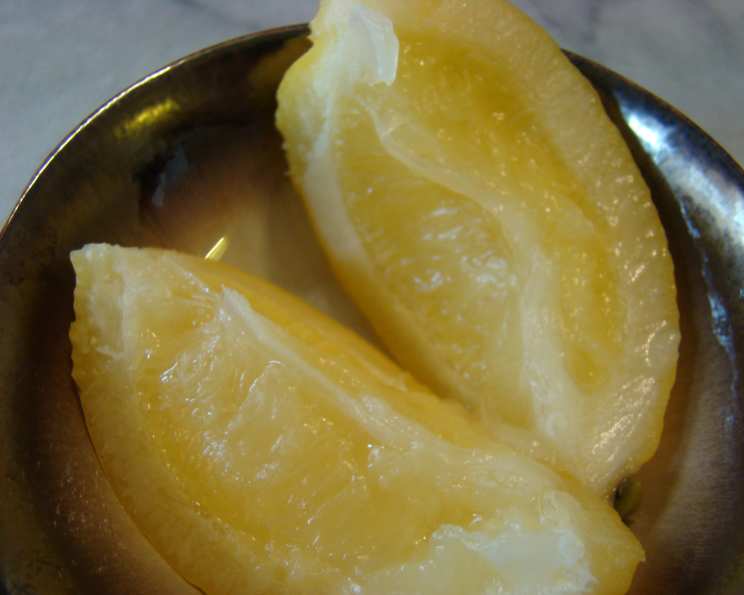
Needing One Preserved Lemon, Now!!
I’ll never forget the time I was hosting a Moroccan-themed dinner party and realized, just hours before guests were due to arrive, that I was completely out of preserved lemons. Panic set in! Every dish I had planned relied on that bright, salty, intensely citrusy flavor. A mad dash to several specialty stores proved fruitless. That’s when I remembered this little trick – a cheater’s version of preserved lemon that saved my dinner party, and has been a lifesaver ever since. It’s not quite the same as the real thing, but in a pinch, it delivers a similar vibrant punch.
Recipe Overview
- Prep Time: 5 minutes
- Cook Time: 1 hour
- Total Time: 1 hour 5 minutes
- Servings: 1 lemon
- Yield: 1 lemon
- Dietary Type: Vegan, Gluten-Free
Ingredients
- 1 large lemon (unwaxed)
- 1 tablespoon salt
- Boiling water
Equipment Needed
- Small bowl (glass preferred)
- Kettle
- Small plate or weight
Instructions
-
Begin by slicing the lemon. From the stem side down, make four cuts, creating quarters. Crucially, avoid cutting completely through the lemon; maintain its connection at the bottom end. This keeps the lemon mostly intact while allowing the brine to penetrate effectively. If you don’t have a bowl deep enough for the almost whole lemon, you can cut the lemon right through into 4 separate quarters.
-
Place the sliced lemon into a small bowl. Glass is ideal as it’s non-reactive and won’t impart any unwanted flavors. Ensure the bowl isn’t too large; you want the lemon to fit snugly, leaving minimal empty space around the sides. If the lemon is cut into quarters, arrange them in the bowl.
-
Generously sprinkle the salt over the lemon, ensuring it gets into the crevices created by the slices. The salt is essential for drawing out moisture and beginning the “preserving” process.
-
Boil water in a kettle. Carefully pour the boiling water over the lemon, fully submerging it. Use a weight or a small plate, pressed down, to keep the lemon submerged. Complete submersion is key to even tenderizing.
-
Let the lemon steep for at least an hour. For a more intense flavor and softer rind, consider gently heating the liquid over very low heat. Monitor closely to ensure the water doesn’t boil away; the goal is to maintain a warm temperature, not to cook the lemon.
-
After an hour, especially if the water was kept warm, the rind and flesh should be noticeably tender. The lemon is now ready to use in your recipe. It will provide a salty, citrusy flavor that’s a great substitute for true preserved lemons in a pinch.
Expert Tips & Tricks
- Choosing the right lemon: Opt for an unwaxed lemon if possible. Wax can hinder the absorption of the brine. If you can only find waxed lemons, give them a good scrub under hot water to remove as much wax as possible. Organic lemons are often unwaxed.
- Don’t skimp on the salt: The salt is crucial for drawing out moisture and tenderizing the lemon. Use a good quality sea salt or kosher salt.
- Heating for Speed: Gentle heat greatly accelerates the tenderizing process. However, be extremely careful not to overcook the lemon. Low and slow is the key. Avoid allowing the water to boil.
- Taste Test: After an hour, taste a small piece of the rind. If it’s still too firm, continue steeping for another 30 minutes, checking periodically. The rind should be soft and slightly translucent.
- Intensifying the Flavor: For a deeper, more complex flavor, add a few spices to the boiling water. Whole peppercorns, coriander seeds, or a bay leaf can add subtle nuances.
Serving & Storage Suggestions
This quick-preserved lemon is best used immediately. It’s not intended for long-term storage like traditionally preserved lemons. If you have any leftover portions after using it in your recipe, store them in an airtight container in the refrigerator for up to 2 days. Note that it will continue to soften and may become more intensely flavored the longer it sits. It is not suitable for freezing.
When serving, remember that both the rind and flesh are edible. Chop it finely and add it to tagines, stews, salads, or even blend it into a vibrant sauce. The possibilities are endless!
Nutritional Information
| Nutrient | Amount per Serving | % Daily Value |
|---|---|---|
| Calories | 22 kcal | 1% |
| Total Fat | 0.3g | 0% |
| Saturated Fat | 0g | 0% |
| Cholesterol | 0mg | 0% |
| Sodium | 6980mg | 291% |
| Total Carbohydrate | 12g | 4% |
| Dietary Fiber | 5g | 20% |
| Sugars | 0g | 0% |
| Protein | 1g | 2% |
Note: Nutritional information is an estimate and may vary based on specific ingredients and preparation methods.
Variations & Substitutions
- Lime instead of Lemon: If you prefer a lime flavor, you can easily substitute a large lime for the lemon. Follow the same instructions.
- Herbs & Spices: Experiment with adding fresh herbs like thyme or rosemary to the boiling water for an aromatic twist.
- Spice Level: Add a pinch of red pepper flakes to the water for a touch of heat.
- Meyer Lemon: If you can find Meyer lemons, their sweeter, less acidic flavor makes an excellent quick-preserved lemon.
FAQs (Frequently Asked Questions)
Q: Can I use regular tap water instead of boiling water?
A: While you can, boiling water helps to soften the rind more quickly and effectively. It also aids in extracting the essential oils, resulting in a more flavorful lemon.
Q: Is it necessary to use unwaxed lemons?
A: Ideally, yes. Waxed lemons may not absorb the brine as effectively. If you only have waxed lemons, scrub them thoroughly under hot water before using.
Q: Can I use less salt?
A: While you can reduce the salt slightly, it’s crucial for the “preserving” process. Too little salt will result in a less flavorful and less tender lemon.
Q: How long does it last in the fridge?
A: This quick-preserved lemon is best used immediately. However, you can store leftovers in an airtight container in the refrigerator for up to 2 days.
Q: Can I skip the heating step and just let it sit at room temperature?
A: Yes, you can, but it will take significantly longer for the lemon to soften. The gentle heat expedites the process.
Final Thoughts
Don’t let the lack of preserved lemons stop you from creating delicious and authentic dishes! This quick and easy method is a fantastic substitute that delivers a vibrant, salty, citrusy kick when you’re short on time. So, go ahead, try it out and let me know what culinary adventures you embark on with your “instant” preserved lemon. Share your creations and tag me in your photos – I can’t wait to see what you cook up!