
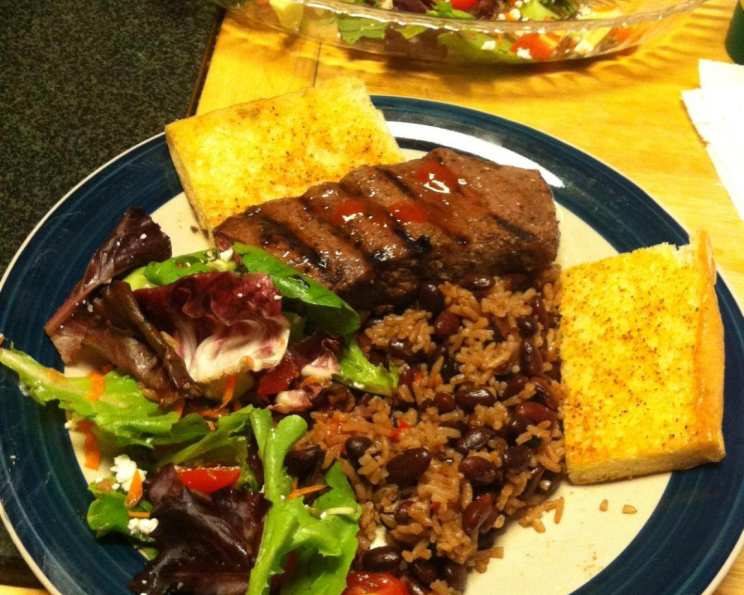
Gallo Pinto: A Nicaraguan Staple
The aroma of rice and beans sizzling in a pan always transports me back to my travels through Central America. I remember sitting in a small comedor in Granada, Nicaragua, the humid air thick with the sounds of Spanish chatter and the rhythmic clack-clack of a machete chopping vegetables. An abuela, her face etched with years of wisdom, placed a heaping plate of gallo pinto in front of me. That simple, yet profoundly flavorful dish, became the culinary touchstone of my trip, a reminder that the best food is often the most humble.
Recipe Overview
- Prep Time: 20 minutes
- Cook Time: 2 hours
- Total Time: 2 hours 20 minutes (including soaking time)
- Servings: 6
- Yield: About 6 cups
- Dietary Type: Vegan
Ingredients
- 1 cup gallo pinto beans (or red beans)
- 1 bay leaf
- 1 small onion, peeled
- 1 clove
- 2 garlic cloves, peeled
- Salt, to taste
- 1 1/2 cups long grain white rice
- 4 tablespoons olive oil
- 1 onion, finely chopped
- Fresh black pepper, to taste
Equipment Needed
- Large pot
- Large heavy saucepan
- Large, heavy frying pan
- Colander
Instructions
-
Begin by preparing the beans. Cover the gallo pinto beans generously with water in a large bowl and let them soak for at least 4 hours, or preferably overnight. Soaking helps to reduce cooking time and improve digestibility.
-
After soaking, drain the beans thoroughly. Transfer them to a large pot and add two quarts (8 cups) of fresh water.
-
Prepare an aromatic bundle by pinning the bay leaf to the small, peeled onion with the clove. This will infuse the beans with subtle flavors as they cook. Add the bundled aromatics to the pot along with the garlic cloves.
-
Bring the beans to a boil over medium-high heat. As the water heats, you’ll notice some foam forming on the surface. Skim this foam off with a spoon; this removes impurities and ensures a cleaner flavor.
-
Once boiling, reduce the heat to low and gently simmer the beans uncovered for approximately 1 to 1 1/2 hours, or until they are tender. Check the beans periodically to ensure they don’t dry out, adding more water if necessary. During the last ten minutes of cooking, add salt to taste.
-
Once the beans are cooked, drain them in a colander and refresh them under cold water. This stops the cooking process and helps maintain their firm texture.
-
Discard the onion, bay leaf, and clove bundle. These have served their purpose and are no longer needed.
-
While the beans are cooking, prepare the rice. In a large, heavy saucepan, bring 2.5 cups of water and 1 teaspoon of salt to a boil.
-
Add the 1 1/2 cups of long grain white rice to the boiling water. Return to a boil, then immediately reduce the heat to the lowest setting. Cover the saucepan tightly and gently simmer the rice until tender and all the water has been absorbed, about 18 minutes.
-
After 18 minutes, turn off the heat and let the rice sit uncovered for 5 minutes. This allows any residual moisture to evaporate. Finally, fluff the rice gently with a fork to separate the grains.
-
While the rice is cooking, prepare the sofrito (aromatic base). Heat 4 tablespoons of olive oil in a large, heavy frying pan over medium heat.
-
Add the finely chopped onion to the pan and cook until it is well browned and softened, about 5 minutes. Browning the onion adds depth and sweetness to the dish.
-
Now, it’s time to bring everything together. Add the cooked rice and beans to the frying pan with the browned onion. Cook, stirring frequently, until the mixture is very aromatic and the rice starts to brown slightly, about 5 minutes. This step is crucial for developing the characteristic flavor of gallo pinto.
-
Taste the gallo pinto and correct the seasonings as needed, adding more salt and freshly ground black pepper to taste.
-
Serve immediately and enjoy!
Expert Tips & Tricks
- Bean Variety: While the recipe calls for gallo pinto beans, red beans are a perfectly acceptable substitute. The key is to use a bean that holds its shape well during cooking.
- Sofrito Enhancement: For an extra layer of flavor, consider adding finely chopped bell pepper to the onion while browning it.
- Day-Old Rice: Using day-old rice can improve the texture of the gallo pinto, as it is less likely to become mushy.
- Flavor Boost: A splash of Salsa Lizano, a popular Costa Rican condiment, adds a unique tangy and savory element to the dish. However, it may be difficult to find outside of Central America. A dash of Worcestershire sauce can provide a similar, though not identical, umami boost.
- Make-Ahead Tip: The beans can be cooked a day in advance and stored in the refrigerator until needed. This can save time on the day you plan to serve the gallo pinto.
Serving & Storage Suggestions
Gallo pinto is a versatile dish that can be served in a variety of ways. It’s traditionally eaten for breakfast, lunch, or dinner in Nicaragua. Serve it as a side dish alongside grilled meats, chicken, or fish. It also pairs well with eggs, plantains, and avocado for a complete and satisfying meal.
Leftover gallo pinto can be stored in an airtight container in the refrigerator for up to 3-4 days. To reheat, simply microwave or warm it in a skillet over medium heat, adding a splash of water if necessary to prevent it from drying out.
Gallo pinto can also be frozen for longer storage. Transfer it to a freezer-safe container and freeze for up to 2-3 months. Thaw overnight in the refrigerator before reheating.
Nutritional Information
Here’s an estimated nutritional breakdown per serving:
| Nutrient | Amount per Serving | % Daily Value |
|---|---|---|
| Calories | 320 kcal | 16% |
| Total Fat | 8g | 12% |
| Saturated Fat | 1g | 5% |
| Cholesterol | 0mg | 0% |
| Sodium | 250mg | 11% |
| Total Carbohydrate | 50g | 18% |
| Dietary Fiber | 6g | 24% |
| Sugars | 2g | N/A |
| Protein | 8g | 16% |
Note: Nutritional information is an estimate and may vary based on specific ingredients and cooking methods.
Variations & Substitutions
- Spicy Gallo Pinto: Add a finely chopped jalapeño or a pinch of cayenne pepper to the onion while browning for a spicy kick.
- Coconut Gallo Pinto: Substitute coconut oil for olive oil and add a splash of coconut milk towards the end of cooking for a richer, more fragrant dish.
- Vegetarian Protein Boost: Add crumbled tofu or tempeh to the gallo pinto for a vegetarian source of protein.
- Smoked Paprika: Add 1/2 teaspoon of smoked paprika to the onions when browning for a smoky flavor.
FAQs (Frequently Asked Questions)
Q: What are gallo pinto beans?
A: Gallo pinto beans are small, speckled red beans commonly used in Central American cuisine, particularly in Nicaragua and Costa Rica. If you can’t find them, red beans are a great substitute.
Q: Can I use canned beans for this recipe?
A: While it’s best to use dried beans for the most authentic flavor, canned beans can be used in a pinch. Be sure to rinse and drain them well before adding them to the pan with the rice.
Q: How can I make this dish more flavorful?
A: Browning the onion well and allowing the rice and beans to cook together in the pan until slightly browned is crucial for developing the characteristic flavor of gallo pinto. Using fresh herbs like cilantro can also enhance the taste.
Q: Is gallo pinto usually served spicy?
A: Gallo pinto is not typically spicy, but you can easily add heat by incorporating a jalapeño pepper or some cayenne pepper into the dish.
Q: What’s the best way to reheat gallo pinto?
A: The best way to reheat gallo pinto is in a skillet over medium heat with a splash of water to prevent it from drying out. You can also microwave it, but be sure to cover it to retain moisture.
Final Thoughts
I hope this recipe inspires you to try your hand at making this classic Nicaraguan dish. Gallo Pinto, in its simplicity, showcases the beauty of flavorful, comforting food that is at the heart of a culture. Don’t be afraid to experiment with the recipe and make it your own, perhaps adding a touch of your personal culinary flair. Share your creation with friends and family and let them experience the warmth and hospitality of Nicaraguan cuisine. Pair it with a refreshing glass of tamarindo juice for the complete Central American experience!