
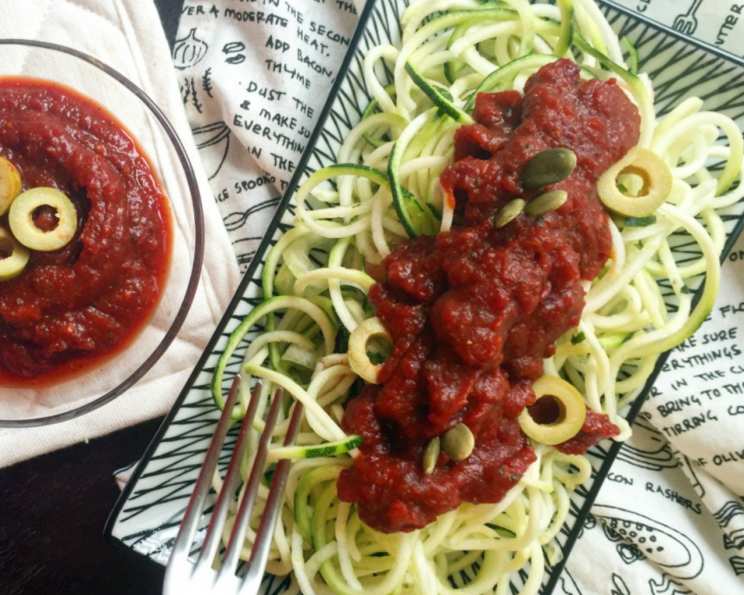
Nomato Sauce: The Tomato-Free Marinara You’ll Adore
I’ll never forget the day my cousin, Marco, discovered his nightshade allergy. Our family gatherings, always overflowing with Nonna’s legendary tomato-rich sauces, suddenly became a minefield for him. Watching him wistfully eye the steaming bowls of pasta, I felt a surge of determination. There had to be a way to bring that familiar, comforting flavor back into his life, without the tomatoes. The quest began, and after countless experiments, this Nomato sauce was born – a vibrant, flavorful alternative that even Nonna approved of!
Recipe Overview
- Prep Time: 15 minutes
- Cook Time: 30 minutes
- Total Time: 45 minutes
- Servings: 2
- Yield: About 2 cups
- Dietary Type: Vegan, Gluten-Free, Paleo, AIP
Ingredients
- ½ tablespoon olive oil
- ½ medium red beet
- 3 medium carrots
- ⅓ medium yellow onion
- 1 garlic clove
- ¼ medium kabocha squash
- 1 tablespoon dried Italian herb seasoning
- ¼ tablespoon Himalayan salt
- ½ cup water
- 5 fresh sage leaves
- 5 fresh basil leaves
- ½ lemon, juiced
- Optional: 1 tablespoon capers
- Optional: 2 tablespoons green olives, thinly sliced
Equipment Needed
- Food processor
- Medium-sized saucepan
- Knife
- Cutting board
- Fork
Instructions
- Begin by prepping the vegetables. Peel the beet, carrots, and kabocha squash.
- Cut the beet, carrots, kabocha squash, and onion into small pieces. This ensures even cooking and easier processing.
- Place the chopped vegetables into a food processor.
- Pulse the vegetables until they are coarsely grated. You want a texture similar to that of traditional tomato sauce. Be careful not to over-process into a puree!
- Finely chop the fresh sage, garlic, and onion. Mincing them will release their flavors beautifully.
- In a medium-sized saucepan, heat up the olive oil over medium heat.
- Once the oil starts to sizzle, add the chopped sage, garlic, and onion to the saucepan.
- Fry the aromatics for about a minute, until fragrant. This step is crucial for building a flavorful base. Avoid browning the garlic, which can become bitter.
- Toss the grated vegetable mixture into the pan along with the Italian herb seasoning and Himalayan salt.
- Mix well to ensure all the vegetables are coated with the oil and spices.
- If using, add the optional capers and thinly sliced green olives at this point. They add a salty, briny dimension to the sauce.
- Add ½ cup of water to the pan. This will help the vegetables cook down and create a sauce-like consistency.
- Cover the saucepan and let the Nomato Sauce cook over medium heat for 30 minutes.
- Check on the sauce every 5 minutes to see if it needs more water. The vegetables should be simmering gently, not sticking to the bottom of the pan. If the sauce seems too dry, add a tablespoon or two of water at a time.
- After 30 minutes, the vegetables should be soft and easily mashable.
- Use a fork to mash the vegetables, creating a smoother sauce. You can leave some texture for a rustic feel, or mash completely for a smoother finish. An immersion blender can also be used with caution, but is not necessary.
- Add the lemon juice and chopped fresh basil to the sauce.
- Mix well for about a minute. The lemon juice brightens the flavors, while the fresh basil adds a vibrant, herbaceous note.
- Taste and adjust seasoning as needed. You might want to add a pinch more salt, pepper, or Italian herbs to your preference.
- Your amazing tomato-free marinara sauce is now ready to use!
Expert Tips & Tricks
- Roast the vegetables: For a deeper, sweeter flavor, roast the beet, carrots, and squash before processing. Toss them with olive oil, salt, and pepper, and roast at 400°F (200°C) for 20-25 minutes, or until tender. Then, proceed with the recipe as directed.
- Adjust sweetness: If the sauce is too acidic, add a pinch of sugar or a small drizzle of maple syrup to balance the flavors.
- Spice it up: Add a pinch of red pepper flakes for a touch of heat.
- Make ahead: The Nomato sauce can be made a day or two in advance. Store it in an airtight container in the refrigerator.
- Thickening: If the sauce is too thin, simmer uncovered for a few more minutes to allow some of the excess liquid to evaporate.
Serving & Storage Suggestions
Serve your Nomato sauce just as you would traditional marinara. It’s delicious tossed with pasta, as a pizza base, as a dipping sauce for breadsticks, or as a component in baked dishes like lasagna.
- Room temperature: Do not leave at room temperature for more than 2 hours.
- Refrigeration: Store leftover Nomato sauce in an airtight container in the refrigerator for up to 3-4 days.
- Freezing: For longer storage, freeze the sauce in an airtight container or freezer bag for up to 2-3 months. Thaw in the refrigerator overnight before reheating.
- Reheating: Reheat the sauce gently in a saucepan over medium heat, stirring occasionally, until heated through. You can also reheat it in the microwave in 30-second intervals, stirring in between.
Nutritional Information
Here is the approximate nutritional information per serving (based on 2 servings), without optional ingredients:
| Nutrient | Amount per Serving | % Daily Value* |
|---|---|---|
| Calories | 110 kcal | 6% |
| Total Fat | 5g | 6% |
| Saturated Fat | 1g | 5% |
| Cholesterol | 0mg | 0% |
| Sodium | 1213mg | 53% |
| Total Carbohydrate | 16g | 6% |
| Dietary Fiber | 5g | 18% |
| Sugars | 7g | – |
| Protein | 3g | 6% |
*Percent Daily Values are based on a 2,000 calorie diet.
Variations & Substitutions
- Sweet Potato Nomato: Substitute the kabocha squash with an equal amount of sweet potato for a slightly sweeter flavor.
- Different Herbs: Experiment with other fresh herbs like oregano, thyme, or rosemary.
- Spice Level: Adjust the amount of dried Italian herb seasoning, or add a pinch of red pepper flakes for heat.
- AIP Version: Ensure your Italian herb seasoning is AIP compliant. Omit the optional olives and capers.
FAQs (Frequently Asked Questions)
Q: Why use beets in a tomato-free sauce?
A: Beets provide a natural sweetness and a beautiful red color, mimicking the appearance of tomatoes.
Q: Can I use pre-grated carrots instead of grating them myself?
A: Yes, pre-grated carrots can save time, but freshly grated carrots will have a slightly better flavor and texture.
Q: What if I don’t have kabocha squash?
A: Butternut squash or pumpkin can be used as a substitute for kabocha squash.
Q: How can I make this sauce smoother?
A: Use an immersion blender to puree the sauce until smooth after cooking. Be cautious when blending hot liquids.
Q: Is this sauce suitable for people with histamine intolerance?
A: It is important to consult your doctor/nutritionalist, as many of the ingredients have moderate histamine levels.
Final Thoughts
This Nomato Sauce is more than just a substitute; it’s a delicious and versatile sauce in its own right. Whether you have a nightshade intolerance or simply want to explore new flavors, I encourage you to give it a try. I’m confident that you’ll be pleasantly surprised by its depth of flavor and vibrant color. Don’t hesitate to experiment with different herbs and spices to create your own unique version! I’d love to hear your feedback and how you decide to serve it, and I’m sure Marco would too!