
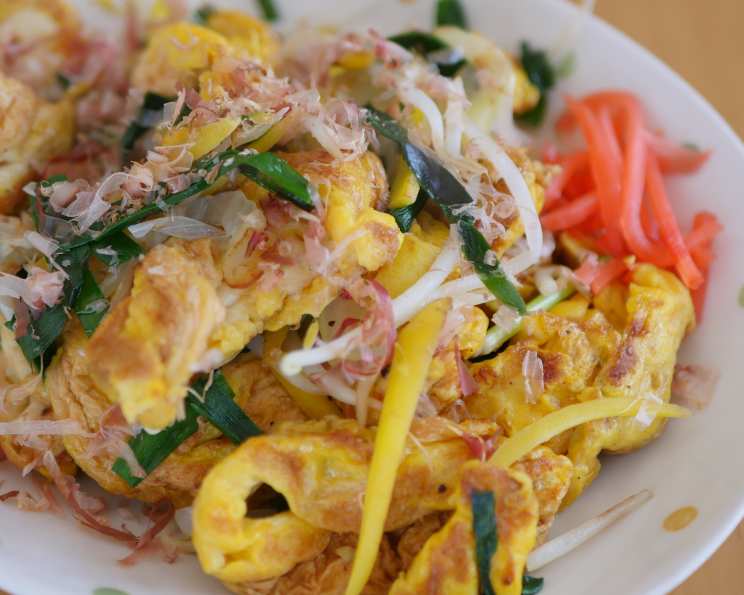
Okinawa Stir-Fried Dry Gluten and Vegetables (Fu Chanpuru)
The first time I tasted Fu Chanpuru, I was backpacking through Okinawa. It wasn’t in a fancy restaurant, but a humble roadside diner, steam billowing from the open kitchen. The combination of textures – the savory, slightly chewy fu, the crisp-tender vegetables, the umami richness of the bonito flakes – was a revelation. It was the taste of Okinawa itself: simple, fresh, and deeply satisfying. From that moment on, I was determined to recreate this Okinawan staple back in my own kitchen.
Recipe Overview
- Prep Time: 25 minutes
- Cook Time: 15-20 minutes
- Total Time: 40-45 minutes
- Servings: 2-3
- Yield: 1 pan
- Dietary Type: Varies (see variations for vegetarian option)
Ingredients
- 30 g Okinawa dry gluten (fu, 1 tube)
- 4 eggs
- 2 tablespoons dashi stock
- 1 piece Okinawa carrot
- ½ piece green onion
- 50 g garlic chives
- 100 g bean sprouts
- 1 tablespoon sesame oil
- ¼ teaspoon salt
- ¼ teaspoon pepper
- 5 g dried bonito flakes (katsuobushi)
- 1 teaspoon red pickled ginger (beni shoga)
Equipment Needed
- Large bowl
- Whisk
- Cutting board
- Knife
- Large skillet or wok
Instructions
-
Slice the fu along its width into slices approximately 1 centimeter (about ⅓ inch) thick. These slices will readily absorb the egg mixture, becoming the heart of the dish.
-
In a large bowl, whisk the 4 eggs. Add 2 tablespoons of dashi stock and ¼ teaspoon of salt. Continue whisking until the mixture is well combined and slightly frothy. The dashi adds a crucial savory depth to the eggs.
-
Add the sliced fu to the bowl with the egg mixture. Allow the fu to soak in the liquid until it becomes soft and pliable. This process typically takes about 20-30 minutes. To ensure even absorption, gently mix the fu occasionally, pressing it down slightly to submerge it in the egg mixture. The fu should be almost saturated with the egg mixture.
-
While the fu is soaking, prepare the vegetables. This step is essential for a quick and efficient stir-fry later on.
-
Cut the garlic chives into pieces approximately 5 centimeters (2 inches) long.
-
Thinly slice the green onion and carrot diagonally. The diagonal cut provides a larger surface area for the vegetables to cook quickly and evenly.
-
Wash and drain the bean sprouts. Removing excess water prevents the stir-fry from becoming soggy.
-
Heat a large skillet or wok over medium-high heat. Add 1 tablespoon of sesame oil. The sesame oil imparts a distinctive, nutty aroma to the dish.
-
Add the egg-soaked fu to the hot pan. Be careful not to overcrowd the pan; work in batches if necessary to ensure the fu pieces cook evenly and develop a nice golden-brown crust.
-
Fry the fu, making sure that the pieces don’t overlap. Fry each side until it has browned nicely, and the egg is cooked through. Turn over the fu pieces once the first side has browned, usually after a few minutes.
-
Once the fu has browned and the egg is cooked, increase the heat to medium-high. Sprinkle with ¼ teaspoon of salt and ¼ teaspoon of pepper.
-
Add the sliced carrot and green onions to the pan. Stir-fry for 1-2 minutes, until the carrots are slightly tender and the green onions are fragrant.
-
Next, add the garlic chives and bean sprouts. Continue stir-frying for another minute or so, until the bean sprouts are cooked but still retain some of their crispness. Avoid overcooking the bean sprouts, as they can become mushy.
-
Remove the Fu Chanpuru from the heat and transfer it to a serving plate.
-
Garnish with dried bonito flakes (katsuoboshi) and red pickled ginger (beni shoga) before serving. The bonito flakes add a savory umami flavor and a delicate smoky aroma, while the red pickled ginger provides a tangy, refreshing counterpoint to the richness of the dish.
Expert Tips & Tricks
- Don’t overcrowd the pan: Cooking the fu in batches ensures even browning and prevents the pan from cooling down too much.
- Adjust the soaking time: If you prefer a firmer texture, reduce the soaking time of the fu. For a softer texture, soak it a bit longer.
- Use high heat: Stir-fries are best cooked at high heat to achieve that characteristic “wok hei” or smoky flavor.
- Prepare all your ingredients in advance: Stir-fries cook quickly, so it’s essential to have all your vegetables and other ingredients prepped and ready to go.
- Enhance flavor: A splash of soy sauce or a drizzle of oyster sauce (if not vegetarian) can add extra depth of flavor.
Serving & Storage Suggestions
Serve Fu Chanpuru hot, immediately after cooking. It’s a perfect standalone dish, but also pairs well with a bowl of steamed rice and a side of miso soup. Leftovers can be stored in an airtight container in the refrigerator for up to 2 days. Reheat gently in a skillet or microwave until warmed through. The texture of the fu may change slightly upon reheating, becoming a bit softer. It is not recommended to freeze Fu Chanpuru, as freezing can significantly alter the texture of the fu and vegetables.
Nutritional Information
| Nutrient | Amount per Serving | % Daily Value |
|---|---|---|
| Calories | 280 kcal | 14% |
| Total Fat | 18g | 28% |
| Saturated Fat | 4.5g | 23% |
| Cholesterol | 380mg | 127% |
| Sodium | 450mg | 19% |
| Total Carbohydrate | 5g | 2% |
| Dietary Fiber | 1.5g | 6% |
| Sugars | 3g | N/A |
| Protein | 15g | 30% |
Note: Nutritional information is an estimate and may vary based on specific ingredients and portion sizes.
Variations & Substitutions
- Vegetarian: Omit the dried bonito flakes (katsuoboshi) or substitute with vegetarian dashi.
- Vegan: Omit the eggs and use a vegetable broth or water to soak the fu. Add a tablespoon of cornstarch to the broth to help bind the mixture.
- Different vegetables: Feel free to substitute or add other vegetables, such as shiitake mushrooms, bell peppers, or spinach.
- Protein: Add slices of pork belly, Spam, or tofu for extra protein.
- Spice it up: Add a pinch of red pepper flakes or a dash of chili oil for a little heat.
- Mainland Japan adaptation: If Okinawa dry gluten isn’t available, use regular fu and adjust the soaking time accordingly.
FAQs (Frequently Asked Questions)
Q: Can I use regular tofu instead of dry gluten?
A: While you can use regular tofu, the texture will be different. Dry gluten provides a unique chewiness that’s characteristic of Fu Chanpuru. If using tofu, be sure to press out excess water before adding it to the stir-fry.
Q: Can I make this ahead of time?
A: It’s best to cook Fu Chanpuru fresh for the best texture. However, you can prepare the vegetables in advance to save time.
Q: Where can I find Okinawa dry gluten (fu)?
A: You can typically find it at Asian grocery stores, particularly those that specialize in Japanese or Okinawan products. You may also be able to find it online.
Q: How do I know when the fu has soaked enough egg mixture?
A: The fu should be noticeably softer and plumper after soaking. It should have absorbed most of the egg mixture, but still hold its shape.
Q: Can I use a different type of oil instead of sesame oil?
A: Yes, you can use another neutral-flavored oil, such as vegetable oil or canola oil. However, sesame oil adds a distinctive flavor that complements the other ingredients.
Final Thoughts
Fu Chanpuru is more than just a recipe; it’s a taste of Okinawa, a celebration of simple ingredients transformed into something truly special. I encourage you to try this recipe and experience the unique flavors and textures for yourself. Don’t be afraid to experiment with different vegetables and seasonings to create your own personalized version. I’d love to hear about your experience and any variations you come up with! Enjoy!