
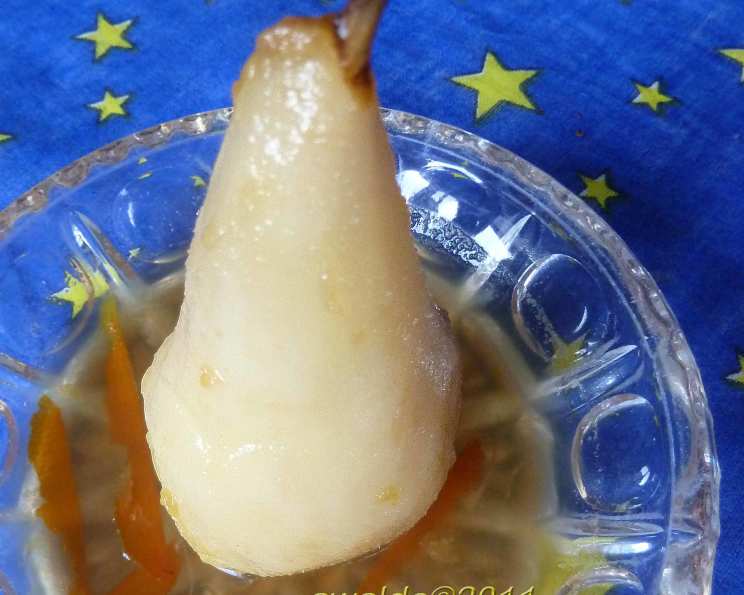
Orange Liqueur Pears: A Chef’s Delight
The memory is etched in my mind: the clinking of crystal glasses, the soft glow of candlelight, and the delicate aroma of citrus mingling with something subtly intoxicating. My grandmother, a woman of impeccable taste and a secret fondness for the finer things, always served these pears after our holiday meals. As a child, I remember being mesmerized by the glistening fruit, almost jewel-like in its syrupy coating, and the grown-ups, relaxed and content, savoring each bite. Now, decades later, recreating this simple yet elegant dessert brings back those cherished moments and allows me to share a piece of that warmth and tradition with my own loved ones.
Recipe Overview
- Prep Time: 15 minutes
- Cook Time: 20 minutes
- Reduction Time: 10-15 minutes
- Total Time: 45-50 minutes
- Servings: 4
- Dietary Type: Vegetarian
Ingredients
- 4 firm pears (such as Bosc or Anjou)
- 250 ml (about 1 cup) orange juice
- 125 ml (about 1/2 cup) water
- 125 ml (about 1/2 cup) dry white wine (such as Sauvignon Blanc or Pinot Grigio)
- 4 tablespoons sugar
- 2 strips orange rind (removed with a vegetable peeler)
- 125 ml (about 1/2 cup) orange liqueur (such as Grand Marnier, Cointreau, or Triple Sec)
Equipment Needed
- Saucepan
- Vegetable Peeler
- Teaspoon
- Serving Dishes
Instructions
- Begin by peeling the pears, leaving the stem intact for an elegant presentation.
- Trim the base of each pear so that it stands upright without wobbling. This not only enhances the visual appeal but also ensures even cooking.
- Using a teaspoon, carefully scoop out a small portion of the core from the bottom of each pear. This creates a reservoir that will allow the flavorful syrup to penetrate the fruit from the inside, intensifying the overall taste.
- In a saucepan, combine the orange juice, water, sugar, orange rind, and white wine.
- Stir the mixture over low heat until the sugar is completely dissolved, ensuring a smooth and even syrup. This step is crucial to prevent any grainy texture in the final product.
- Add the prepared pears to the saucepan.
- Simmer the pears for approximately 20 minutes, or until they are tender but still hold their shape. The cooking time may vary slightly depending on the ripeness and variety of the pears. Use a knife to gently test for doneness – it should slide in easily without resistance.
- Throughout the simmering process, baste the pears with the syrup from time to time. This ensures that they are evenly coated and absorb the maximum amount of flavor.
- Once the pears are cooked, carefully remove them from the saucepan and set them aside.
- Increase the heat under the pan to medium-high.
- Reduce the remaining syrup until it thickens and reaches a sticky, saucy consistency. This usually takes around 10-15 minutes. Keep a close eye on the syrup to prevent it from burning. You’re aiming for a consistency that will coat the back of a spoon.
- Pour the reduced syrup over the pears, ensuring they are thoroughly coated.
- Allow the pears to cool completely. Once cooled, add the orange liqueur, pouring it evenly over the fruit. The liqueur infuses the pears with a delightful aroma and adds a sophisticated touch.
- Before serving, remove the orange rind from the syrup.
- Spoon a generous amount of the remaining syrup over the pears and serve.
Expert Tips & Tricks
- For a more intense orange flavor, use freshly squeezed orange juice. The zest from the orange can also be added to the syrup for an extra burst of citrus.
- Choose pears that are firm to the touch but yield slightly when gently pressed near the stem. Overripe pears will become mushy during cooking.
- To prevent the pears from browning while you are preparing them, rub them with a little lemon juice after peeling.
- If the syrup becomes too thick during reduction, add a tablespoon or two of water to thin it out.
- Don’t discard the leftover syrup! It’s delicious drizzled over yogurt, ice cream, or pancakes.
- For a stunning presentation, you can caramelize the pears slightly after poaching. Before adding the liqueur, place the pears in a hot pan with a tablespoon of butter and brown them on all sides.
- If you don’t have white wine on hand, you can substitute it with apple cider or extra orange juice.
- You can add a touch of spice to the syrup by including a cinnamon stick or a few star anise during simmering. Just remember to remove them before serving.
Serving & Storage Suggestions
These Orange Liqueur Pears are best served chilled or at room temperature. For an elegant presentation, arrange them on individual dessert plates and garnish with a sprig of fresh mint or a dollop of whipped cream or mascarpone cheese. They also pair beautifully with a scoop of vanilla ice cream or a slice of almond cake.
Leftover pears can be stored in an airtight container in the refrigerator for up to 3 days. The flavor may intensify over time as the pears continue to absorb the liqueur. The pears are best eaten within this time however, as they can start to soften too much.
Nutritional Information
Please note that these values are estimates and can vary based on specific ingredients and portion sizes.
| Nutrient | Amount per Serving | % Daily Value |
|---|---|---|
| Calories | 275 kcal | 14% |
| Total Fat | 1g | 1% |
| Saturated Fat | 0g | 0% |
| Cholesterol | 0mg | 0% |
| Sodium | 5mg | 0% |
| Total Carbohydrate | 58g | 21% |
| Dietary Fiber | 7g | 25% |
| Sugars | 42g | – |
| Protein | 1g | 2% |
Variations & Substitutions
- Spice it up: Add a cinnamon stick or a few star anise to the syrup while simmering for a warm, aromatic twist.
- Citrus variations: Experiment with different citrus fruits, such as lemons, limes, or grapefruits, to create unique flavor profiles.
- Alcohol-free option: Replace the orange liqueur with orange extract or a non-alcoholic orange syrup for a family-friendly version.
- Pear variety: Use different varieties of pears, such as Bartlett or Comice, to explore subtle differences in flavor and texture.
- Wine substitution: If you prefer red wine, a light-bodied Pinot Noir or Beaujolais can be used instead of white wine.
- For a richer syrup, add a tablespoon of butter to the pan after removing the pears, and swirl until melted and emulsified.
FAQs (Frequently Asked Questions)
Q: Can I use a different type of liqueur?
A: Absolutely! While orange liqueur is traditional, you can experiment with other flavors like amaretto (almond), kirsch (cherry), or even a splash of brandy.
Q: Can I make this recipe ahead of time?
A: Yes, in fact, the flavors deepen and meld together as the pears sit in the syrup, so making it a day in advance is ideal. Just add the liqueur closer to serving.
Q: The pears are not fully submerged in the syrup. Is that okay?
A: Yes, as long as you baste them frequently, they will cook evenly. You can also gently turn them halfway through the simmering process.
Q: How do I know when the syrup is reduced enough?
A: The syrup should be thick enough to coat the back of a spoon. Be careful not to over-reduce it, as it will become too thick and sticky when cooled.
Q: Can I freeze the leftover pears?
A: While you can freeze them, the texture of the pears may change slightly upon thawing, becoming a bit softer. For best results, enjoy them within a few days of making.
Final Thoughts
I truly hope you’ll give these Orange Liqueur Pears a try. This recipe is more than just a dessert; it’s an invitation to create your own special moments and traditions. Whether you’re hosting a dinner party or simply treating yourself to something sweet, these pears are sure to impress. Don’t be afraid to experiment with different flavors and variations to make it your own. I’d love to hear your feedback and see your creations! Perhaps you’ll pair it with a crisp glass of dessert wine or a strong cup of coffee. Whatever you choose, savor each bite and enjoy the simple pleasures of life. Bon appétit!