
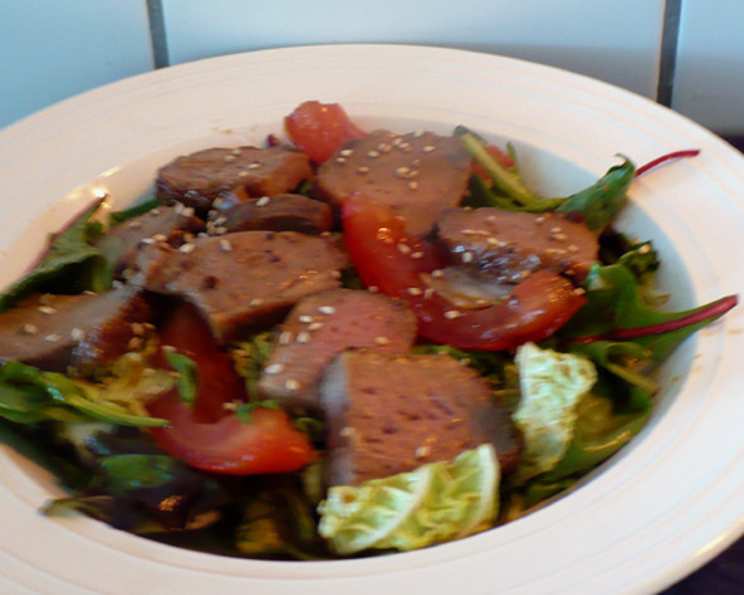
Oriental Duck Salad: A Culinary Journey to the East
The first time I tasted a duck salad like this, I was backpacking through Southeast Asia. In a bustling night market in Bangkok, amidst the fragrant aromas of street food, I stumbled upon a humble stall. The vendor, with a warm smile, presented a plate piled high with vibrant greens, juicy tomatoes, and glistening strips of duck, all drizzled with a captivatingly sweet and savory dressing. That single bite, a symphony of textures and tastes, transported me, igniting a lifelong passion for exploring the harmonious blend of Eastern and Western flavors in my cooking. This recipe, while not a carbon copy, aims to capture that unforgettable moment.
Recipe Overview
- Prep Time: 15 minutes
- Cook Time: 14 minutes
- Total Time: 29 minutes
- Servings: 2
- Dietary Type: High Protein
Ingredients
- 2 duck breasts, skin on
- 4 ounces salad leaves
- 9 ounces cherry tomatoes
- 4 scallions, sliced diagonally
For the dressing:
- 1 garlic clove, crushed
- 1 teaspoon fresh ginger, grated
- 2 tablespoons soy sauce
- 3 tablespoons honey
- Salt and pepper to taste
Equipment Needed
- Oven
- Non-stick frying pan
- Baking tray
- Small bowl (for dressing)
Instructions
- Preheat your oven to 400°F (200°C). Ensure your oven is properly calibrated for consistent results.
- Prepare the duck breasts. Use a sharp knife to score the skin in a crisscross pattern, being careful not to cut into the flesh. This helps the fat render out, resulting in crispy skin. Season the duck breasts generously with salt and pepper.
- Heat a non-stick frying pan over high heat. It’s crucial that the pan is hot before adding the duck to prevent sticking and ensure optimal browning.
- Place the duck breasts skin-side down in the hot pan. Cook for 4 minutes, or until the skin is beautifully crisp and golden brown. You should hear a satisfying sizzle as the fat renders.
- Turn the duck breasts over and quickly brown the underside. This should only take about a minute. The goal here is just to sear the flesh, not to cook it through.
- Transfer the duck breasts to a baking tray. Make sure the tray is oven-safe.
- Prepare the dressing. In a small bowl, mix together the crushed garlic, grated ginger, soy sauce, and honey. Whisk thoroughly until well combined. Taste and adjust seasoning with salt and pepper as needed.
- Spoon all but 2 tablespoons of the dressing over the duck breasts on the baking tray. This will infuse the duck with flavor during roasting.
- Roast the duck in the preheated oven for 10 minutes for medium-rare, or longer if you prefer it more well-done. The internal temperature should reach 135°F (57°C) for medium-rare. A meat thermometer is your best friend here.
- Remove the duck from the oven and let it rest for 4 minutes. Resting allows the juices to redistribute, resulting in a more tender and flavorful duck. Tenting it loosely with foil can help retain heat.
- While the duck is resting, prepare the salad. Toss together the salad leaves, cherry tomatoes, and diagonally sliced scallions in a large bowl.
- Slice the rested duck breasts into strips. Use a sharp knife to ensure clean, even slices.
- Add the duck slices to the salad and drizzle over the remaining dressing. Toss gently to combine.
- Serve immediately and enjoy!
Expert Tips & Tricks
- Crispy Skin Secret: Start with a cold pan. Place the duck skin-side down in a cold pan, then turn the heat to medium. This allows the fat to render slowly, resulting in super crispy skin.
- Duck Fat Bonus: Save the rendered duck fat! It’s liquid gold for roasting potatoes or vegetables.
- Dressing Adjustment: If you prefer a tangier dressing, add a splash of rice vinegar or lemon juice.
- Spice It Up: Add a pinch of red pepper flakes to the dressing for a touch of heat.
- Marinating Magic: For an even more intense flavor, marinate the duck breasts in the dressing for at least 30 minutes before cooking.
- Don’t Overcook!: Duck is best served medium-rare to medium. Overcooked duck can be dry and tough. Use a meat thermometer to ensure perfectly cooked duck every time.
Serving & Storage Suggestions
Serve this Oriental Duck Salad immediately for the best flavor and texture. The warmth of the duck complements the freshness of the salad beautifully.
Leftovers can be stored in an airtight container in the refrigerator for up to 2 days. However, the salad leaves may wilt slightly. It’s best to store the dressing separately and add it just before serving to prevent the salad from becoming soggy. Reheat the duck gently in a skillet or microwave until warmed through, being careful not to overcook it. This salad is not suitable for freezing.
Nutritional Information
| Nutrient | Amount per Serving | % Daily Value |
|---|---|---|
| Calories | 627 kcal | 31% |
| Total Fat | 26.4g | 40% |
| Saturated Fat | 7.1g | 35% |
| Cholesterol | 326.4mg | 109% |
| Sodium | 1220mg | 51% |
| Total Carbohydrate | 34.8g | 12% |
| Dietary Fiber | 2.6g | 10% |
| Sugars | 30.3g | N/A |
| Protein | 62.6g | 125% |
Note: Nutritional information is an estimate and may vary based on specific ingredients and preparation methods.
Variations & Substitutions
- Chicken Substitution: If duck isn’t your thing, you can easily substitute it with chicken breasts or thighs. Adjust cooking time accordingly.
- Vegetarian Option: Replace the duck with grilled tofu or tempeh for a vegetarian version.
- Salad Green Swap: Use different types of salad greens, such as arugula, spinach, or mixed greens, depending on your preference.
- Nutty Crunch: Add some toasted sesame seeds, chopped peanuts, or cashews for extra crunch and flavor.
- Fruit Fusion: Incorporate other fruits like mandarin oranges, pineapple chunks, or sliced grapes for a sweeter twist.
- Herbal Infusion: Add fresh herbs like cilantro, mint, or basil to the salad for a burst of freshness.
- Gluten-Free Adaptation: Ensure the soy sauce you use is gluten-free (tamari is a great option).
FAQs (Frequently Asked Questions)
Q: Can I make the dressing ahead of time?
A: Absolutely! The dressing can be made up to 2 days in advance and stored in an airtight container in the refrigerator.
Q: How do I know when the duck is cooked to the right temperature?
A: The best way is to use a meat thermometer. Insert it into the thickest part of the duck breast. 135°F (57°C) is medium-rare, 145°F (63°C) is medium, and 160°F (71°C) is well-done.
Q: What if I don’t have fresh ginger?
A: You can use ground ginger as a substitute, but the flavor won’t be as vibrant. Use about 1/2 teaspoon of ground ginger for every teaspoon of fresh ginger.
Q: Can I grill the duck instead of roasting it?
A: Yes, grilling is a great option! Grill the duck breasts over medium heat, skin-side down, until the skin is crispy and the internal temperature reaches your desired level of doneness.
Q: Is this salad spicy?
A: The recipe as written is not spicy, but you can easily add a pinch of red pepper flakes to the dressing or include some thinly sliced chili peppers in the salad for a kick.
Final Thoughts
This Oriental Duck Salad is more than just a recipe; it’s a culinary adventure waiting to happen. With its blend of crispy duck, fresh vegetables, and tantalizing dressing, it’s a dish that’s sure to impress. I encourage you to try this recipe and make it your own. Experiment with different variations, share your feedback, and most importantly, enjoy the process of creating something delicious. Consider pairing it with a light Sauvignon Blanc or a crisp Asian beer to enhance the flavors. Happy cooking!