
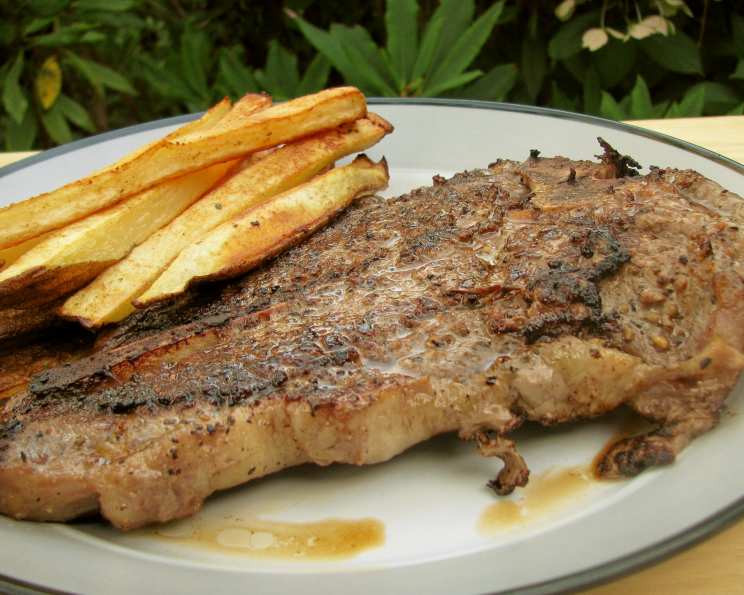
The Perfect Pan-Seared T-Bone Steak: A Chef’s Guide
I still remember the first time I cooked a T-bone steak for my father. It was his birthday, and I was determined to impress him with a perfectly cooked steak. I painstakingly researched methods, learned about searing and resting, and carefully monitored the internal temperature. The moment he took that first bite, his eyes lit up, and he simply said, “This is incredible.” That feeling of accomplishment, the joy of creating something truly delicious for someone I loved, solidified my passion for cooking and cemented the T-bone steak as a personal favorite.
Recipe Overview
- Prep Time: 5 minutes
- Cook Time: 14 minutes
- Total Time: 19 minutes
- Servings: 2
- Yield: 2 steaks
- Dietary Type: Gluten-Free, Dairy-Free
Ingredients
- 1 1⁄2 lbs bone-in beef T-bone steaks
- Kosher salt
- Black pepper (freshly ground)
- 1 tablespoon canola oil
Equipment Needed
- Large skillet (preferably cast iron)
- Oven
- Instant-read thermometer
- Cutting board
Instructions
- Preheat the oven to 450 degrees F. This high heat helps to finish the steak quickly and evenly.
- A half-hour before cooking, remove the steak from the refrigerator. Allowing the steak to come to room temperature ensures more even cooking and a juicier final product. This is crucial for a tender result.
- Heat a large skillet (cast iron is ideal) over high heat. You want the skillet screaming hot to get that beautiful sear.
- Pat the steak dry with paper towels. This step is vital for achieving a good sear. Moisture is the enemy of browning.
- Season the steak generously with kosher salt and freshly ground black pepper. Don’t be shy with the seasoning; it’s the foundation of the steak’s flavor.
- Add the canola oil to the hot skillet. When the oil begins to smoke, carefully add the steak. The smoking oil indicates the pan is hot enough for searing.
- Reduce the heat slightly and cook the steak until browned, about 4 minutes on each side. This initial sear is where the magic happens, developing a rich, flavorful crust. Resist the urge to move the steak around in the pan; let it develop a proper crust.
- Transfer the skillet to the oven. This allows the steak to cook through evenly without burning the outside.
- Roast until an instant-read thermometer inserted sideways into the steak registers 120 degrees F for medium-rare, about 6 to 8 minutes. Cooking times will vary depending on the thickness of the steak and the accuracy of your oven. For medium, aim for 130-135 degrees F. Remember that the steak will continue to cook slightly as it rests.
- Transfer the steak to a cutting board and let it rest for 10 minutes. This is a very important step! Resting allows the juices to redistribute throughout the steak, resulting in a much more tender and flavorful cut. If you skip this, all those delicious juices will run out when you cut into it.
- Cut the steak from the bone and carve the meat across the grain. Cutting against the grain shortens the muscle fibers, making the steak easier to chew.
Expert Tips & Tricks
- Reverse Sear: For an even more controlled cook, try the reverse sear method. Start the steak in a low oven (around 275°F) until it reaches about 110°F internally. Then, sear it in the hot skillet for that final crust.
- Flavor Infusion: Add a sprig of rosemary or thyme to the skillet during the searing process to infuse the steak with herbaceous notes. A clove of crushed garlic can also add a nice touch.
- Salt Type: Kosher salt is preferred over table salt because it has a larger crystal size and adheres better to the steak, resulting in more even seasoning.
- Pan Matters: While cast iron is ideal, any heavy-bottomed skillet that can withstand high heat will work. Avoid non-stick pans, as they don’t get hot enough for a good sear.
- Don’t Crowd the Pan: If you’re cooking more than one steak, make sure they’re not crammed into the pan. Overcrowding lowers the pan temperature and results in steaming instead of searing. Cook in batches if necessary.
Serving & Storage Suggestions
Serve your perfectly seared T-bone steak immediately after resting. Classic pairings include roasted potatoes, grilled asparagus, or a simple salad. For a truly decadent meal, top the steak with a pat of compound butter (such as garlic-herb or blue cheese butter).
Leftovers can be stored in an airtight container in the refrigerator for up to 3 days. To reheat, gently warm in a skillet over medium-low heat or in a low oven (around 250°F) to prevent overcooking. You can also slice the leftover steak and use it in salads, sandwiches, or tacos. Freezing cooked steak is not ideal as it can affect the texture, but if necessary, wrap tightly in plastic wrap and then aluminum foil. Thaw overnight in the refrigerator before reheating.
Nutritional Information
| Nutrient | Amount per Serving | % Daily Value |
|---|---|---|
| Calories | 810 kcal | N/A |
| Total Fat | 59 g | 90% |
| Saturated Fat | 21 g | 106% |
| Cholesterol | 194 mg | 64% |
| Sodium | 184 mg | 7% |
| Total Carbohydrate | 0 g | 0% |
| Dietary Fiber | 0 g | 0% |
| Sugars | 0 g | 0% |
| Protein | 65 g | 130% |
Note: Nutritional information is an estimate and may vary based on specific ingredients and cooking methods.
Variations & Substitutions
- Herb Butter: As mentioned earlier, a compound butter can elevate the flavor of the steak. Experiment with different herbs and spices to create your own signature blend.
- Marinade: For a more intense flavor, marinate the steak for a few hours before cooking. A simple marinade could consist of olive oil, garlic, herbs, and lemon juice.
- Spice Rub: Instead of just salt and pepper, create a spice rub with paprika, chili powder, garlic powder, and onion powder.
- Different Oils: While canola oil is a good neutral option, you can also use other high-smoke-point oils like grapeseed oil or avocado oil.
- Sauce Options: A classic red wine reduction, béarnaise sauce, or chimichurri are all excellent accompaniments to a T-bone steak.
FAQs (Frequently Asked Questions)
Q: How do I know when my pan is hot enough for searing?
A: The oil should shimmer and just begin to smoke. If it’s not hot enough, the steak will steam instead of sear.
Q: What is the ideal internal temperature for medium-rare steak?
A: For medium-rare, aim for an internal temperature of 120-125 degrees F. The steak will continue to cook slightly as it rests.
Q: Why is it important to let the steak rest after cooking?
A: Resting allows the juices to redistribute throughout the steak, resulting in a more tender and flavorful cut. If you cut into it immediately, the juices will run out.
Q: Can I use a grill instead of a skillet and oven?
A: Absolutely! Grill the steak over high heat to sear, then move to a cooler part of the grill to finish cooking.
Q: What if I don’t have an instant-read thermometer?
A: While a thermometer is the best way to ensure accurate doneness, you can also use the touch test. Press the center of the steak; it should feel slightly firm but still have some give for medium-rare.
Final Thoughts
There’s a certain satisfaction that comes from preparing a truly exceptional steak, and the T-bone, with its combination of tender filet and flavorful strip, is a cut that always delivers. Don’t be intimidated by the process; with a few simple techniques and a little practice, you’ll be serving up restaurant-quality steaks in no time. I encourage you to give this recipe a try, experiment with different flavors, and most importantly, share your creation with someone you love. Pair it with a bold Cabernet Sauvignon for a truly unforgettable meal!