
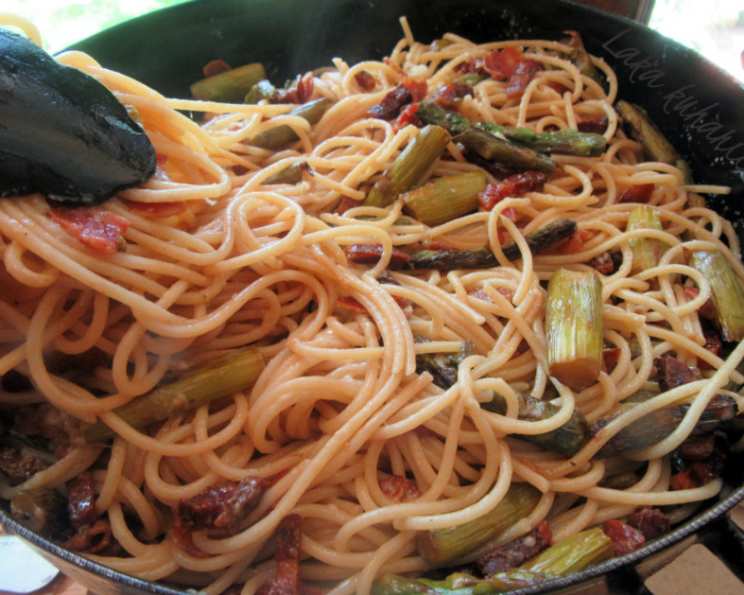
Pancetta and Asparagus Pasta: A Taste of Spring
I can still picture myself, a fresh-faced culinary student, nervously preparing this dish for my first ever “real” dinner party. The aroma of crispy pancetta sizzling in the pan, mingling with the delicate scent of asparagus, filled my tiny apartment. It was a simple meal, born out of a limited budget and a desire to impress, but the clean, bright flavors spoke volumes. That night, gathered around a rickety table, laughter and conversation flowed as freely as the wine, and I knew, in that moment, that I had found my calling. This pasta, for me, will always be a symbol of fresh starts, shared moments, and the simple joy of good food.
Recipe Overview
- Prep Time: 10 minutes
- Cook Time: 20 minutes
- Total Time: 30 minutes
- Servings: 4
- Dietary Type: Varies (see variations)
Ingredients
- 250 g pasta, of your choice
- 250 g pancetta, cut into small sticks
- 500 g fresh asparagus, ends trimmed and cut into 2-inch pieces
- 20 ml dry white wine
- 1/2 cup grated parmesan cheese
Equipment Needed
- Large pot
- Large pan or skillet
- Slotted spoon
Instructions
- Begin by placing a large pot of salted water on high heat. Once boiling, add your pasta and cook according to the package instructions until al dente. Remember to reserve about ¼ cup of the pasta water before draining, just in case you need it later to adjust the sauce consistency.
- While the pasta is cooking, prepare the pancetta. Place the pancetta in a large pan or skillet over medium-high heat. Sauté, stirring occasionally, until the pancetta is crispy and golden brown. This should take about 5-7 minutes.
- Using a slotted spoon, carefully remove the crispy pancetta from the pan and set it aside on a plate lined with paper towels to drain any excess grease.
- Next, add the trimmed and chopped asparagus to the pan with the rendered pancetta fat. Sauté the asparagus for about 5-6 minutes, stirring occasionally, until it is tender-crisp and bright green. Be careful not to overcook it; you want it to retain a bit of bite.
- Now it’s time to deglaze the pan. Slowly pour in the dry white wine, being careful as it will sizzle and steam. Scrape the bottom of the pan with a wooden spoon to loosen any flavorful browned bits that have accumulated. Continue cooking for about 5 minutes, or until the wine has reduced by about half, concentrating its flavor.
- Once the pasta is cooked and drained (reserving that pasta water!), add it directly to the pan with the asparagus. Also, add the crispy pancetta and ¼ cup of the Parmesan cheese.
- Toss everything together until well combined, ensuring the pasta is coated in the flavorful sauce. If the sauce seems too thick, add a little of the reserved pasta water, one tablespoon at a time, until you reach your desired consistency.
- Serve immediately, sprinkled with the remaining ¼ cup of Parmesan cheese.
Expert Tips & Tricks
- Crispy Pancetta Secrets: For extra crispy pancetta, start with a cold pan. This allows the fat to render slowly, resulting in perfectly crisp pieces.
- Asparagus Perfection: To keep asparagus vibrant green, blanch it in boiling water for just a minute, then immediately plunge it into ice water. This stops the cooking process and preserves its color and texture. You can then add it to the pancetta fat at the end to warm it through.
- Wine Choice: While any dry white wine will work, a crisp Sauvignon Blanc or Pinot Grigio complements the flavors of the dish beautifully.
- Pasta Water is Gold: Never underestimate the power of pasta water! The starch in the water helps emulsify the sauce, creating a creamy texture without the need for cream.
- Make-Ahead Tip: You can cook the pancetta and asparagus ahead of time and store them separately in the refrigerator. When ready to serve, simply reheat them in the pan and toss with the cooked pasta and Parmesan cheese.
Serving & Storage Suggestions
Serve this Pancetta and Asparagus Pasta immediately while it’s hot and the flavors are at their peak. Garnish with a few extra shavings of Parmesan cheese and a sprig of fresh parsley or basil for a pop of color. A simple side salad with a lemon vinaigrette would complement the richness of the pasta.
Leftovers can be stored in an airtight container in the refrigerator for up to 2 days. To reheat, gently warm the pasta in a skillet over medium heat, adding a splash of water or broth to prevent it from drying out. Microwaving is also an option, but it can sometimes make the pasta a bit mushy. Freezing is not recommended as the texture of the pasta and asparagus can change upon thawing.
Nutritional Information
| Nutrient | Amount per Serving | % Daily Value |
|---|---|---|
| Calories | 450 kcal | 23% |
| Total Fat | 25g | 38% |
| Saturated Fat | 12g | 60% |
| Cholesterol | 50mg | 17% |
| Sodium | 400mg | 17% |
| Total Carbohydrate | 40g | 13% |
| Dietary Fiber | 5g | 20% |
| Sugars | 4g | – |
| Protein | 20g | 40% |
Variations & Substitutions
- Vegetarian Option: Omit the pancetta and substitute with sautéed mushrooms or sun-dried tomatoes for a vegetarian twist. You can also add a pinch of red pepper flakes for a bit of heat.
- Gluten-Free: Use your favorite gluten-free pasta to make this dish suitable for those with gluten sensitivities.
- Dairy-Free: Substitute the Parmesan cheese with nutritional yeast for a cheesy flavor without the dairy.
- Seasonal Swap: In the fall, try replacing the asparagus with roasted butternut squash or Brussels sprouts.
- Protein Boost: Add grilled chicken or shrimp to the pasta for a more substantial meal.
- Lemon Zest: For a brighter, more citrusy flavor, add a teaspoon of lemon zest to the pasta when tossing it with the asparagus and pancetta.
FAQs (Frequently Asked Questions)
Q: Can I use bacon instead of pancetta?
A: Yes, bacon can be used as a substitute, but keep in mind that bacon has a smokier flavor than pancetta, which will alter the overall taste of the dish.
Q: Can I use frozen asparagus?
A: While fresh asparagus is preferred, frozen asparagus can be used in a pinch. Be sure to thaw it completely and pat it dry before sautéing to prevent it from becoming mushy.
Q: How do I know when the pasta is cooked al dente?
A: “Al dente” means “to the tooth” in Italian. The pasta should be firm to the bite with a slight resistance in the center.
Q: Can I add other vegetables to this pasta?
A: Absolutely! Peas, zucchini, and spinach are all great additions to this dish.
Q: Can I use a different type of cheese?
A: While Parmesan is the classic choice, you can experiment with other hard cheeses like Pecorino Romano or Grana Padano.
Final Thoughts
This Pancetta and Asparagus Pasta is more than just a recipe; it’s an invitation to embrace simple pleasures and create lasting memories around the table. I encourage you to try it, experiment with the variations, and make it your own. Share your creations with friends and family, and let the flavors of spring inspire joy and connection. And, if you happen to find yourself with a glass of crisp white wine nearby, well, that’s just a bonus!