
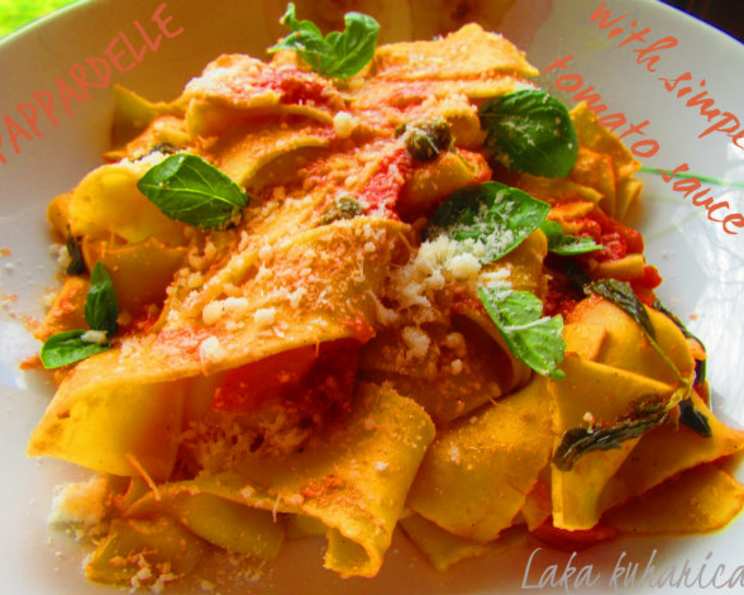
Pappardelle With Simple Tomato Sauce: A Taste of Italian Simplicity
The aroma of garlic gently sautéing in olive oil, the vibrant red of ripe tomatoes bubbling in a pan, the comforting simplicity of perfectly cooked pasta – these are the scents and sights that transport me back to my Nonna’s kitchen in Tuscany. I remember watching her, mesmerized, as she transformed humble ingredients into culinary masterpieces. This pappardelle with simple tomato sauce is my homage to her – a dish that proves the most satisfying flavors are often born from the purest expressions of culinary love.
Recipe Overview
- Prep Time: 15 minutes
- Cook Time: 10 minutes
- Total Time: 25 minutes
- Servings: 4
- Dietary Type: Vegetarian
Ingredients
- 1 tablespoon olive oil
- 4 garlic cloves, peeled and finely sliced
- 1 fresh red bell pepper, halved, deseeded and finely sliced
- 1 small bunch fresh basil, leaves picked
- 800 g whole tomatoes, tinned
- 1 tablespoon pickled capers
- 1 teaspoon sea salt
- 1 teaspoon black pepper
- 500 g fresh lasagna sheets
- Parmesan cheese, grated (for serving)
Equipment Needed
- Large skillet or saucepan
- Knife or pastry wheel
- Large pot
- Colander
Instructions
- Begin by preparing your sauce. In a large skillet or saucepan, heat the olive oil over medium heat. Once the oil is shimmering, add the finely sliced garlic and red bell pepper strips. Sauté, stirring frequently, until the garlic is lightly colored and fragrant, taking care not to burn it – about 2-3 minutes.
- Add most of the basil leaves to the pan, stir gently, and wait a few seconds until the basil wilts slightly, releasing its aromatic oils.
- Pour in the tinned whole tomatoes. Using a wooden spoon or spatula, break the tomatoes up into smaller chunks. This will help them to release their juices and create a smoother sauce.
- Bring the sauce to a gentle boil, then reduce the heat to low and simmer for about 5 minutes, allowing the flavors to meld together. Stir occasionally to prevent sticking.
- Stir in the pickled capers, sea salt, and black pepper. Taste the sauce and adjust seasonings as needed. Set the sauce aside and keep it warm while you prepare the pasta.
- Now, prepare your pappardelle. On a lightly floured work surface, lay out the fresh lasagna sheets. Using a sharp knife or a pastry wheel, cut the lasagna sheets lengthwise into strips, approximately 1-inch wide. These will be your pappardelle.
- Bring a large pot of water to a rolling boil. Add a generous pinch of salt to the boiling water.
- Gently add the fresh pappardelle to the boiling water. Cook for just a few minutes, until the pasta is al dente – tender but still firm to the bite. Fresh pasta cooks very quickly, so keep a close eye on it.
- Once the pappardelle is cooked, drain it in a colander, reserving about a 1/2 cup of the pasta water.
- Immediately add the drained pasta to the warm tomato sauce in the skillet or saucepan. Gently toss to coat the pappardelle evenly with the sauce. If the sauce seems too thick, add a little of the reserved pasta water to loosen it up and create a luscious consistency.
- Serve the pappardelle immediately in warmed bowls. Sprinkle generously with grated Parmesan cheese and garnish with the remaining fresh basil leaves.
Expert Tips & Tricks
- For a richer, more complex flavor, consider adding a splash of dry red wine to the sauce after sautéing the garlic and bell pepper. Allow the wine to reduce slightly before adding the tomatoes.
- If you don’t have fresh lasagna sheets, you can use dried pappardelle. Cook it according to the package directions, but be sure to drain it well before adding it to the sauce.
- To intensify the tomato flavor, you can roast the tomatoes in the oven before adding them to the sauce. Simply toss the tomatoes with olive oil, salt, and pepper, then roast at 400°F (200°C) for about 30 minutes, or until softened and slightly caramelized.
- Don’t overcook the pasta! Fresh pasta cooks very quickly, so be sure to check it frequently to ensure it remains al dente.
- For a smoother sauce, you can use an immersion blender to puree the sauce after simmering. However, I prefer to leave it slightly chunky for a more rustic texture.
Serving & Storage Suggestions
Serve the pappardelle immediately while it’s hot and the sauce is vibrant. A simple green salad and crusty bread make the perfect accompaniment. This dish pairs beautifully with a light-bodied Italian red wine, such as Chianti or Barbera.
Leftovers can be stored in an airtight container in the refrigerator for up to 3 days. To reheat, gently warm the pappardelle in a skillet over low heat, adding a splash of water or broth if needed to prevent it from drying out. You can also reheat it in the microwave, but be careful not to overcook the pasta.
Nutritional Information
| Nutrient | Amount per Serving | % Daily Value |
|---|---|---|
| Calories | 480 kcal | 24% |
| Total Fat | 18g | 28% |
| Saturated Fat | 6g | 30% |
| Cholesterol | 20mg | 7% |
| Sodium | 750mg | 31% |
| Total Carbohydrate | 65g | 22% |
| Dietary Fiber | 5g | 20% |
| Sugars | 12g | |
| Protein | 15g | 30% |
Note: Nutritional information is an estimate and may vary based on specific ingredients and preparation methods.
Variations & Substitutions
- Vegan: Omit the Parmesan cheese or substitute it with a vegan Parmesan alternative.
- Gluten-Free: Use gluten-free lasagna sheets or a gluten-free dried pasta like tagliatelle.
- Spicy: Add a pinch of red pepper flakes to the sauce while sautéing the garlic and bell pepper.
- Vegetable Medley: Incorporate other vegetables into the sauce, such as zucchini, eggplant, or mushrooms.
- Herby: Experiment with different herbs, such as oregano, thyme, or rosemary.
FAQs (Frequently Asked Questions)
Q: Can I use crushed tomatoes instead of whole tomatoes?
A: Yes, you can substitute crushed tomatoes for whole tomatoes. The texture of the sauce will be a bit different, but the flavor will still be delicious.
Q: Can I make this sauce ahead of time?
A: Absolutely! The sauce can be made up to 3 days in advance and stored in the refrigerator. This is a great way to save time on busy weeknights.
Q: How do I prevent the pasta from sticking together?
A: Make sure to use plenty of boiling water when cooking the pasta. Adding salt to the water also helps. Once the pasta is cooked, drain it immediately and toss it with the sauce.
Q: Can I freeze leftover pappardelle with tomato sauce?
A: Yes, you can freeze leftover pappardelle with tomato sauce. Store it in an airtight container for up to 2 months. Thaw overnight in the refrigerator before reheating. The pasta texture may be slightly softer after freezing and thawing.
Q: What is the best type of Parmesan cheese to use?
A: I recommend using freshly grated Parmigiano-Reggiano for the best flavor and texture.
Final Thoughts
This pappardelle with simple tomato sauce is a testament to the power of simple, fresh ingredients. It’s a dish that’s both comforting and satisfying, perfect for a quick weeknight meal or a special occasion. I encourage you to try this recipe and experience the joy of creating a delicious and authentic Italian dish in your own kitchen. Don’t be afraid to experiment with different variations and make it your own. And please, share your feedback – I’d love to hear how it turns out! Pair this wonderful dish with a chilled glass of Pinot Grigio to elevate the entire experience. Buon appetito!