
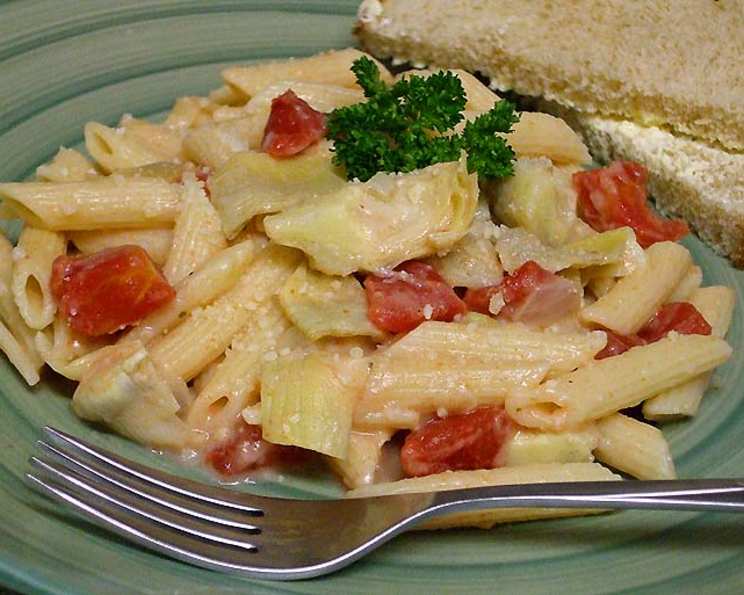
Pasta With Artichokes: A Taste of the Tuscan Coast
The aroma of artichokes sautéing in butter and garlic is a scent that instantly transports me back to a small trattoria nestled on the Tuscan coast. It was there, amidst the sun-drenched hills and the sound of crashing waves, that I first encountered this deceptively simple, yet utterly captivating dish. The tender artichokes, perfectly cooked pasta, and a touch of creamy richness created a symphony of flavors that I knew I had to recreate at home. Every time I make it, it’s like a little piece of Tuscany appears on my table, ready to be enjoyed.
Recipe Overview
- Prep Time: 20 minutes
- Cook Time: 15 minutes
- Total Time: 35 minutes
- Servings: 5
- Dietary Type: Vegetarian (can be made vegan)
Ingredients
- 1/2 lb baby artichokes (about the size of an egg)
- 1/2 lemon, juice of
- 1/2 cup scallions, finely chopped
- 1/4 cup butter (or olive oil for vegan)
- 1 lb ripe tomatoes, peeled, seeded, and chopped
- 1/2 cup heavy cream (or plant-based cream alternative)
- Salt, to taste
- Pepper, to taste
- 3/4 lb dry pasta (tagliatelle or thin spaghetti recommended)
- Grated Parmesan cheese (optional)
Equipment Needed
- Large pot
- Large skillet
- Cutting board
- Knife
- Mixing bowl
Instructions
- Begin by preparing the artichokes. Peel the stems, break off any tough outer leaves, and cut off the tip to remove the spines. This step is crucial for removing the fibrous parts of the artichoke.
- As you prepare the artichokes, chop them finely. Immediately drop the chopped artichokes into a bowl of water acidulated with the juice of 1/2 lemon. This prevents them from oxidizing and turning brown.
- In a large skillet, melt the 1/4 cup of butter over low-medium heat. If you’re making a vegan version, substitute with olive oil.
- Add 1/2 cup of finely chopped scallions to the skillet. Cook the scallions, stirring occasionally, until they are softened, about 3-5 minutes. Be careful not to burn them.
- Drain the artichokes from the lemon water. Add the drained artichokes to the skillet with the softened scallions.
- Cook the artichokes over medium heat for 5-7 minutes, or until they are tender. Stir frequently to ensure even cooking and prevent sticking. The artichokes should have a slight golden color.
- Add 1 lb of peeled, seeded, and chopped ripe tomatoes to the skillet. Cook the tomatoes over moderate heat, stirring, for 1 minute to allow the flavors to meld.
- Pour in 1/2 cup of heavy cream. If you’re opting for a vegan version, use a plant-based cream alternative like cashew cream or oat cream.
- Season the sauce with salt and pepper to taste. Adjust the seasoning according to your preference.
- Bring the sauce to a boil, then reduce the heat and simmer, covered, for one minute. This allows the flavors to combine and the sauce to thicken slightly. Then, turn off the heat.
- While the sauce is simmering, bring a large pot of boiling salted water to a rolling boil. Add 3/4 lb of dry pasta to the boiling water. Cook the pasta according to package directions until it is al dente. This means it should be firm to the bite.
- Just before the pasta is done, turn the heat under the sauce back on to low. This will warm the sauce and prepare it for tossing with the pasta.
- Once the pasta is cooked al dente, drain it well, reserving about 1/2 cup of the pasta water.
- Add the drained pasta to the skillet with the artichoke sauce. Toss the pasta and sauce together thoroughly to coat each strand. If the sauce seems too thick, add a little of the reserved pasta water to loosen it.
- Serve the hot pasta immediately, topped with grated Parmesan cheese, a piacere (if desired).
Expert Tips & Tricks
- Artichoke Prep: Preparing artichokes can seem daunting, but a sharp knife and a little patience are key. If you’re using regular artichokes instead of baby artichokes, be sure to trim them more aggressively, removing all the tough outer leaves and the fibrous choke.
- Tomato Choice: Using ripe, in-season tomatoes will significantly enhance the flavor of the sauce. If fresh tomatoes are not available, you can substitute with good-quality canned diced tomatoes. Drain them well before adding them to the skillet.
- Pasta Water: Don’t discard the pasta water! It’s a valuable tool for adjusting the consistency of the sauce. The starchy water helps the sauce cling to the pasta and creates a creamier texture.
- Vegan Adaptation: For a vegan version, use olive oil instead of butter and a plant-based cream alternative like cashew cream or oat cream. Nutritional yeast can be added for a cheesy flavor.
- Make-Ahead: The artichoke sauce can be made ahead of time and stored in the refrigerator for up to 2 days. Simply reheat it before tossing with the cooked pasta.
Serving & Storage Suggestions
Serve this Pasta with Artichokes immediately after tossing the pasta and sauce together for the best flavor and texture. Garnish with a sprinkle of fresh parsley or a drizzle of olive oil for an extra touch of elegance.
Leftovers can be stored in an airtight container in the refrigerator for up to 3 days. To reheat, gently warm the pasta in a skillet over low heat, adding a splash of water or broth if needed to prevent it from drying out. Microwaving is also an option, but it may affect the texture of the pasta. Freezing is not recommended as the pasta may become mushy upon thawing.
Nutritional Information
| Nutrient | Amount per Serving | % Daily Value |
|---|---|---|
| Calories | 450 kcal | 23% |
| Total Fat | 20g | 31% |
| Saturated Fat | 12g | 60% |
| Cholesterol | 60mg | 20% |
| Sodium | 150mg | 6% |
| Total Carbohydrate | 60g | 20% |
| Dietary Fiber | 5g | 20% |
| Sugars | 5g | – |
| Protein | 12g | 24% |
Note: Nutritional information is an estimate and may vary based on specific ingredients and portion sizes.
Variations & Substitutions
- Spicy Kick: Add a pinch of red pepper flakes to the sauce for a subtle kick of heat.
- Lemon Zest: Grate the zest of one lemon into the sauce for a brighter, more citrusy flavor.
- White Wine: Deglaze the skillet with 1/4 cup of dry white wine after cooking the scallions for added depth of flavor.
- Other Vegetables: Add other vegetables to the sauce, such as mushrooms, asparagus, or zucchini, for a heartier meal.
- Gluten-Free: Use gluten-free pasta to accommodate dietary restrictions.
FAQs (Frequently Asked Questions)
Q: Can I use frozen artichoke hearts?
A: Yes, you can use frozen artichoke hearts. Thaw them completely and drain them well before adding them to the skillet. They may not have the same texture as fresh artichokes, but they are a convenient alternative.
Q: How do I prevent the artichokes from discoloring?
A: Acidulating the water with lemon juice is crucial for preventing the artichokes from oxidizing and turning brown. Make sure to add the chopped artichokes to the lemon water immediately after cutting them.
Q: Can I make this recipe without cream?
A: Yes, you can omit the cream altogether for a lighter version. The sauce will still be flavorful from the tomatoes, artichokes, and scallions.
Q: What other types of pasta would work well with this sauce?
A: While tagliatelle and thin spaghetti are recommended, other types of pasta like penne, rigatoni, or fusilli would also work well. Choose a pasta shape that has ridges or grooves to help the sauce cling to it.
Q: How can I add more protein to this dish?
A: You can add grilled chicken, shrimp, or white beans to the pasta for a protein boost.
Final Thoughts
This Pasta with Artichokes recipe is a testament to the beauty of simple, fresh ingredients. It’s a dish that’s both comforting and elegant, perfect for a weeknight dinner or a special occasion. I encourage you to try it for yourself and experience the taste of the Tuscan coast. Don’t be afraid to experiment with variations and substitutions to make it your own. Buon appetito!