
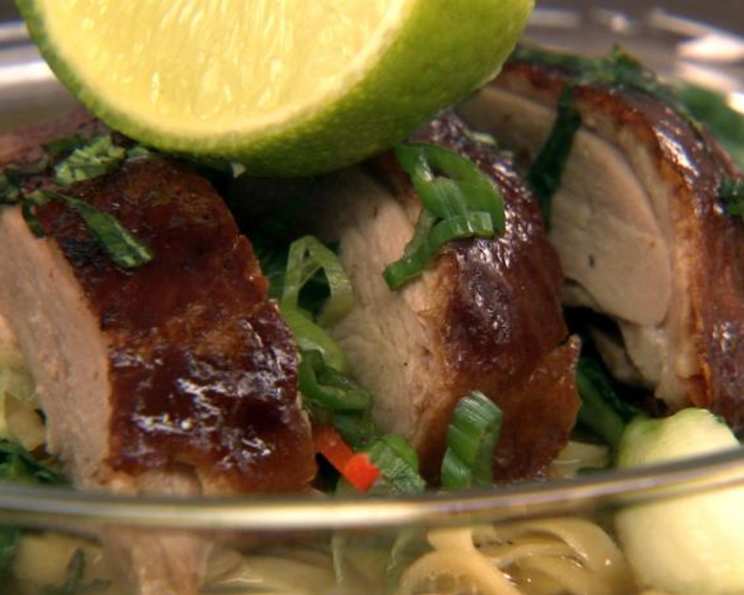
Peking Duck Noodle Soup: A Culinary Symphony
I remember the first time I tasted truly authentic Peking duck. It wasn’t in Beijing, but in a tiny, unassuming restaurant tucked away in Montreal’s Chinatown. The chef, a wizened old man with hands that moved with practiced grace, carved the crisp, lacquered skin with theatrical flair. The succulent meat, the delicate pancakes, the sweet bean sauce – it was a revelation. That memory has forever shaped my appreciation for this iconic dish, and this Peking Duck Noodle Soup is my attempt to capture that magic in a comforting, slurpable bowl. It’s a celebration of flavor and texture, transforming the elegant Peking duck into an approachable, everyday pleasure. Recipe courtesy of the brilliant Chuck Hughes, this soup will quickly become a family favorite.
Recipe Overview
- Prep Time: 25 minutes
- Cook Time: 3 hours 15 minutes
- Total Time: 3 hours 40 minutes
- Servings: 4
- Dietary Type: Omnivore
Ingredients
Broth
- 3 tablespoons vegetable oil
- Bones from 1 duck
- 1 onion, chopped
- 2 celery ribs, chopped
- 2 carrots, chopped
- 2 inches fresh ginger, sliced
- 1 garlic clove, minced
- 1 teaspoon black peppercorns
- 1 teaspoon szechuan peppercorns
- 2 kaffir lime leaves
- Salt and pepper to taste
Duck Soup
- 2 baby bok choy, sliced
- 1 cup chopped scallion
- 1 hot red chili pepper, cut into thin strips
- 1 tablespoon soy sauce
- 1 package wonton egg noodles
- 2 cooked duck breasts
- Thai basil, for garnish
- Lime slice, for garnish
- Sriracha sauce, for serving
Equipment Needed
- Large stockpot
- Sieve
- Shallow bowls
- Cutting board
- Sharp knife
Instructions
- Prepare the Broth: In a large stockpot, heat the vegetable oil over medium-high heat.
- Sear the Duck Bones: Break up the duck bones and sear them on all sides until golden brown, approximately 5 minutes. Searing the bones is crucial for building a rich and flavorful broth. Don’t rush this step!
- Add the Vegetables: Add the chopped onion, celery ribs, and carrots to the pot. Continue cooking until the vegetables are caramelized, about another 5 minutes. Caramelization adds depth and sweetness to the broth. Stir frequently to prevent burning.
- Infuse with Spices: Add the sliced fresh ginger, minced garlic clove, black peppercorns, szechuan peppercorns, and kaffir lime leaves. Sauté for another minute to release their aromas.
- Simmer the Broth: Add 16 cups of water to the stockpot. Season with salt and pepper. Bring the mixture to a boil, then lower the heat to a simmer. Let it simmer gently for approximately 3 hours. This long simmering time is essential to extract all the flavor from the bones and vegetables.
- Cool and Strain: After simmering, let the broth cool for about 15 minutes. This makes it safer to handle when straining.
- Strain the Broth: Pass the broth through a sieve to remove the solids. Discard the solids. This will give you a clean and clear broth.
- Remove the Fat: Skim off any excess fat from the surface of the broth. This step helps to create a lighter and more palatable soup.
- Reserve the Broth: Pour the broth back into the stockpot. This is your base for the Peking Duck Noodle Soup. Keep it warm over low heat.
- Assemble the Soup: Add the sliced baby bok choy, chopped scallion, and thin strips of hot red chili pepper to the stockpot with the reserved duck broth.
- Season: Add the soy sauce to enhance the savory flavor.
- Cook the Noodles: Add the wonton egg noodles to the pot and simmer for 1 minute, or until the noodles are cooked through but still slightly firm. Be careful not to overcook the noodles, as they will become mushy.
- Slice the Duck: Slice the cooked duck breasts thinly. Aim for even slices for consistent presentation and texture.
- Serve: Place the cooked wonton egg noodles in the center of a shallow bowl. Top with the sliced duck.
- Ladle and Garnish: Pour some of the broth and vegetables into each bowl. Garnish with fresh Thai basil and a slice of lime. Serve immediately with sriracha sauce on the side for those who like extra heat.
Expert Tips & Tricks
- Duck Bone Sourcing: If you don’t have leftover duck bones, ask your local butcher. They may be able to provide them for you. Roasting the bones in the oven before simmering can also deepen the broth’s flavor.
- Spice Level Adjustment: Adjust the amount of red chili pepper to your preferred spice level. Removing the seeds will reduce the heat.
- Broth Make-Ahead: The broth can be made a day or two in advance and stored in the refrigerator. This allows the flavors to meld even further.
- Noodle Doneness: Keep a close eye on the noodles as they cook. Different brands may cook at slightly different rates.
Serving & Storage Suggestions
Serve this Peking Duck Noodle Soup immediately while it’s hot and the noodles are perfectly cooked. Garnish with fresh Thai basil and a wedge of lime for a vibrant presentation. Leftover soup can be stored in an airtight container in the refrigerator for up to 3 days. The noodles will continue to absorb the broth, so they may become softer upon reheating. To reheat, gently warm the soup over low heat on the stovetop, adding a splash of water or broth if needed. While freezing is possible, the texture of the noodles may change upon thawing. It is best to consume the soup fresh or within a few days of making it.
Nutritional Information
| Nutrient | Amount per Serving | % Daily Value |
|---|---|---|
| Calories | 450 kcal | 23% |
| Total Fat | 25g | 38% |
| Saturated Fat | 8g | 40% |
| Cholesterol | 80mg | 27% |
| Sodium | 800mg | 33% |
| Total Carbohydrate | 35g | 12% |
| Dietary Fiber | 3g | 12% |
| Sugars | 5g | – |
| Protein | 20g | 40% |
Note: Nutritional information is an estimate and can vary based on specific ingredients and portion sizes.
Variations & Substitutions
- Chicken or Turkey: If duck isn’t available, chicken or turkey bones can be substituted for the broth. The flavor profile will be slightly different but still delicious.
- Vegetarian Option: For a vegetarian version, use vegetable broth and add tofu or mushrooms instead of duck.
- Gluten-Free Noodles: Use gluten-free rice noodles or glass noodles for a gluten-free option.
- Spicier Soup: Add more chili pepper or a dash of chili oil for a spicier soup.
- Add Vegetables: Add other vegetables like snow peas, bean sprouts, or shiitake mushrooms for added texture and nutrients.
FAQs (Frequently Asked Questions)
Q: Can I make the broth in a slow cooker?
A: Yes, you can adapt this recipe for a slow cooker. Sear the duck bones and vegetables as instructed, then transfer them to the slow cooker with the spices and water. Cook on low for 6-8 hours, then strain and proceed with the recipe.
Q: What if I can’t find kaffir lime leaves?
A: Kaffir lime leaves add a unique citrusy aroma, but if you can’t find them, you can substitute with a teaspoon of lime zest or a few drops of lime juice.
Q: Can I use pre-cooked rotisserie duck instead of roasting my own?
A: Absolutely! Using pre-cooked rotisserie duck is a great shortcut. Just shred the meat and use the bones to make the broth.
Q: How can I make the soup less salty?
A: Use low-sodium soy sauce and taste the broth before adding any additional salt. You can also add a squeeze of lime juice to balance the flavors.
Q: Can I freeze the leftover duck meat separately?
A: Yes, freezing the duck separately from the broth and noodles is a great way to preserve the quality. Thaw it completely before adding it to the reheated soup.
Final Thoughts
This Peking Duck Noodle Soup is more than just a recipe; it’s an invitation to experience the warmth and comfort of Asian-inspired cuisine. The rich, flavorful broth, the tender duck, and the perfectly cooked noodles create a symphony of flavors and textures that will delight your senses. Don’t be intimidated by the multiple steps – each one contributes to the final masterpiece. I encourage you to try this recipe and share your creations with friends and family. Pair it with a light salad or some steamed dumplings for a complete and satisfying meal. And please, let me know how it turns out! Happy cooking!