
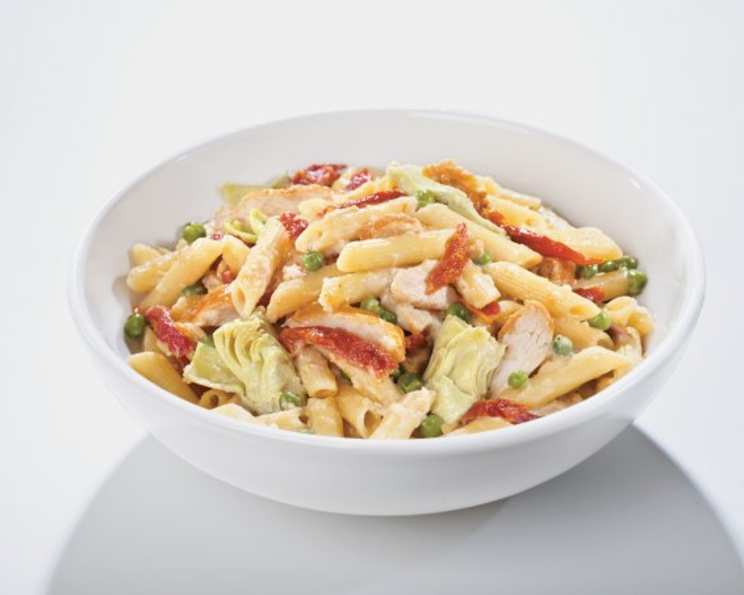
Penne San Remo: A Culinary Embrace of Italy
The first time I tasted Penne San Remo, it was at a bustling family gathering. The aroma alone, a symphony of garlic, sun-dried tomatoes, and creamy parmesan, drew everyone to the table. That initial bite – the perfectly al dente penne, the tender chicken, the bright burst of artichoke – it was more than just a meal; it was a warm embrace of Italian flavors that instantly transported me to a sunny Tuscan countryside. I knew then I needed to recreate this magic at home, and this recipe, inspired by Buca di Beppo’s rendition, captures that very essence.
Recipe Overview
- Prep Time: 25 minutes
- Cook Time: 35 minutes
- Total Time: 1 hour
- Servings: 4-6
- Yield: One large pan
- Dietary Type: Not Gluten-Free
Ingredients
- 16 ounces penne pasta
- 1 lb boneless skinless chicken breast
- 1 1⁄2 tablespoons flour (for thickening the sauce)
- 1 cup flour (for chicken breading)
- 2 teaspoons Italian seasoning (you may substitute a combo of basil, oregano, rosemary, thyme, marjoram, garlic)
- 1 teaspoon salt
- 1 teaspoon black pepper
- 3 tablespoons olive oil (for sauteeing the chicken)
- 1 tablespoon butter
- 3 tablespoons olive oil (for the sauce)
- 2 tablespoons fresh garlic (minced)
- 3⁄4 cup marinated artichoke (chopped into quarters)
- 1⁄2 cup green peas (cooked)
- 3⁄4 cup sun-dried tomato (julienne-cut)
- 1⁄3 cup white wine
- 1⁄2 cup heavy cream
- 3⁄4 cup parmesan cheese
- 1 pinch kosher salt (or amount according to taste. Table salt works fine)
Equipment Needed
- Large pot
- Colander
- Meat tenderizer
- Large skillet
- Tongs
Instructions
- Begin by cooking the penne pasta according to the package instructions. Be sure to generously salt the boiling water to enhance the pasta’s flavor. Once cooked to al dente, drain the pasta and set it aside.
- Prepare the chicken breasts. Use a meat tenderizer to pound the meat to an even thickness of about 1/2 to 3/4 inch. This ensures even cooking. Cut each chicken breast in half lengthwise.
- For the chicken breading, combine the flour, Italian seasoning, salt, and black pepper in a shallow dish.
- Dredge each chicken breast on both sides with the flour mixture, ensuring it’s fully coated. Press lightly to help the flour adhere.
- In a large skillet, over medium heat, heat the olive oil and butter. The combination of oil and butter adds both flavor and prevents the butter from burning.
- Sauté the chicken on both sides, for 3-5 minutes per side, or until it turns golden brown and is cooked through. The internal temperature should reach 165°F (74°C).
- Remove the chicken from the pan and place it on a cutting board. Let it rest for a few minutes before slicing it into thin, bite-sized pieces, about 3/8 inch thick. Set the sliced chicken aside.
- Remove as much of the cooked oil from the skillet as possible. Then, add the fresh olive oil reserved for the sauce.
- Add the minced garlic, sun-dried tomatoes, and artichokes to the skillet. Stir for about 2 minutes, until the garlic becomes fragrant but not browned.
- Sprinkle the flour (reserved for thickening the sauce) into the pan. Stir continuously until all the ingredients are coated with the flour, about 30 seconds. This creates a roux that will thicken the sauce.
- Add the white wine to the pan and bring it to a boil, scraping up any browned bits from the bottom of the pan. This adds depth of flavor to the sauce.
- Once boiling, lower the heat to medium-low and simmer for 2-3 minutes, allowing the alcohol to evaporate and the sauce to slightly reduce.
- When much of the wine has evaporated and the sauce starts to thicken, raise the heat to medium and add the heavy cream. Stir for 30-45 seconds until well incorporated.
- Add the parmesan cheese and stir until it melts into the sauce, creating a smooth and creamy texture.
- Add the green peas and stir for about three minutes, allowing them to warm through.
- Add the sliced chicken and the cooked pasta to the pan. Mix gently but thoroughly to ensure the pasta is evenly coated with the sauce.
- Serve immediately and enjoy!
Expert Tips & Tricks
- Pounding the chicken is crucial for even cooking and a tender result. Use a meat mallet and work gently to avoid tearing the meat.
- Don’t overcrowd the pan when sautéing the chicken. Cook in batches if necessary to ensure proper browning.
- Use good quality Parmesan cheese. Freshly grated Parmesan will melt more smoothly into the sauce.
- If the sauce becomes too thick, add a splash of pasta water to thin it out. The starch in the pasta water will also help to bind the sauce.
- For a richer flavor, consider adding a pinch of red pepper flakes to the sauce.
Serving & Storage Suggestions
Serve Penne San Remo immediately after cooking for the best flavor and texture. Garnish with extra parmesan cheese and a sprinkle of fresh parsley for a beautiful presentation. This dish pairs well with a crisp green salad and some crusty bread.
Leftovers can be stored in an airtight container in the refrigerator for up to 3 days. To reheat, gently warm in a skillet over medium-low heat, adding a splash of cream or pasta water if needed to restore the sauce’s consistency. While freezing is possible, the texture of the pasta and sauce may change upon thawing.
Nutritional Information
| Nutrient | Amount per Serving | % Daily Value |
|---|---|---|
| Calories | 750 kcal | 38% |
| Total Fat | 35g | 54% |
| Saturated Fat | 18g | 90% |
| Cholesterol | 180mg | 60% |
| Sodium | 1100mg | 46% |
| Total Carbohydrate | 75g | 25% |
| Dietary Fiber | 5g | 20% |
| Sugars | 8g | – |
| Protein | 40g | 80% |
Variations & Substitutions
- Vegetarian: Omit the chicken and add more vegetables, such as mushrooms, spinach, or roasted red peppers.
- Gluten-Free: Use gluten-free penne pasta and a gluten-free flour blend for breading the chicken.
- Dairy-Free: Substitute the heavy cream with full-fat coconut milk or a cashew cream sauce. Nutritional yeast can be used in place of parmesan cheese for a cheesy flavor.
- Spicy: Add a pinch of red pepper flakes to the sauce for a touch of heat.
- Seasonal: Incorporate seasonal vegetables, such as asparagus in the spring or butternut squash in the fall.
FAQs (Frequently Asked Questions)
Q: Can I use pre-cooked chicken to save time?
A: While you can use pre-cooked chicken, freshly cooked chicken will offer the best flavor and texture. If using pre-cooked, add it during the last few minutes to simply warm it through.
Q: What if I don’t have white wine?
A: Chicken broth or vegetable broth can be used as a substitute for white wine. You can also add a tablespoon of lemon juice for a similar acidity.
Q: Can I use dried herbs instead of Italian seasoning?
A: Yes, you can use a combination of dried basil, oregano, rosemary, thyme, marjoram, and garlic powder. Adjust the amount to taste.
Q: How do I prevent the sauce from separating?
A: Avoid boiling the sauce after adding the cream. Simmering gently will help maintain a smooth and emulsified sauce.
Q: Can I make this dish ahead of time?
A: While the pasta is best served fresh, you can prepare the sauce ahead of time and store it in the refrigerator for up to 2 days. Cook the pasta and chicken just before serving.
Final Thoughts
Penne San Remo is more than just a pasta dish; it’s a celebration of Italian flavors and a culinary experience that can be enjoyed by all. I encourage you to try this recipe and bring the taste of Italy to your own table. Feel free to experiment with different variations and substitutions to make it your own. Share your feedback and let me know how it turns out! Buon appetito!