
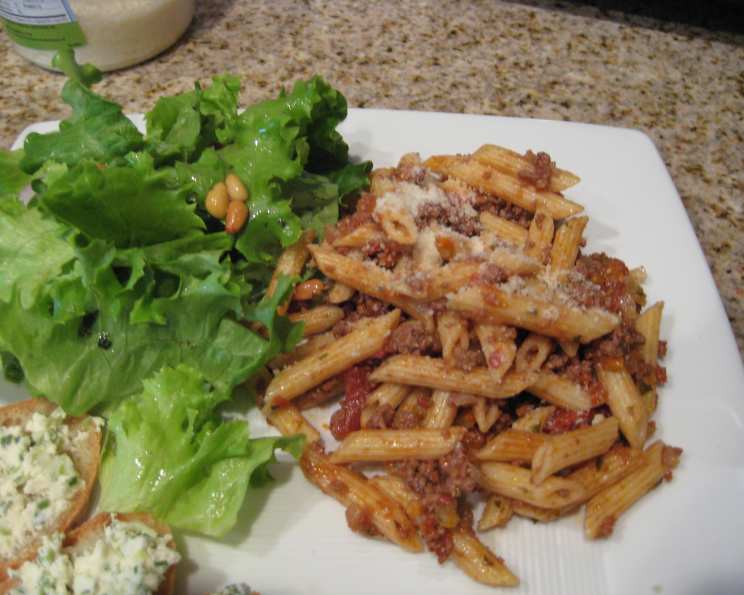
Penne Strascicate: A Taste of the Tuscan Countryside
The aroma of simmering tomatoes, garlic, and herbs always transports me back to a small trattoria nestled in the rolling hills of Tuscany. I remember the warmth of the sun on my face, the clinking of glasses, and the boisterous laughter echoing through the air as I savored a plate of Penne Strascicate, a dish that embodies the rustic simplicity and heartiness of Italian cuisine. It’s a memory I cherish, and a flavor I try to recreate every time I make this comforting pasta at home. This recipe, inspired by those authentic flavors, is a tribute to the Valley of the Moon Winery’s Chef Robin Lehnhoff-McCray’s interpretation of a Florentine classic.
Recipe Overview
- Prep Time: 20 minutes
- Cook Time: 40 minutes
- Total Time: 1 hour
- Servings: 4
- Yields: 4 plates
- Dietary Type: Not specified
Ingredients
- 1 cup diced onion
- 1/3 cup diced carrot
- 1/3 cup diced celery
- 2 tablespoons fresh parsley, chopped
- 6 tablespoons extra virgin olive oil
- 12 ounces lean ground beef
- 1/2 cup red wine (Chianti Classico would be ideal)
- 2 cups canned Italian tomatoes (San Marzano preferred, crushed or diced)
- 1 cup beef stock (low sodium recommended)
- 1 lb penne pasta
- 1 cup grated Parmesan cheese (freshly grated is best)
Equipment Needed
- Heavy-bottomed saucepan
- Cutting board
- Chef’s knife
- Wooden spoon or spatula
- Pasta pot
Instructions
-
Begin by preparing your vegetables. Dice the onion, carrot, and celery into small, even pieces. This ensures they cook uniformly. Chop the fresh parsley and set aside.
-
In a large, heavy-bottomed saucepan, heat the extra virgin olive oil over medium heat. Once the oil is shimmering, add the diced onion, carrot, and celery. Sauté the vegetables until they are softened and translucent, about 5-7 minutes. This process, known as a soffritto, forms the flavor base of the sauce.
-
Add the lean ground beef to the saucepan. Cook, breaking up the meat with a wooden spoon or spatula, until it is fully browned and no longer pink. Be sure to crumble the beef well to avoid large clumps. Season the meat with salt and pepper to taste. Don’t be afraid to be generous with the seasoning, as this will enhance the overall flavor of the dish.
-
Pour in the red wine and cook for about 10 minutes, allowing the alcohol to evaporate and the wine to reduce slightly. This step adds depth and complexity to the sauce. The aroma will fill your kitchen with a delightful fragrance.
-
Stir in the chopped fresh parsley, canned Italian tomatoes, and beef stock. Bring the sauce to a gentle simmer.
-
Reduce the heat to low, cover the saucepan, and simmer the sauce for 30 minutes, stirring occasionally. This allows the flavors to meld and deepen. The longer the sauce simmers, the richer it will become.
-
While the sauce is simmering, cook the penne pasta according to package directions in a large pot of boiling, salted water. Cook the pasta until it is al dente, meaning it is firm to the bite. Reserve about 1 cup of pasta water before draining.
-
Drain the pasta and add it directly to the saucepan with the sauce. Cook for about 2 minutes, allowing the sauce to penetrate the pasta. If the sauce seems too thick, add a little of the reserved pasta water to loosen it up. This will also help the sauce cling to the pasta.
-
Serve the Penne Strascicate immediately, topped with grated Parmesan cheese. A sprinkle of fresh parsley can also add a touch of color and freshness.
Expert Tips & Tricks
- For a richer flavor, consider using a combination of ground beef and ground pork.
- If you don’t have beef stock on hand, you can substitute chicken stock or vegetable stock.
- For a vegetarian version, omit the ground beef and add more vegetables, such as mushrooms or zucchini.
- To make the sauce ahead of time, prepare it up to the simmering stage and store it in the refrigerator for up to 3 days. Reheat gently before adding the cooked pasta.
- If you find your sauce is too acidic, add a pinch of sugar to balance the flavors.
- Don’t overcrowd the pan when browning the ground beef. Brown it in batches to ensure even cooking.
- A bay leaf added during simmering can impart subtle aromatics. Remember to remove it before serving.
Serving & Storage Suggestions
Penne Strascicate is best served immediately, while the pasta is still hot and the sauce is vibrant. Serve it in warmed bowls and garnish with freshly grated Parmesan cheese and a sprinkle of fresh parsley. It pairs well with a crisp green salad and a glass of red wine, such as a Chianti or Sangiovese.
Leftovers can be stored in an airtight container in the refrigerator for up to 3 days. Reheat gently in a saucepan over medium heat, adding a little water or broth if needed to prevent the pasta from drying out. You can also reheat it in the microwave, but be careful not to overcook the pasta. Freezing is not recommended, as the pasta may become mushy upon thawing.
Nutritional Information
| Nutrient | Amount per Serving | % Daily Value |
|---|---|---|
| Calories | 909.2 kcal | N/A |
| Calories from Fat | 347 g | 38% |
| Total Fat | 38.7 g | 59% |
| Saturated Fat | 11 g | 55% |
| Cholesterol | 77.7 mg | 25% |
| Sodium | 765.2 mg | 31% |
| Total Carbohydrate | 100.5 g | 33% |
| Dietary Fiber | 14.1 g | 56% |
| Sugars | 4.9 g | 19% |
| Protein | 37 g | 73% |
Note: Nutritional information is an estimate and may vary depending on specific ingredients and portion sizes.
Variations & Substitutions
- Gluten-Free: Use gluten-free penne pasta for a gluten-free option.
- Spicy: Add a pinch of red pepper flakes to the sauce for a touch of heat.
- Vegetarian: Replace the ground beef with lentils or crumbled vegetarian ground beef substitute.
- Creamy: Stir in a dollop of mascarpone cheese or heavy cream at the end of cooking for a richer, creamier sauce.
- Seasonal: Incorporate seasonal vegetables such as zucchini in the summer or butternut squash in the fall.
FAQs (Frequently Asked Questions)
Q: What does “strascicate” mean?
A: “Strascicate” roughly translates to “dragged” or “pulled,” referring to how the pasta is cooked and coated with the sauce, allowing it to fully absorb the flavors.
Q: Can I use different types of pasta?
A: While penne is traditional, other short pasta shapes like rigatoni, farfalle (bowties), or fusilli (spirals) would also work well.
Q: How can I make the sauce thicker?
A: If the sauce is too thin, simmer it uncovered for a longer period to allow some of the liquid to evaporate. You can also add a slurry of cornstarch and water to thicken it.
Q: Can I add other vegetables to the sauce?
A: Absolutely! Bell peppers, mushrooms, spinach, or kale would be great additions. Add them during the sautéing process along with the onions, carrots, and celery.
Q: How do I prevent the pasta from sticking together?
A: Use plenty of salted water when cooking the pasta, and stir it frequently during the first few minutes of cooking. Do not rinse the pasta after draining unless you’re making a cold pasta salad.
Final Thoughts
Penne Strascicate is more than just a pasta dish; it’s an invitation to experience the warmth and simplicity of Italian home cooking. Don’t be afraid to experiment with the recipe, making it your own by adding your favorite vegetables or spices. I hope this recipe brings as much joy to your table as it has to mine. Share your culinary creations and experiences with us, and Buon Appetito!