
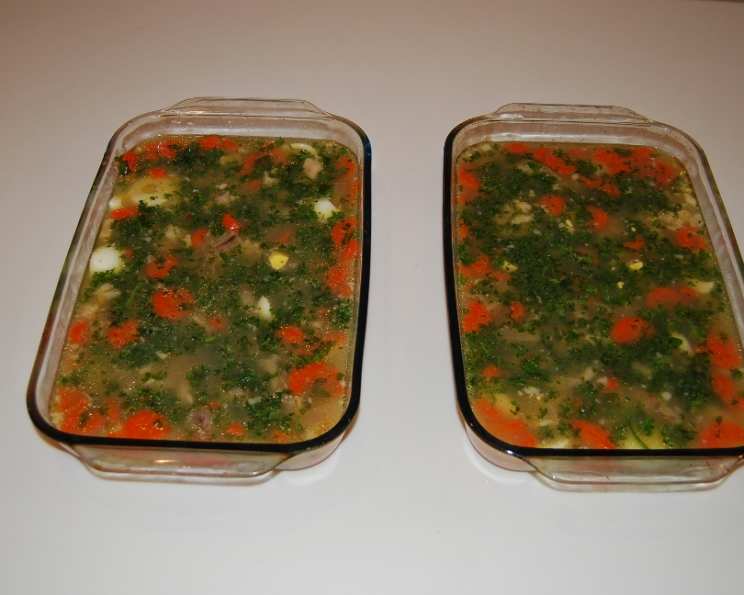
Petchah: A Culinary Journey Through Time
My grandmother, Bubbe Rose, always had a pot simmering on the stove. The aromas emanating from her kitchen were a tapestry woven with dill, garlic, and the comforting scent of slow-cooked meats. While she made many wonderful dishes, one always stood out: Petchah. As a child, I found its wobbly texture and savory flavor intriguing, a world away from the peanut butter and jelly sandwiches my friends enjoyed. It wasn’t until I began my culinary training that I truly appreciated the history and resourcefulness behind this unique delicacy – a testament to a time when every part of an animal was honored and transformed into something nourishing and delicious. Petchah, calf’s foot jelly, is more than just a dish; it’s a taste of heritage.
Recipe Overview
- Prep Time: 30 minutes
- Cook Time: 6+ hours
- Total Time: 7+ hours (plus refrigeration time)
- Servings: 16-20
- Yield: 1 tray
- Dietary Type: Not suitable for vegetarian or vegan diets
Ingredients
- 2 calf feet, cut by your Kosher butcher in one-inch cross sections
- Cold water, to cover calf feet
- 2 large carrots, peeled and diced
- 1 large sweet onion, peeled and diced
- 5 fresh garlic cloves
- 3 hard-boiled eggs, sliced
- Salt, to taste
- Black pepper, to taste
- 5 lemons, sliced into wedges
Equipment Needed
- Large stockpot
- Cutting board
- Knife
- Food processor (optional)
- Rectangular glass or enameled baking dish
Instructions
-
Begin by thoroughly rinsing the calf feet with cold water. Place them in a large stockpot and add enough cold water to completely cover them.
-
Bring the water to a boil over high heat. As the water heats, skim off any scum that rises to the surface. This step is essential for a clear, clean-tasting final product.
-
Once boiling, drain the calf feet and discard the water. This initial boiling and draining process removes impurities and contributes to a cleaner flavor.
-
Return the calf feet to the stockpot and again cover with fresh, cold water. Bring the pot to a boil once more.
-
Reduce the heat to the lowest possible setting. Add the diced carrots and onion, and season generously with salt and pepper.
-
Cover the stockpot and allow the mixture to simmer on the lowest possible heat for a minimum of six hours, or preferably overnight. The longer it simmers, the more collagen is extracted from the calf feet, which is crucial for the jelly-like texture. Continue cooking until any adherent meat, cartilage, tendons, and ligaments separate easily from the bones.
-
Carefully remove the calf feet from the pot. Reserve the broth, carrots, and onions; discard the bones.
-
Taste the broth and adjust the salt and pepper to your liking. This is your opportunity to achieve the perfect balance of savory flavors.
-
Separate any meat, cartilage, softened tendons, and ligaments from the calf feet bones, discarding the bones. Chop the separated material into very small pieces, being extremely careful to avoid any small bone fragments. Incorporate the minced garlic. Alternatively, place the larger pieces, along with the garlic cloves, into a food processor and process until well incorporated, creating a lumpy paste.
-
Arrange the sliced hard-boiled eggs neatly in the bottom of a rectangular glass or enameled baking dish. This will create an attractive presentation when the Petchah is unmolded.
-
Evenly distribute the meat/garlic mixture over the layer of sliced eggs.
-
Gently pour the reserved broth, including the cooked onions and carrots, over the meat mixture. The broth should be at least one inch deep, ideally an inch and a half. This amount of liquid is crucial for the desired jelly consistency.
-
Allow the mixture to cool on the counter or stovetop for a brief period, then place it on a shelf in the refrigerator to set undisturbed. This will typically take several hours, or preferably overnight, until the mixture solidifies completely.
-
Once the mixture has gelled firmly, any fat that has risen to the top can be removed by carefully skimming with the edge of a knife. This will improve the appearance and texture of the final product.
-
Following solidification, cut the Petchah into squares or rectangles. It is traditionally served cold as an appetizer or a cool snack. Garnish with a slice of lemon wedge, which can be squeezed over the aspic for additional flavor.
Expert Tips & Tricks
-
Skimming the Scum: Don’t skip skimming the scum in the early stages of cooking. This is important to clarify the broth and remove impurities.
-
Low and Slow: The key to extracting enough collagen for a good set is to cook the calf’s foot low and slow. Don’t be tempted to rush the process.
-
Garlic Infusion: If you prefer a more subtle garlic flavor, add the cloves whole during the simmering process and remove them before processing the meat.
-
Vegetable Variety: Feel free to add other root vegetables to the simmering broth, such as parsnips or celery root, for a more complex flavor.
Serving & Storage Suggestions
Petchah is best served chilled. It can be served as an appetizer, a snack, or even as part of a larger buffet spread. The lemon wedge garnish is crucial for cutting through the richness of the dish and adding a refreshing zing.
Leftovers should be stored in an airtight container in the refrigerator. It will keep for up to 5 days. Petchah is not suitable for freezing, as the texture will be negatively affected upon thawing.
Nutritional Information
| Nutrient | Amount per Serving | % Daily Value |
|---|---|---|
| Calories | 30.3 kcal | N/A |
| Calories from Fat | 10 g | N/A |
| Total Fat | 1.1 g | 1% |
| Saturated Fat | 0.3 g | 1% |
| Cholesterol | 39.8 mg | 13% |
| Sodium | 19.3 mg | 0% |
| Total Carbohydrate | 5.8 g | 1% |
| Dietary Fiber | 2 g | 7% |
| Sugars | 0.9 g | 3% |
| Protein | 1.8 g | 3% |
Variations & Substitutions
- Spicy Petchah: Add a pinch of red pepper flakes or a chopped chili pepper to the broth during simmering for a spicy kick.
- Herb Infusion: Incorporate fresh herbs like parsley, dill, or thyme into the broth for an aromatic twist. Add them in the last hour of cooking to preserve their flavor.
- Clear Aspic: For a clearer aspic, strain the broth through a cheesecloth-lined sieve after simmering.
FAQs (Frequently Asked Questions)
Q: What is Petchah made of?
A: Petchah is a traditional Eastern European aspic made primarily from simmered calf feet, which provides the necessary gelatin for the jelly-like texture. It also includes vegetables, seasonings, and often hard-boiled eggs for presentation.
Q: How do I prevent the Petchah from being too fatty?
A: Skimming off the scum during the initial boiling and removing the solidified fat from the top after refrigeration will help to reduce the fat content and improve the texture.
Q: Can I use gelatin powder instead of calf feet?
A: While you could technically use gelatin powder, it will not replicate the authentic flavor and texture of Petchah made with calf feet. The slow simmering of the feet extracts unique collagen and flavors.
Q: Why is my Petchah not solidifying?
A: Insufficient cooking time or not enough collagen extracted from the calf feet are the most common reasons. Ensure you simmer the feet for at least six hours and use enough calf feet for the amount of broth.
Q: Can I freeze Petchah?
A: Freezing is not recommended as it can alter the texture of the Petchah, making it watery and less appealing after thawing.
Final Thoughts
Petchah might not be for everyone, but it’s undoubtedly a fascinating and deeply flavorful dish with a rich history. I encourage you to try this recipe, embracing the tradition and resourcefulness of our culinary ancestors. Don’t be afraid to experiment with variations to suit your personal taste. Share your creations and feedback – your culinary journey is part of the story of this incredible dish.