
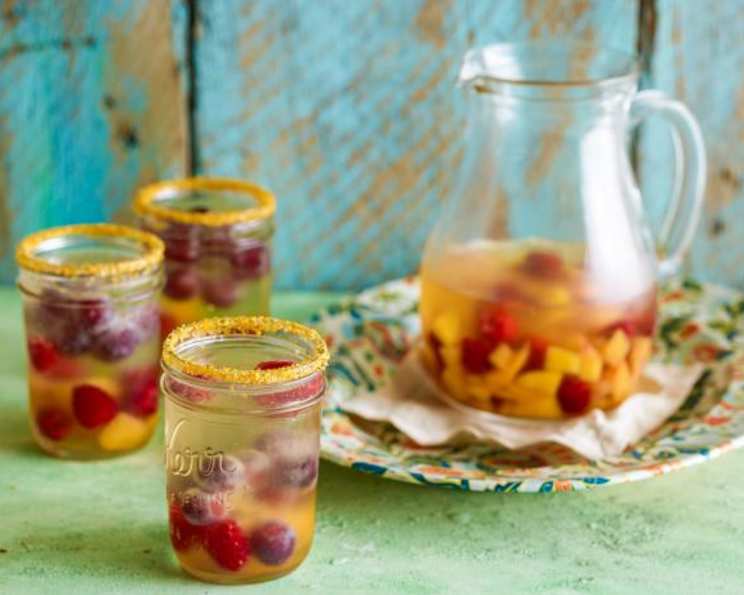
White Sangria: A Citrus Kissed Celebration in a Glass
I’ll never forget the first time I tasted white sangria. It was a sweltering summer evening in Barcelona, the air thick with the scent of orange blossoms and roasting paella. Tucked away in a tiny tapas bar, the bartender slid a frosty glass towards me, the condensation beading on its surface like tiny diamonds. The explosion of crisp white wine, sweet fruit, and bright citrus was an instant vacation for my taste buds, a liquid embodiment of the Spanish sun and the vibrant energy of the city. It’s a taste I’ve chased ever since, always striving to recreate that perfect balance of refreshment and celebration in every batch I make.
Recipe Overview
- Prep Time: 20 minutes
- Cook Time: 1 hour
- Total Time: 1 hour 20 minutes
- Servings: 6-8
- Dietary Type: Gluten-Free
Ingredients
- 3 lemons, zest of
- 3 oranges, zest of
- 2 cups/ 500ml white port
- 1 cup/ 250ml raspberries
- ½ cup/ 125ml orange liqueur, such as Triple Sec
- 1-2 peach, peeled, halved and diced
- 1 cup/ 250ml corinthian grapes, frozen
- 1 bottle/ 750ml sparkling white wine
Equipment Needed
- Baking Sheet
- Parchment Paper
- Spice Grinder
- Large Mason Jar or Pitcher
- Tall Serving Glasses
Instructions
-
Preheat your oven to a low 150 degrees F (65 degrees C). This gentle heat will help dry out the citrus zest without burning it.
-
Spread the lemon zest and orange zest evenly on a baking sheet lined with parchment paper. Make sure the zest is in a single layer so it dries properly.
-
Place the baking sheet in the preheated oven and let the zest dry for about 1 hour. Keep a close eye on it to ensure it doesn’t brown or burn. The zest is ready when it feels dry and brittle.
-
Remove the baking sheet from the oven and let the dried zest cool completely.
-
Once cooled, transfer the dried zest to a spice grinder. Process until the zest is reduced to a fine powder. This citrus powder will be used to rim the glasses and add an aromatic burst of flavor to each sip. Set aside.
-
In a large mason jar or pitcher, combine the white port, raspberries, orange liqueur, and diced peach. Stir gently to combine the ingredients.
-
Cover the mason jar or pitcher and keep it refrigerated until ready to serve. This allows the flavors to meld and the fruit to infuse the port and liqueur. Ideally, let it sit for at least a few hours, or even overnight, for the best flavor.
-
When ready to serve, prepare the glasses. Lightly moisten the rims of tall serving glasses with water or a lemon wedge. Then, gently press the rims into the citrus zest powder, coating them evenly.
-
Pour the sangria mixture into the prepared glasses, filling them about one-third of the way full.
-
Add the frozen corinthian grapes to each glass. The frozen grapes act as edible ice cubes, keeping the sangria chilled without diluting it too much.
-
Top each glass with sparkling white wine, filling the glasses to the brim.
-
Serve immediately and enjoy!
Expert Tips & Tricks
- Zest with Precision: When zesting the lemons and oranges, be careful to only remove the colored part of the peel (the zest) and avoid the white pith underneath, which is bitter. A microplane zester works best for this.
- Fruit Freshness: Use the freshest, ripest peaches you can find for the best flavor. If fresh peaches are not in season, you can use frozen peach slices. Just thaw them slightly before adding them to the sangria.
- Chill Factor: For an extra-cold sangria, chill the sparkling wine and the mason jar or pitcher before assembling the drink.
- Flavor Infusion: Don’t rush the maceration process! Letting the fruit soak in the port and liqueur for several hours, or even overnight, will result in a much more flavorful sangria.
- Citrus Boost: If you want an even stronger citrus flavor, add a few slices of fresh lemon and orange to the sangria mixture while it’s macerating.
- Spice it Up: For a warmer, more complex flavor profile, add a cinnamon stick or a few star anise to the sangria mixture while it’s macerating. Remove them before serving.
Serving & Storage Suggestions
Serve this White Sangria immediately after preparing to enjoy its effervescence and freshness. The citrus rim adds a delightful aroma and flavor to each sip, so encourage your guests to savor the experience.
If you have any leftover sangria, it’s best to store it in the refrigerator in an airtight container. The sparkling wine will lose its fizz over time, so the sangria won’t be quite as bubbly the next day, but the flavors will still be delicious. It’s best consumed within 24-48 hours. Avoid freezing, as this will negatively impact the texture and flavor of the fruit and wine.
Nutritional Information
| Nutrient | Amount per Serving | % Daily Value |
|---|---|---|
| Calories | 200 kcal | 10% |
| Total Fat | 0g | 0% |
| Saturated Fat | 0g | 0% |
| Cholesterol | 0mg | 0% |
| Sodium | 5mg | 0% |
| Total Carbohydrate | 15g | 5% |
| Dietary Fiber | 1g | 4% |
| Sugars | 12g | 24% |
| Protein | 0g | 0% |
Note: Nutritional information is an estimate and may vary based on specific ingredients and portion sizes.
Variations & Substitutions
- Berry Blast: Substitute the raspberries for other berries like strawberries, blueberries, or blackberries. A mixed berry sangria is always a crowd-pleaser.
- Tropical Twist: Add slices of mango, pineapple, or kiwi for a tropical flavor profile. Coconut rum can be used in place of the orange liqueur for an extra hint of the tropics.
- Herbal Infusion: Muddle a few fresh mint leaves or basil leaves into the sangria mixture for a refreshing herbal note.
- Non-Alcoholic Option: Replace the white port and orange liqueur with white grape juice and orange juice for a non-alcoholic version. Use sparkling white grape juice instead of sparkling wine.
- Seasonal Fruits: Adapt the recipe to the seasons. In the fall, use apples, pears, and cranberries. In the winter, try blood oranges and pomegranate seeds.
FAQs (Frequently Asked Questions)
Q: Can I make this sangria ahead of time?
A: Yes, you can prepare the sangria base (white port, raspberries, orange liqueur, and peach) up to 24 hours in advance. However, wait to add the sparkling wine and frozen grapes until just before serving to maintain their fizz and frozen state.
Q: What is white port? Is there a substitute?
A: White port is a fortified wine from Portugal, similar to regular port but made with white grapes. If you can’t find white port, you can substitute a dry white wine like Sauvignon Blanc or Pinot Grigio, but the flavor will be slightly different. You may need to add a touch of simple syrup for sweetness.
Q: Can I use regular grapes instead of frozen corinthian grapes?
A: Yes, you can use regular grapes. However, the frozen grapes help to keep the sangria cold without diluting it as much as ice would. If using regular grapes, consider adding a few ice cubes to each glass.
Q: How long will the citrus zest powder keep?
A: If stored in an airtight container in a cool, dry place, the citrus zest powder should keep for several weeks.
Q: Can I use a different type of sparkling wine?
A: Absolutely! Prosecco, Cava, or any other dry sparkling white wine will work well in this recipe. Choose one that you enjoy drinking on its own.
Final Thoughts
White Sangria is more than just a drink; it’s an experience, a celebration of flavor and friendship. The bright citrus notes, the sweet fruit, and the refreshing fizz combine to create a drink that’s perfect for any occasion, from a casual backyard barbecue to a sophisticated dinner party. Don’t be afraid to experiment with different fruits and herbs to create your own signature version. Gather your friends, raise a glass, and enjoy the taste of summer in every sip! I encourage you to try this recipe and share your creations and experiences with me. Cheers!