
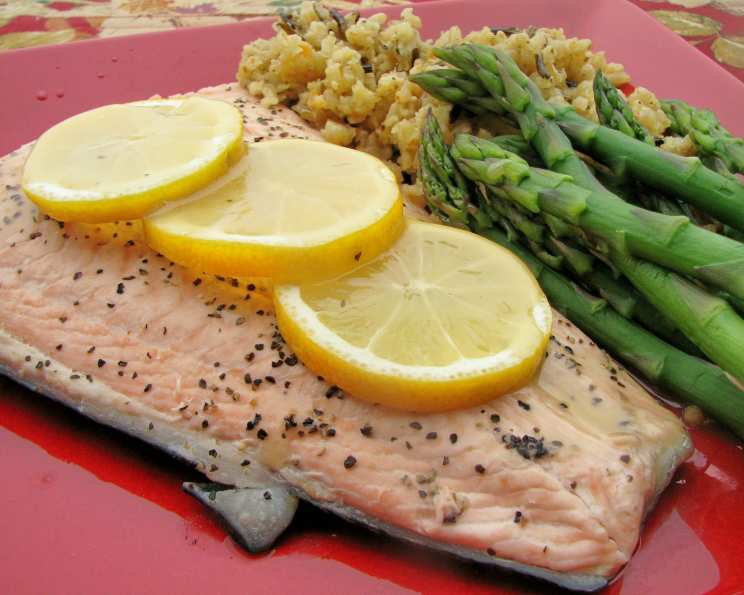
Pinot Noir Poached Salmon: A Culinary Symphony
I still remember the first time I tasted salmon prepared this way. It was at a small bistro nestled in the heart of Oregon wine country, and the air was thick with the scent of damp earth and ripening grapes. The dish, a simple yet elegant plate of Pinot Noir Poached Salmon, completely captivated me. The salmon, incredibly moist and infused with the subtle fruitiness of the wine, melted in my mouth. It was an experience that transported me to the lush landscapes of the Willamette Valley, and I’ve been recreating it in my own kitchen ever since.
Recipe Overview
- Prep Time: 5 minutes
- Cook Time: 12 minutes
- Total Time: 17 minutes
- Servings: 2
- Dietary Type: Pescatarian, Gluten-Free, Dairy-Free (if using oil instead of butter)
Ingredients
- 2 salmon steaks, approximately 1-inch thick
- ½ lemon, juice of
- Coarse kosher salt, to taste
- Fresh coarse ground black pepper, to taste
- 1 cup Pinot Noir wine
- 1 cup water
- 1-2 tablespoons butter
Equipment Needed
- Skillet or frying pan (at least 2-inches deep)
- Meat thermometer
Instructions
-
Begin by gently washing the salmon steaks under cold water. Pat them completely dry with paper towels. This helps the lemon juice and seasonings adhere properly.
-
Squeeze the juice of half a lemon evenly over the top of each salmon steak. This adds brightness and helps tenderize the fish.
-
Sprinkle each salmon steak generously with coarse kosher salt and fresh coarse ground black pepper. Don’t be shy – the seasoning will mellow during the poaching process.
-
In a skillet or frying pan that is at least 2-inches deep, combine the Pinot Noir wine and water.
-
Bring the liquid to a simmer over medium heat. Once simmering, reduce the heat to low. The key here is a gentle simmer, not a rolling boil, which can toughen the salmon.
-
Carefully add the salmon steaks to the skillet in a single layer. Make sure the liquid covers at least half the thickness of each steak. If it doesn’t, add a bit more water.
-
Cover the skillet and simmer for approximately 8 to 12 minutes, or until a meat thermometer inserted into the thickest part of the salmon registers 140°F (60°C). Cooking time will vary depending on the thickness of the salmon steaks. Check for doneness at 8 minutes and adjust accordingly. Overcooking will result in dry salmon.
-
Once the salmon is cooked to perfection, carefully remove it from the pan using a slotted spatula or fish turner. Transfer the salmon steaks onto individual serving plates.
-
Increase the heat under the skillet to medium-high and let the poaching liquid boil until it has reduced to approximately 1/3 cup. This concentrates the Pinot Noir flavor and creates a beautiful sauce. Watch carefully, as the liquid can reduce quickly.
-
Remove the pan from the heat. Add the butter and gently mix it into the reduced sauce by swirling the pan. The butter adds richness and helps emulsify the sauce, giving it a glossy sheen. For a dairy-free option, skip the butter or use a high-quality olive oil.
-
Immediately pour the Pinot Noir sauce generously over the salmon steaks just before serving. The sauce will continue to thicken slightly as it cools.
Expert Tips & Tricks
- For an even richer flavor, use a Pinot Noir with pronounced fruit notes. Avoid using a Pinot Noir that is overly tannic or acidic, as this can overpower the delicate flavor of the salmon.
- If you don’t have Pinot Noir on hand, you can substitute another dry red wine, such as Merlot or Beaujolais.
- To prevent the salmon from sticking to the pan, you can lightly grease the bottom of the skillet with olive oil before adding the wine and water.
- If you prefer a thicker sauce, you can whisk in a small amount of cornstarch (about 1 teaspoon mixed with 1 tablespoon of cold water) during the last minute of simmering.
- For added flavor, try adding a few sprigs of fresh thyme or a crushed clove of garlic to the poaching liquid.
- Don’t discard the salmon skin until after poaching. Leaving the skin on helps keep the salmon moist and prevents it from falling apart.
- If you want to add some vegetables to the dish, you can poach asparagus spears or green beans in the same Pinot Noir liquid after the salmon is cooked. Simply add them to the pan and simmer for a few minutes until tender-crisp.
Serving & Storage Suggestions
Pinot Noir Poached Salmon is best served immediately while the salmon is still warm and the sauce is glossy. Garnish with a sprig of fresh dill or a wedge of lemon for added visual appeal. It pairs beautifully with roasted asparagus, mashed potatoes, or a simple green salad.
Leftover salmon can be stored in an airtight container in the refrigerator for up to 2 days. To reheat, gently warm the salmon in a skillet over low heat or in the microwave. Be careful not to overcook it, as it can become dry. The sauce can also be reheated separately in a small saucepan.
This dish is not recommended for freezing, as freezing can alter the texture of the salmon.
Nutritional Information
| Nutrient | Amount per Serving | % Daily Value |
|---|---|---|
| Calories | 358 kcal | 18% |
| Total Fat | 19.2 g | 29% |
| Saturated Fat | 6.7 g | 33% |
| Cholesterol | 70.3 mg | 23% |
| Sodium | 113.4 mg | 4% |
| Total Carbohydrate | 3.5 g | 1% |
| Dietary Fiber | 0 g | 0% |
| Sugars | 0.3 g | 1% |
| Protein | 20.6 g | 41% |
Variations & Substitutions
- Spice it up: Add a pinch of red pepper flakes to the poaching liquid for a touch of heat.
- Herb Infusion: Experiment with different herbs such as tarragon, parsley, or chives to infuse the salmon with unique flavors.
- Citrus Burst: Enhance the citrus notes by adding a few slices of orange or grapefruit to the poaching liquid.
- Vegetarian Option: While this recipe is specifically for salmon, you can adapt the poaching method for firm tofu or portobello mushrooms. Adjust cooking times accordingly.
- Creamy Sauce: For a richer sauce, stir in a tablespoon of heavy cream or crème fraîche at the end.
FAQs (Frequently Asked Questions)
Q: Can I use frozen salmon for this recipe?
A: While fresh salmon is always preferable, you can use frozen salmon. Be sure to thaw it completely before cooking and pat it dry to remove excess moisture.
Q: How do I know when the salmon is done?
A: The best way to check for doneness is to use a meat thermometer. The salmon is cooked when it reaches an internal temperature of 140°F (60°C). The flesh should also be opaque and flake easily with a fork.
Q: Can I make this dish ahead of time?
A: It’s best to serve Pinot Noir Poached Salmon immediately, but you can prepare the poaching liquid ahead of time and store it in the refrigerator. Just add the salmon when you’re ready to cook.
Q: What should I do if my sauce is too thin?
A: If your sauce is too thin, you can continue to simmer it over medium-high heat until it reduces to your desired consistency. Alternatively, you can whisk in a small amount of cornstarch slurry (1 teaspoon cornstarch mixed with 1 tablespoon cold water).
Q: Can I use a different type of wine?
A: While Pinot Noir is the traditional choice, you can use another dry red wine such as Merlot or Beaujolais. Avoid wines that are too tannic or acidic.
Final Thoughts
Pinot Noir Poached Salmon is an incredibly versatile dish that is perfect for a weeknight dinner or a special occasion. The delicate flavor of the salmon pairs beautifully with the fruity notes of the Pinot Noir sauce, creating a truly memorable culinary experience. I encourage you to try this recipe and experiment with different herbs and spices to create your own unique version. Don’t be afraid to get creative in the kitchen! And if you do give it a try, I’d love to hear your feedback. Pair this dish with a crisp glass of white wine like a Pinot Grigio, and you’ll have an unforgettable meal.