
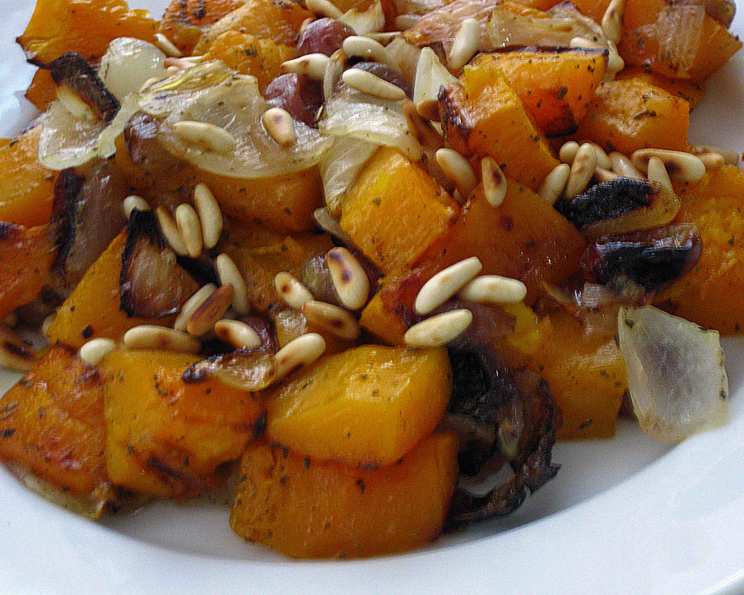
Roasted Butternut Squash, Red Grapes, and Sage: An Autumnal Symphony
The first time I tasted this dish, I was at a harvest festival in Sonoma. The air was crisp, filled with the scent of woodsmoke and ripe grapes. A local farmer, his face weathered and kind, offered me a small bowl of roasted butternut squash studded with glistening red grapes. The sweetness of the grapes, the earthy squash, and the herbaceous sage created a flavor explosion that instantly transported me to autumn. That single bite sparked a lifelong love affair with this simple yet elegant combination. It’s more than just a side dish; it’s a celebration of the season’s bounty.
Recipe Overview
- Prep Time: 20 minutes
- Cook Time: 50 minutes
- Total Time: 1 hour 10 minutes
- Servings: 4
- Dietary Type: Vegetarian
Ingredients
- 1 butternut squash, peeled and cut into 1 1/2 inch pieces
- 1 1/2 cups red seedless grapes
- 1 medium onion, cut into 1 inch pieces
- 1 tablespoon fresh sage, sliced into thin ribbons
- 1 tablespoon olive oil
- 2 tablespoons unsalted butter, melted
- Salt and pepper
- 1/4 cup pine nuts, toasted
Equipment Needed
- Large bowl
- Large rimmed baking sheet
- Knife
- Cutting board
- Small skillet or toaster oven (for toasting pine nuts)
Instructions
-
Preheat your oven to 425 degrees F (220 degrees C). Ensuring your oven is properly preheated is essential for even roasting and caramelization.
-
In a large bowl, combine the prepared butternut squash, red seedless grapes, onion pieces, and sliced fresh sage. The bowl should be large enough to allow you to toss the ingredients without spilling.
-
Drizzle the olive oil and melted butter over the mixture. Make sure to distribute the oil and butter evenly to ensure the vegetables roast properly.
-
Season generously with salt and pepper. Don’t be afraid to season well, as roasting tends to mellow out the flavors. Toss everything thoroughly to coat all the ingredients evenly with the oil, butter, and seasonings.
-
Spread the mixture in a single layer on a large rimmed baking sheet. Avoid overcrowding the pan, as this can cause the vegetables to steam instead of roast. Use two baking sheets if necessary.
-
Roast in the preheated oven for approximately 50 minutes, or until the squash and onion begin to brown and are tender when pierced with a fork. Check the vegetables halfway through the cooking time and toss them gently to ensure even browning.
-
While the squash is roasting, toast the pine nuts. This can be done in a dry skillet over medium heat, stirring frequently, until golden brown and fragrant. Alternatively, toast them in a toaster oven on a low setting. Watch them carefully as they burn easily.
-
Remove the baking sheet from the oven and sprinkle the toasted pine nuts over the roasted squash, grapes, onion, and sage.
-
Serve immediately.
Expert Tips & Tricks
- Sweetness Boost: If your grapes aren’t as sweet as you’d like, consider adding a drizzle of maple syrup or honey after roasting.
- Herb Infusion: For a more intense sage flavor, you can gently bruise the sage leaves before slicing them. This releases more of their aromatic oils.
- Browning Power: To encourage better browning, try placing the baking sheet on the lowest rack of your oven during the last 15 minutes of cooking. Keep a close eye on it to prevent burning.
- Make-Ahead Prep: The squash and onion can be peeled and chopped a day in advance and stored in an airtight container in the refrigerator. The sage can also be sliced ahead of time.
- Saving Burnt Pine Nuts: If you accidentally burn your pine nuts, don’t despair! Toss them with a pinch of salt and a squeeze of lemon juice to help mask the burnt flavor.
- Caramelization: Make sure you don’t skip the step of spreading the mixture in a single layer on the baking sheet. This allows the ingredients to caramelize properly, enhancing their sweetness.
Serving & Storage Suggestions
This roasted butternut squash dish is best served warm, immediately after roasting. It makes a wonderful side dish for roasted chicken, pork, or a vegetarian main course like lentil loaf or a hearty grain bowl. The vibrant colors and flavors also make it an attractive addition to any holiday table.
Leftovers can be stored in an airtight container in the refrigerator for up to 3 days. To reheat, you can gently warm them in a skillet over medium heat, or in a preheated oven at 350 degrees F (175 degrees C) until heated through. You can also microwave them, but be aware that the texture may become slightly softer. Freezing is not recommended, as the texture of the squash can become mushy upon thawing.
Nutritional Information
| Nutrient | Amount per Serving | % Daily Value |
|---|---|---|
| Calories | 316.9 kcal | N/A |
| Calories from Fat | 138 g | 44% |
| Total Fat | 15.4 g | 23% |
| Saturated Fat | 4.7 g | 23% |
| Cholesterol | 15.3 mg | 5% |
| Sodium | 14.7 mg | 0% |
| Total Carbohydrate | 47.4 g | 15% |
| Dietary Fiber | 7.2 g | 28% |
| Sugars | 16.5 g | 65% |
| Protein | 4.8 g | 9% |
Variations & Substitutions
- Maple-Sage Variation: Replace the olive oil with maple-infused olive oil for a deeper, richer flavor.
- Herb Swap: Try using fresh thyme or rosemary instead of sage. Both herbs pair well with butternut squash and grapes.
- Nut Alternatives: If you’re allergic to pine nuts, you can substitute them with toasted pumpkin seeds or chopped walnuts.
- Balsamic Glaze: Drizzle a balsamic glaze over the roasted vegetables just before serving for a tangy-sweet finish.
- Spicy Kick: Add a pinch of red pepper flakes to the mixture before roasting for a touch of heat.
- Winter Citrus: Add segments of orange or tangerine to the roasting pan during the last 15 minutes of cooking for a bright, citrusy note.
- Root Vegetable Medley: Incorporate other root vegetables like carrots, parsnips, or sweet potatoes for a more diverse flavor profile.
FAQs (Frequently Asked Questions)
Q: Can I use frozen butternut squash for this recipe?
A: Yes, you can use frozen butternut squash, but be sure to thaw it completely and pat it dry before roasting to prevent it from becoming too watery.
Q: How do I toast pine nuts?
A: Toast pine nuts in a dry skillet over medium heat, stirring frequently, until golden brown and fragrant. Watch them carefully as they burn easily.
Q: Can I make this dish vegan?
A: Absolutely! Simply substitute the butter with an equal amount of olive oil or your favorite vegan butter alternative.
Q: What is the best way to peel a butternut squash?
A: Microwaving the squash for a few minutes can soften the skin, making it easier to peel. You can also use a sharp vegetable peeler or a sturdy knife. Be careful when using a knife to avoid injury.
Q: Can I add other vegetables to this dish?
A: Yes, feel free to add other vegetables like Brussels sprouts, carrots, or parsnips to create a more diverse and flavorful roasted medley.
Final Thoughts
I hope this recipe inspires you to embrace the flavors of autumn and create a memorable dish that will delight your senses. This Roasted Butternut Squash, Red Grapes, and Sage is a testament to the magic that happens when simple, seasonal ingredients are combined with care and creativity. Don’t hesitate to experiment with variations and substitutions to make it your own. Enjoy, and please share your feedback! I’d love to hear how it turns out for you. Consider pairing it with a crisp white wine like a Sauvignon Blanc or a Pinot Grigio for the perfect autumnal meal.