
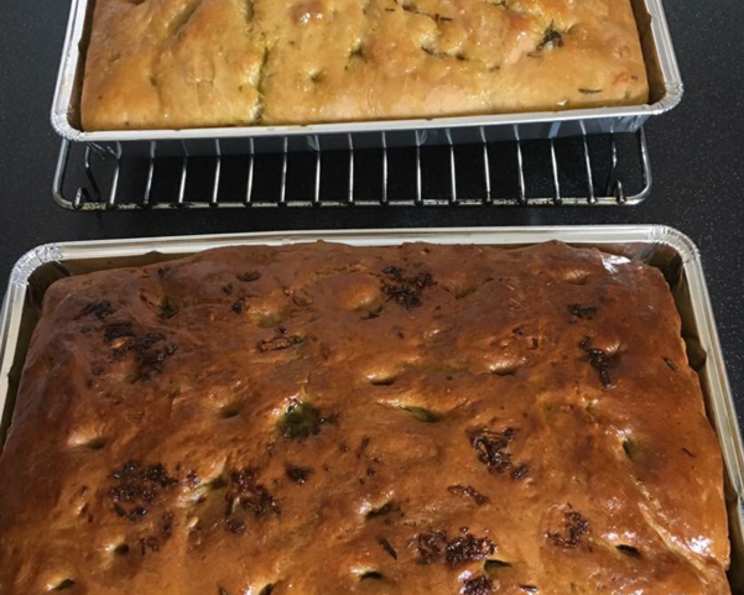
Rosemary Focaccia: An Italian Classic from My Kitchen to Yours
The scent of rosemary always transports me back to my grandmother’s sun-drenched kitchen in Tuscany. As a child, I would watch her, her hands dusted with flour, coaxing life into simple ingredients. The aroma of freshly baked focaccia, infused with rosemary from her garden, would fill the air, promising warmth and comfort. This recipe is my attempt to capture that magic, to share a piece of my heritage with you, and to fill your home with the same comforting, herbaceous aroma.
Recipe Overview
- Prep Time: 1 hour 20 minutes (includes rising time)
- Cook Time: 15 minutes
- Total Time: 1 hour 35 minutes
- Yield: 2 loaves
- Dietary Type: Vegetarian
Ingredients
- 5 ½ cups unsifted bread flour (all-purpose flour can be used with good results)
- 1 (1/4 ounce) package fast rising yeast
- 2 tablespoons fresh rosemary, divided
- 1 ½ teaspoons salt
- 2 cups warm water (120 F-130 F)
- 4 tablespoons olive oil, divided
- 1 teaspoon kosher salt or 1 teaspoon sea salt
Equipment Needed
- Large mixing bowl
- Wooden spoon
- Clean kitchen towel
- Floured surface
- Two large baking sheets (baking stones optional)
Instructions
- In a large mixing bowl, combine the flour, yeast, 1 tablespoon of the rosemary, and the salt.
- With a wooden spoon, stir in the warm water and 3 tablespoons of the olive oil. Beat the mixture vigorously for 5 minutes. This vigorous mixing is crucial for developing the gluten and creating a chewy texture.
- Cover the bowl with a clean towel and let the dough rise in a warm place, away from drafts, until doubled in size. This should take about 40 minutes. Patience is key here; don’t rush the rising process, as it’s essential for a light and airy focaccia.
- Turn the dough onto a floured surface and gently knead for one minute. This step helps to redistribute the yeast and release any large air pockets.
- Lightly oil two large baking sheets. If you have baking stones, feel free to use them for a crispier crust.
- Divide the dough in half, placing one half on each baking sheet.
- Press or roll out each portion to a 10-inch round. The dough will be elastic, so work gently and allow it to rest for a few minutes if it resists.
- Cover the rounds with clean towels and let them rise until doubled in size. This second rise usually takes about 30 minutes.
- Preheat your oven to 400°F (200°C). Make sure your oven is fully preheated before baking for even cooking.
- With your fingertips, make indentations all over the surface of each focaccia round. These indentations create little pools for the olive oil and rosemary to nestle in, infusing the bread with flavor.
- Brush each round with ½ tablespoon of the remaining olive oil, ensuring the oil gets into all the indentations.
- Sprinkle the rounds with the remaining rosemary and the kosher salt or sea salt. The type of salt you use can influence the final flavor, so choose one you enjoy.
- Bake for 15 minutes, or until golden brown. Keep an eye on the focaccia as it bakes; baking times may vary slightly depending on your oven. The bottom should also be golden brown.
- Cut into wedges and serve warm.
Expert Tips & Tricks
- For a more intense rosemary flavor, infuse the olive oil with fresh rosemary before adding it to the dough. Simply heat the olive oil with a few sprigs of rosemary over low heat for about 15 minutes, then let it cool completely before using.
- If you want a tangier flavor, try using a starter or poolish instead of commercial yeast.
- Don’t be afraid to experiment with other toppings! Sun-dried tomatoes, olives, and different herbs all work beautifully on focaccia.
- If your dough is too sticky to handle, lightly flour your hands and the work surface.
- To ensure even baking, rotate the baking sheets halfway through the baking time.
- If the focaccia is browning too quickly, tent it with foil.
Serving & Storage Suggestions
Rosemary focaccia is best served warm, straight from the oven. It makes a delicious accompaniment to soups, salads, and pasta dishes. It’s also fantastic as a base for sandwiches or panini.
Leftover focaccia can be stored at room temperature in an airtight container for up to 2 days. To keep it fresh for longer, store it in the refrigerator for up to 5 days. You can also freeze focaccia for up to 2 months. To reheat, simply wrap it in foil and warm it in a preheated oven at 350°F (175°C) for about 10 minutes.
Nutritional Information
| Nutrient | Amount per Serving | % Daily Value |
|---|---|---|
| Calories | 751 kcal | N/A |
| Total Fat | 15.3 g | 24% |
| Saturated Fat | 2.2 g | 11% |
| Cholesterol | 0 mg | 0% |
| Sodium | 1315 mg | 55% |
| Total Carbohydrate | 132 g | 44% |
| Dietary Fiber | 5.2 g | 21% |
| Sugars | 0.5 g | N/A |
| Protein | 18.5 g | 37% |
Note: Nutritional information is an estimate and may vary based on specific ingredients and portion sizes.
Variations & Substitutions
- Gluten-Free: Substitute the bread flour with a high-quality gluten-free bread flour blend. You may need to add a binder like xanthan gum to improve the texture.
- Vegan: This recipe is already vegan! Just ensure your yeast is vegan-friendly.
- Herb Variations: Experiment with different herbs, such as thyme, oregano, or sage.
- Topping Variations: Add sliced olives, sun-dried tomatoes, or roasted garlic to the top of the focaccia before baking.
- Cheese Topping: Sprinkle some parmesan or pecorino cheese on top during the last few minutes of baking (note: this would make the recipe non-vegan).
FAQs (Frequently Asked Questions)
Q: Can I use all-purpose flour instead of bread flour?
A: Yes, you can. Bread flour will give you a chewier texture, but all-purpose flour will still yield a delicious focaccia.
Q: My dough didn’t rise. What happened?
A: The most common reasons for dough not rising are old yeast, water that’s not warm enough, or a room that’s too cold. Ensure your yeast is fresh, your water is between 120-130°F, and your rising environment is warm.
Q: Can I make the dough ahead of time?
A: Yes! You can prepare the dough, let it rise once, then punch it down and refrigerate it for up to 24 hours. Let it come to room temperature before shaping and baking.
Q: How do I know when the focaccia is done?
A: The focaccia is done when it’s golden brown on top and the bottom sounds hollow when tapped. An internal temperature of around 200-210°F (93-99°C) is ideal.
Q: Can I freeze the focaccia?
A: Yes, you can freeze baked focaccia. Wrap it tightly in plastic wrap and then in foil. To reheat, bake from frozen at 350°F (175°C) for about 20 minutes, or until warmed through.
Final Thoughts
I hope this rosemary focaccia recipe brings as much joy to your kitchen as it does to mine. Don’t be intimidated by working with yeast; it’s a forgiving process, and the reward of fresh, homemade bread is well worth the effort. Feel free to experiment with different toppings and herbs to create your own signature focaccia. Share your creations and tag me in your posts – I can’t wait to see what you bake! Consider pairing this focaccia with a simple tomato soup or a glass of crisp, dry white wine for a truly delightful meal. Buon appetito!