
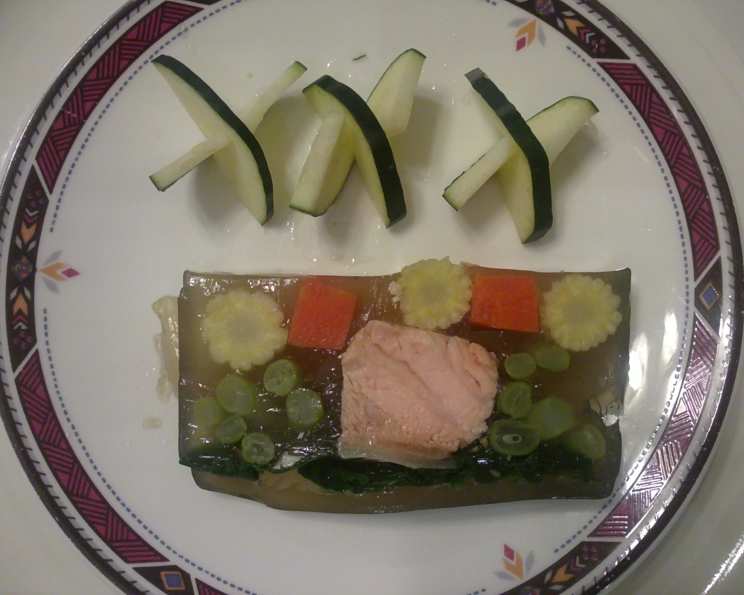
Salmon and Vegetable Terrine: A Chef’s Garden in Every Slice
The first time I encountered a terrine, I was a wide-eyed apprentice in a bustling Parisian bistro. The chef, a gruff but kind man named Jacques, presented it as a pâté de légumes. I was immediately captivated by the mosaic of colors and textures, each slice revealing a carefully arranged composition of seasonal vegetables suspended in shimmering aspic. It wasn’t just food; it was edible art. The layers told a story of the garden, brought together with culinary precision. Today, I bring that same spirit to this Salmon and Vegetable Terrine, adapting the classic technique to showcase the delicate flavor of salmon alongside crisp, vibrant vegetables.
Recipe Overview
- Prep Time: 30 minutes
- Cook Time: 20 minutes
- Total Time: 50 minutes
- Servings: 10-15 slices
- Yield: 1 loaf
- Dietary Type: Pescatarian, Gluten-Free, Dairy-Free
Ingredients
- 4 cups high gelatin stock made from chicken feet or pork knuckles
- 1 bunch spinach
- 4 salmon fillets, cut into strips
- 20 string beans
- 15 baby corn
- 6 square carrot sticks
Equipment Needed
- Large pot
- One large or two small loaf pans (pound cake tins)
- Slotted spoon
- Sharp knife
Instructions
- Begin by poaching the salmon strips and vegetables. The baby corn and carrots need to be almost tender; if they are too firm, the terrine might collapse when slicing to serve. Use a large pot filled with lightly salted water, bringing it to a gentle simmer. Poach each item separately until just tender. Remove with a slotted spoon and set aside to cool slightly. Tip: Don’t overcook the vegetables, as they will continue to soften in the terrine.
- Prepare your loaf pan(s). Ladle a thin layer of stock onto the bottom of the tin to create a base layer. This will help the terrine release cleanly when unmolded. Tip: Place the pan in the fridge or freezer for a few minutes to speed up the setting process of this first layer.
- Arrange the spinach in the pan. Lay some leaves from left to right and others from right to left, ensuring that each slice of the terrine will have both leaves and stems for visual appeal. The spinach will act as a binder and provide a delicate flavor to the overall terrine.
- Place the salmon strips and string beans on top of the spinach. Distribute them evenly, creating a visually appealing pattern.
- Add enough stock to just cover the layer of salmon and string beans. This will create a solid layer that will bind the ingredients together. Place the loaf pan(s) in the refrigerator to cool and partially set this second layer.
- After the second layer has partially set (about 30 minutes to an hour), arrange the carrots and baby corn on top. Again, ensure even distribution and consider the visual impact of the cross-sections of the vegetables.
- Cover the carrots and baby corn with the remaining stock, making sure to fill any gaps between the vegetables.
- Chill the terrine in the refrigerator for at least 4-6 hours, or preferably overnight, to allow it to fully set. The longer it chills, the firmer and more stable the terrine will be.
- To unmold the terrine, run a thin knife around the edges of the loaf pan. You can also briefly dip the bottom of the pan in warm water to help loosen the terrine. Invert the pan onto a serving platter.
- Use a sharp knife to cut the terrine into slices and serve chilled.
Expert Tips & Tricks
- Stock is Key: The quality of your stock is paramount. A rich, gelatinous stock will ensure a firm, flavorful terrine. If you don’t have time to make your own, use a high-quality store-bought stock. However, homemade is always best for this dish!
- Vegetable Prep: Cut the vegetables into uniform sizes for even cooking and a more visually appealing terrine. Consider blanching tougher vegetables like carrots and string beans before poaching to ensure they are tender.
- Layering Matters: Pay attention to the layering of your ingredients. Alternate colors and textures to create a visually stunning terrine.
- Seasoning: Don’t be afraid to season each layer lightly with salt and pepper. This will ensure that the terrine is flavorful throughout. You can also add herbs like dill or parsley to enhance the flavor.
- Gelatin Boost: If you are concerned that your stock isn’t gelatinous enough, you can add a small amount of powdered gelatin to the stock before assembling the terrine. Follow the package instructions for the correct ratio of gelatin to liquid.
- Clarity: For a crystal-clear aspic, gently simmer the stock and skim off any impurities that rise to the surface.
Serving & Storage Suggestions
Serve the Salmon and Vegetable Terrine chilled as an appetizer or light lunch. It pairs well with a crisp green salad and a light vinaigrette. A dollop of crème fraîche or a squeeze of lemon can also add a nice touch.
Store any leftover terrine in an airtight container in the refrigerator for up to 3 days. It is not recommended to freeze the terrine, as freezing can affect the texture of the vegetables and aspic.
Nutritional Information
| Nutrient | Amount per Serving | % Daily Value |
|---|---|---|
| Calories | 150 kcal | 8% |
| Total Fat | 5g | 8% |
| Saturated Fat | 1g | 5% |
| Cholesterol | 30mg | 10% |
| Sodium | 100mg | 4% |
| Total Carbohydrate | 5g | 2% |
| Dietary Fiber | 2g | 8% |
| Sugars | 2g | |
| Protein | 15g | 30% |
Note: Nutritional information is an estimate and may vary based on specific ingredients and portion sizes.
Variations & Substitutions
- Vegetarian Terrine: Replace the salmon with grilled halloumi cheese or firm tofu for a vegetarian version.
- Seasonal Vegetables: Adapt the terrine to the seasons by using different vegetables. In the spring, try asparagus and peas. In the summer, use zucchini and bell peppers. In the fall, incorporate butternut squash and Brussels sprouts.
- Herbs & Spices: Experiment with different herbs and spices to customize the flavor of the terrine. Try adding dill, parsley, thyme, or lemon zest to the stock.
- Seafood Medley: Instead of just salmon, consider using a mix of seafood such as shrimp, scallops, and crabmeat.
- Spicy Kick: Add a pinch of red pepper flakes to the stock for a subtle spicy kick.
FAQs (Frequently Asked Questions)
Q: Can I use store-bought gelatin instead of relying solely on the stock?
A: Yes, if your stock isn’t quite gelatinous enough, adding a teaspoon or two of powdered gelatin will help ensure a firm terrine. Be sure to bloom the gelatin in cold water before adding it to the warm stock.
Q: How do I prevent the vegetables from sinking to the bottom of the terrine?
A: Partially setting each layer of stock in the refrigerator before adding the next layer of vegetables will help keep everything suspended in place.
Q: Can I make this terrine ahead of time?
A: Absolutely! The terrine actually benefits from being made a day or two in advance, as it allows the flavors to meld together and the terrine to set completely.
Q: How do I get clean slices when serving?
A: Use a sharp, thin-bladed knife and wipe it clean between each slice. You can also chill the terrine thoroughly before slicing.
Q: What if I don’t have loaf pans?
A: Any similar shape container can be used, like a casserole dish. But this might alter the overall look of the finished terrine.
Final Thoughts
The Salmon and Vegetable Terrine is more than just a dish; it’s an experience. It’s a celebration of fresh, seasonal ingredients and a testament to the art of culinary presentation. While it may seem intimidating at first, this recipe is surprisingly simple to execute with a little patience and attention to detail. I encourage you to try your hand at creating this stunning dish, and don’t be afraid to put your own personal spin on it. Share your creations, your feedback, and your stories. Bon appétit!