
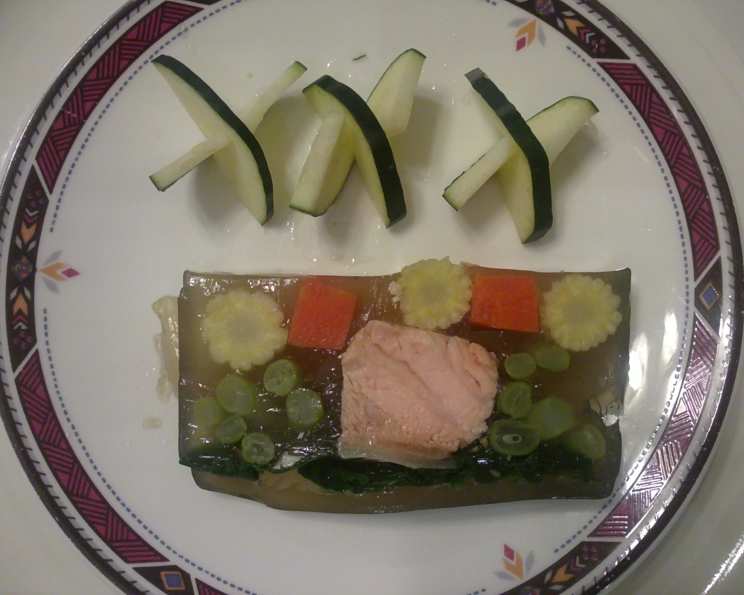
Salmon and Vegetable Terrine: A Culinary Canvas
There’s something deeply satisfying about a dish that’s as beautiful to look at as it is delicious to eat. My grandmother, a woman who believed food should be a feast for all the senses, used to create stunning aspics, shimmering molds of savory jellies studded with colorful vegetables and meats. As a child, I was mesmerized by their jewel-like appearance, and although aspics have fallen out of favor, the spirit of her artistic approach to cooking lives on in this Salmon and Vegetable Terrine. It’s a modern take on a classic, a celebration of fresh ingredients, and a chance to create your own edible masterpiece.
Recipe Overview
- Prep Time: 45 minutes
- Cook Time: Varies (depending on stock and vegetable prep)
- Total Time: Varies (plus chilling time, ideally overnight)
- Servings: 10-15 slices
- Yields: 1 loaf
- Dietary Type: Gluten-Free, Dairy-Free (depending on stock ingredients)
Ingredients
- 4 cups high gelatin stock made from chicken feet or pork knuckles (see note below)
- 1 bunch spinach
- 4 salmon fillets, cut into strips
- 20 string beans, trimmed
- 15 baby corn, halved or quartered depending on size
- 6 square carrot sticks, about 3 inches long
Note: For the stock, you can use store-bought gelatin-rich stock, but homemade is highly recommended for the best flavor and texture. If using store-bought, ensure it’s low sodium.
Equipment Needed
- Large pot or Dutch oven
- Knife and cutting board
- Large spoon or ladle
- One large or two small pound cake tins (loaf pans)
- Refrigerator
Instructions
- First, prepare your high gelatin stock. If you’re making it from scratch using chicken feet or pork knuckles, simmer them in a large pot with water for several hours until the stock is rich and flavorful. Allow it to cool, then strain it thoroughly. Remove any excess fat. This step is crucial for the terrine to set properly.
- Next, prepare the vegetables. Trim the string beans and halve or quarter the baby corn, depending on their size. The goal is for all the vegetables to be easy to eat and aesthetically pleasing in the terrine.
- Poach the salmon strips, string beans, baby corn, and carrot sticks separately in simmering water or stock. The baby corn and carrots need to be almost tender, but not mushy. If they are too firm, the terrine might collapse when slicing. The salmon should be just cooked through, about 3-5 minutes.
- Blanch the spinach in boiling water for about 30 seconds until wilted. Immediately transfer it to an ice bath to stop the cooking process and preserve its vibrant green color. Squeeze out any excess water.
- Find one large or two small pound cake tins (loaf pans). Ladle a thin layer of the prepared stock onto the bottom of the tin to create a base layer. Place the tin in the refrigerator to allow the stock to set slightly. This will help prevent the ingredients from shifting when you add them.
- Begin layering the ingredients. Arrange the spinach leaves in the tin, some from left to right and some from right to left, ensuring that each slice will have both leaves and stalks. This adds visual interest to the finished terrine.
- Lay down the salmon strips and string beans over the spinach. Pour enough stock to partially cover the ingredients. Return the tin to the refrigerator to cool and set for about 30 minutes. This helps to stabilize the layer and prevent the colors from bleeding into each other.
- Create the final layer by arranging the carrot sticks and baby corn attractively. Pour the remaining stock over the vegetables, ensuring that everything is fully submerged.
- Chill the terrine in the refrigerator for at least 6 hours, or preferably overnight, to allow it to set completely. This is essential for a clean slice.
- To unmold the terrine, dip the bottom of the tin briefly in warm water. Run a thin knife around the edges to loosen it. Invert the terrine onto a serving platter.
- Slice the terrine with a sharp knife and serve chilled.
Expert Tips & Tricks
- Clarity is Key: For a crystal-clear terrine, clarify your stock. This involves simmering the stock with egg whites to remove any impurities.
- Color Coordination: Think about the color palette as you layer the ingredients. Contrasting colors make the terrine visually stunning.
- Vegetable Variety: Experiment with other vegetables like asparagus, bell peppers (roasted for sweetness), or mushrooms.
- Herb Infusion: Infuse the stock with herbs like dill, parsley, or tarragon to enhance the flavor.
- Secure the Layers: To prevent the vegetables from floating, you can weigh them down with a small plate or plastic wrap during the chilling process.
- Don’t Overcook: Overcooked vegetables will become mushy and detract from the terrine’s texture.
- Make Ahead: This terrine is perfect for making ahead of time. It actually tastes better after a day or two, as the flavors have a chance to meld.
Serving & Storage Suggestions
Serve the Salmon and Vegetable Terrine chilled, sliced into attractive portions. It makes an elegant appetizer or a light lunch. Garnish with fresh herbs like dill or parsley, and serve with a simple vinaigrette or lemon wedges. It pairs well with crusty bread or crackers.
Store leftover terrine in an airtight container in the refrigerator for up to 3 days. Due to the gelatin content, it’s not suitable for freezing, as the texture will be compromised. It’s best enjoyed cold, so no reheating is necessary.
Nutritional Information
| Nutrient | Amount per Serving | % Daily Value |
|---|---|---|
| Calories | 150 kcal | 8% |
| Total Fat | 7g | 11% |
| Saturated Fat | 1g | 5% |
| Cholesterol | 40mg | 13% |
| Sodium | 100mg | 4% |
| Total Carbohydrate | 5g | 2% |
| Dietary Fiber | 2g | 8% |
| Sugars | 2g | N/A |
| Protein | 15g | 30% |
Nutritional information is an estimate and may vary depending on specific ingredients and portion sizes.
Variations & Substitutions
- Smoked Salmon: Substitute some of the fresh salmon with smoked salmon for a deeper, more intense flavor.
- Seafood Medley: Add other seafood like shrimp or scallops to the terrine for a more complex flavor profile.
- Vegetarian Version: Replace the salmon with firm tofu or grilled halloumi cheese for a vegetarian option.
- Gelatin Alternative: For a vegetarian alternative to gelatin, use agar-agar, a seaweed-based gelling agent. Follow the manufacturer’s instructions for proper usage.
- Seasonal Vegetables: Adapt the recipe to use seasonal vegetables for the freshest flavors. In the fall, try using butternut squash or sweet potatoes. In the spring, asparagus and peas would be delicious additions.
- Spiced Terrine: Add a pinch of red pepper flakes or a dash of hot sauce to the stock for a little kick.
FAQs (Frequently Asked Questions)
Q: How do I ensure my terrine sets properly?
A: The key is to use a high-quality, gelatin-rich stock. Homemade stock made from chicken feet or pork knuckles is ideal. Allow ample time for chilling, preferably overnight.
Q: Can I use frozen vegetables?
A: While fresh vegetables are preferred for their texture and flavor, you can use frozen vegetables in a pinch. Be sure to thaw them thoroughly and squeeze out any excess water before using.
Q: How do I prevent the vegetables from floating in the stock?
A: Pour the stock in layers, chilling the terrine in between each layer. This will help to set the ingredients in place. You can also weigh down the vegetables with a small plate or plastic wrap during the chilling process.
Q: My terrine is too soft. What did I do wrong?
A: The stock may not have been gelatinous enough, or the terrine may not have been chilled for long enough. Try using a more gelatin-rich stock and chilling the terrine for a longer period of time.
Q: How far in advance can I make this terrine?
A: You can make the terrine up to 3 days in advance. Store it in an airtight container in the refrigerator.
Final Thoughts
The Salmon and Vegetable Terrine is more than just a recipe; it’s an invitation to express your creativity in the kitchen. Don’t be afraid to experiment with different ingredients and arrangements to create your own unique culinary masterpiece. I encourage you to try this recipe, share your feedback, and pair it with a crisp white wine for a truly unforgettable dining experience. Bon appétit!