
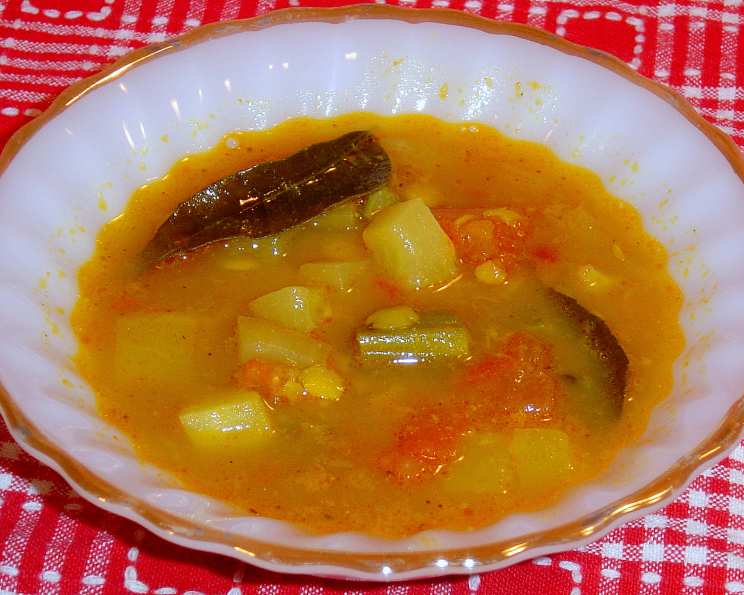
The Soulful Simplicity of Sambar: A Culinary Journey to South India
I’ll never forget the first time I tasted authentic sambar. It was in a small, bustling Chennai eatery, the air thick with the aroma of spices and freshly brewed coffee. A steaming bowl arrived alongside a perfectly crisp dosa, the sambar a vibrant, earthy brown, dotted with colorful vegetables. That first spoonful was an explosion of flavor – tangy, spicy, and deeply comforting. It was more than just a soup; it was a taste of home, a story told through lentils and vegetables, and it sparked a lifelong love affair with South Indian cuisine.
Recipe Overview
- Prep Time: 20 minutes
- Cook Time: 1 hour
- Total Time: 1 hour 20 minutes
- Servings: 6
- Dietary Type: Vegan, Gluten-Free
Ingredients
- 1/2 cup toor dal (dried yellow split peas)
- 1/4 teaspoon turmeric
- 1/4 teaspoon salt
- 1 pinch asafoetida powder
- 2 cups water
For the Tempering:
- 2 tablespoons mustard oil
- 1/2 teaspoon cumin seed
- 1/4 teaspoon mustard seeds
- 1/8 teaspoon fenugreek seeds
- 10-12 curry leaves
- 4 small dried chilies
- 1 pinch asafoetida powder
For the Sambar:
- 1 cup yellow Indian cucumbers (dosakai) or 1 cup English cucumber, peeled, seeded and finely chopped
- 1 cup vegetable drumsticks or 1 cup fresh asparagus, cut into finger lengths
- 1 small potato, peeled and finely chopped
- 1 medium tomato, finely chopped
- 2 tablespoons tamarind pulp
- 1 tablespoon sambar masala seasoning (or more, to taste)
Equipment Needed
- Medium saucepan
- Small sauté pan
- Sieve or strainer
- Spoon
Instructions
-
Begin by preparing the toor dal. In a medium saucepan, combine the toor dal, turmeric, salt, asafoetida powder, and water.
-
Bring the mixture to a boil over high heat. Once boiling, reduce the heat to low and simmer gently until the dal is cooked and softened, approximately 30-45 minutes. Be sure to stir occasionally and add more water if it evaporates to prevent sticking. The dal should be easily mashed with the back of a spoon when done.
-
While the dal is simmering, prepare the tempering. In a small sauté pan, heat the mustard oil over medium heat.
-
Once the oil is hot (you’ll see a slight shimmer), add the cumin seeds, mustard seeds, and fenugreek seeds.
-
Allow the seeds to sputter for a few seconds, then add the curry leaves, dried chilies, and asafoetida powder.
-
Sauté for about 30 seconds, or until the curry leaves become fragrant and begin to sputter. Be careful not to burn the spices.
-
Carefully pour the tempering mixture into the cooked dal soup. The mixture will sizzle as it hits the liquid.
-
Next, prepare the tamarind extract. Mix the tamarind pulp with about 1/2 cup of hot water.
-
Strain the mixture through a sieve or strainer, using the back of a spoon to press out all the pulp and extract the tamarind flavor. Discard the remaining solids.
-
Add the strained tamarind extract to the dal soup.
-
Now, add the vegetables for the sambar. Place the yellow Indian cucumbers (or English cucumber), vegetable drumsticks (or asparagus), potato, and tomato into the saucepan with the dal soup and tamarind extract.
-
Top up the pan with water to cover the vegetables. The amount of water will depend on your desired consistency of the sambar.
-
Add the sambar masala seasoning to the pan. You can adjust the amount to your liking, depending on your preferred level of spice.
-
Bring the mixture to a boil over medium-high heat.
-
Once boiling, reduce the heat to low and simmer gently for 30 minutes, or until the vegetables are tender. Check the vegetables with a fork to determine doneness. The potato should be easily pierced, and the drumsticks/asparagus should be tender-crisp.
-
If using drumsticks and they are woody, discard them before serving.
-
Adjust the water amount during simmering to achieve your desired consistency. The sambar should be thick enough to coat a spoon, but not overly watery.
Expert Tips & Tricks
- For a richer flavor, roast the toor dal in a dry pan for a few minutes before cooking. This enhances the nutty notes of the lentils.
- If you can’t find sambar masala, you can make your own blend using coriander seeds, cumin seeds, dried red chilies, fenugreek seeds, and black peppercorns.
- To thicken the sambar quickly, mash a small portion of the cooked dal and vegetables against the side of the pot.
- Don’t overcook the vegetables, as they can become mushy. Aim for a tender-crisp texture.
- The key to a good sambar is balancing the flavors – the tanginess of the tamarind, the spice of the sambar masala, and the earthiness of the lentils and vegetables. Adjust the ingredients to your liking.
Serving & Storage Suggestions
Sambar is traditionally served hot with idli, dosa, vada, or rice. Garnish with fresh cilantro for added freshness. Leftover sambar can be stored in an airtight container in the refrigerator for up to 3-4 days. It can also be frozen for longer storage, up to 2-3 months. Thaw in the refrigerator overnight before reheating. To reheat, simply warm the sambar in a saucepan over medium heat, stirring occasionally, or microwave until heated through. You may need to add a little water if the sambar has thickened during storage.
Nutritional Information
| Nutrient | Amount per Serving | % Daily Value |
|---|---|---|
| Calories | 150 kcal | 8% |
| Total Fat | 6g | 8% |
| Saturated Fat | 1g | 5% |
| Cholesterol | 0mg | 0% |
| Sodium | 150mg | 7% |
| Total Carbohydrate | 20g | 7% |
| Dietary Fiber | 7g | 28% |
| Sugars | 4g | N/A |
| Protein | 6g | 12% |
Variations & Substitutions
- For a Jain version (without onion and garlic): Omit the onion and garlic entirely. The recipe will still be delicious.
- Add other vegetables: Feel free to add other vegetables such as eggplant, okra, carrots, or pumpkin.
- Adjust the spice level: Add more or less sambar masala, or use different types of chilies, to adjust the spice level to your preference.
- Use different lentils: While toor dal is traditional, you can also use masoor dal (red lentils) or a combination of lentils.
- Coconut milk variation: For a creamier and richer sambar, add 1/2 cup of coconut milk during the last 10 minutes of simmering.
FAQs (Frequently Asked Questions)
Q: Can I make sambar ahead of time?
A: Absolutely! Sambar actually tastes better the next day as the flavors have more time to meld. Store it in the refrigerator and reheat before serving.
Q: What if I can’t find drumsticks?
A: Fresh asparagus makes an excellent substitute. Green beans are another good option.
Q: How do I know if my sambar masala is good quality?
A: A good sambar masala should be fragrant and vibrant in color. If possible, try to source it from an Indian grocery store.
Q: Can I use canned tomatoes instead of fresh?
A: Yes, you can. Use about 1 cup of canned diced tomatoes, drained.
Q: My sambar is too sour. How can I fix it?
A: Add a little bit of jaggery (Indian unrefined sugar) or regular sugar to balance the acidity.
Final Thoughts
Sambar is more than just a recipe; it’s an invitation to explore the vibrant flavors and traditions of South India. Don’t be intimidated by the ingredient list – the beauty of sambar lies in its adaptability. Feel free to experiment with different vegetables and spice levels to create a dish that’s uniquely your own. So, gather your ingredients, embrace the process, and prepare to be transported to the sun-kissed lands of South India with every spoonful of this soulful and satisfying dish. Enjoy, and don’t hesitate to share your creations and feedback!