
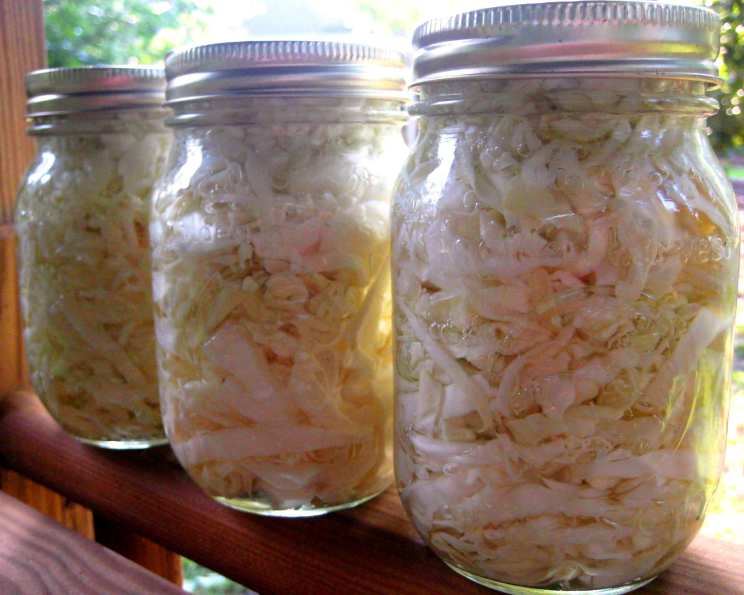
Homemade Sauerkraut: A Taste of Tradition
My grandmother’s hands, gnarled with age and stained with the memory of countless harvests, moved with a practiced grace as she transformed mountains of cabbage into tangy, life-sustaining sauerkraut. I can still recall the cool, earthy scent of the cellar where the jars were stored, and the satisfying pop as we opened a jar of kraut on a cold winter evening. It wasn’t just a side dish; it was a connection to our heritage, a reminder of simpler times, and a testament to the magic of fermentation. This recipe aims to recapture that magic, bringing the taste of homemade sauerkraut to your table with ease.
Recipe Overview
- Prep Time: 20 minutes
- Cook Time: 0 minutes (fermentation time varies)
- Total Time: Varies (days to weeks)
- Yield: 1-10 jars
- Serves: 2-20
- Dietary Type: Vegan, Gluten-Free, Dairy-Free, Probiotic-Rich
Ingredients
- Shredded cabbage (amount depends on jar size)
- 1 heaping teaspoon salt (per quart jar) or 1/2 heaping teaspoon (per pint jar)
- 1 heaping teaspoon sugar (per quart jar) or 1/2 heaping teaspoon (per pint jar)
- Boiling water
Equipment Needed
- Kraut cutter or large knife
- Cutting board
- Pint or quart jars with new lids and rings (sterile)
- Wooden spoon or spatula
- Large pot for boiling water
Instructions
-
Begin by carefully preparing your cabbage. Discard any limp outer leaves, or any that appear marred or dirty. Quality ingredients are the cornerstone of any good recipe, and sauerkraut is no exception.
-
Shred your cabbage. An old-fashioned kraut cutter provides the authentic, long shreds traditional for sauerkraut. However, if you don’t have one, a sharp knife and a little patience will work just as well. Aim for shreds that are relatively uniform in size to ensure even fermentation.
-
Select your desired jar size: either pint or quart jars. Thoroughly sterilize your jars, lids, and rings by boiling them in water for 10 minutes. This is crucial for preventing unwanted bacteria from spoiling your sauerkraut. Remove the sterilized jars and lids, being careful not to contaminate them.
-
Pack plain shredded cabbage into a sterile jar, either pint or quart, according to your preference. This is where the real work begins. By “pack,” I mean really pack! Put some cabbage in the jar, then turn a wooden spoon, or a spatula, upside down and cram that cabbage in as tightly as you can while filling the jar up. The more tightly packed the cabbage, the better the fermentation process will be. This will help release the cabbage’s natural juices, which are essential for the brine.
-
When the cabbage is packed to the neck of the jar, it’s time to add the salt and sugar. For a quart jar, add 1 heaping teaspoon of salt and 1 heaping teaspoon of sugar. For a pint jar, use 1/2 heaping teaspoon of salt and 1/2 heaping teaspoon of sugar. Don’t skimp on the measurements; these ingredients are vital for the fermentation process.
-
Carefully fill the sterile jar with boiling water to within 1 inch of the rim. Ensure that the water is truly boiling to help create a sterile environment within the jar.
-
Quickly cap the jar with a sterile new seal and ring. Make sure the lid is properly aligned to ensure a good seal.
-
Turn the jar upside down and let it cool completely in a place where air can move freely around the jar. This helps create a vacuum seal. As the jar cools, you may hear a popping sound, which indicates that the seal has formed properly. If a jar doesn’t seal, you can reprocess it with a new lid or store it in the refrigerator.
-
Allow the jars to sit at room temperature (ideally around 65-72°F or 18-22°C) for several days to several weeks to ferment. You will notice bubbles forming inside the jar, which indicates that the fermentation process is underway. Taste the sauerkraut after a week or so; it’s ready when it reaches your desired level of sourness.
Expert Tips & Tricks
- Use a high-quality sea salt or kosher salt for the best flavor. Avoid iodized salt, as it can inhibit fermentation.
- If you don’t have a kraut cutter, you can use a mandoline to shred the cabbage quickly and evenly.
- For a more complex flavor, add juniper berries, caraway seeds, or dill seeds to the jar before packing the cabbage.
- Ensure your jars are completely sterile to prevent mold and unwanted bacteria growth.
- Monitor the jars during fermentation. If mold appears on the surface, discard the entire batch.
Serving & Storage Suggestions
Serve your homemade sauerkraut chilled as a side dish with grilled sausages, pork chops, or Reuben sandwiches. It’s also fantastic added to salads, soups, or stews.
Unopened jars of sauerkraut can be stored at room temperature for up to a year. Once opened, store in the refrigerator and consume within a few weeks. Discard if you notice any signs of spoilage, such as mold or an off odor.
Nutritional Information
| Nutrient | Amount per Serving (estimated) | % Daily Value (estimated) |
|---|---|---|
| Calories | 15 kcal | 1% |
| Total Fat | 0 g | 0% |
| Saturated Fat | 0 g | 0% |
| Cholesterol | 0 mg | 0% |
| Sodium | 300 mg | 13% |
| Total Carbohydrate | 3 g | 1% |
| Dietary Fiber | 1 g | 4% |
| Sugars | 1 g | 0% |
| Protein | 0 g | 0% |
| Vitamin C | 15 mg | 25% |
| Vitamin K | 10 mcg | 8% |
Note: Nutritional information is approximate and can vary based on specific ingredients and portion sizes.
Variations & Substitutions
- Spicy Sauerkraut: Add a pinch of red pepper flakes or a chopped chili pepper to the jar for a spicy kick.
- Garlic Sauerkraut: Add a few cloves of minced garlic to the jar for a savory flavor.
- Carrot & Cabbage Sauerkraut: Mix shredded carrots with the cabbage for added sweetness and color.
- Beet Sauerkraut: Add shredded beets to the cabbage for a vibrant pink color and earthy flavor.
FAQs (Frequently Asked Questions)
Q: Why is it important to pack the cabbage tightly in the jar?
A: Packing the cabbage tightly helps to release its natural juices, creating the brine necessary for fermentation. It also reduces the amount of air in the jar, which can promote the growth of unwanted bacteria.
Q: How long does it take for sauerkraut to ferment?
A: Fermentation time varies depending on the temperature and humidity of your environment. Generally, it takes between one and four weeks for the sauerkraut to develop its characteristic sour flavor.
Q: What if mold appears on the surface of the sauerkraut?
A: If mold appears, it’s best to discard the entire batch. Mold can produce toxins that are harmful to your health.
Q: Can I use a different type of salt?
A: It’s best to use sea salt or kosher salt, as iodized salt can inhibit fermentation.
Q: How do I know when the sauerkraut is ready?
A: Taste it! The sauerkraut is ready when it has reached your desired level of sourness. It should also have a pleasant, tangy aroma.
Final Thoughts
There’s something deeply satisfying about creating your own sauerkraut from scratch. It’s a process that connects you to generations past, to the rhythms of the seasons, and to the simple pleasure of transforming humble ingredients into something truly special. So, gather your cabbage, sterilize your jars, and embark on this culinary adventure. Don’t be afraid to experiment with different flavors and spices to create your own signature sauerkraut. And, most importantly, share your creations with friends and family! Your homemade sauerkraut is sure to be a conversation starter and a delicious addition to any meal.