
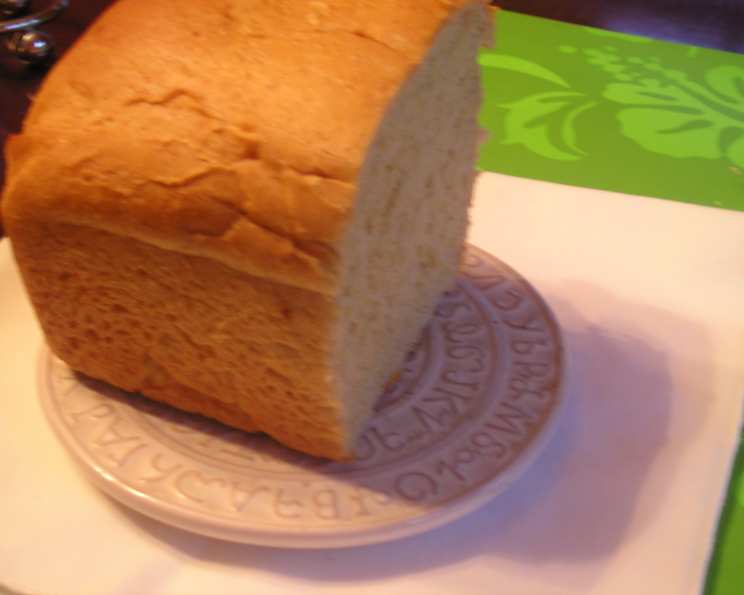
Anadama Bread: A Taste of New England History
The aroma alone can transport me back to crisp autumn days in New England. I remember visiting my grandmother’s cozy farmhouse, the scent of woodsmoke mingling with the sweet, yeasty fragrance emanating from her warm kitchen. It wasn’t just any bread baking; it was Anadama bread, a staple passed down through generations. The golden crust, the subtly sweet molasses notes, the satisfyingly dense crumb – it’s a sensory experience that speaks of tradition and home.
Recipe Overview
- Prep Time: 25 minutes
- Cook Time: 45 minutes
- Total Time: 1 hour 50 minutes (includes rising time)
- Yield: 1 loaf
- Dietary Type: Vegetarian
Ingredients
- 3 ¼ cups all-purpose flour
- 1 teaspoon all-purpose flour (for sprinkling)
- ½ cup cornmeal
- 1 teaspoon salt
- 1 package (¼ ounce) Fleischmann’s active dry yeast or 1 package (¼ ounce) fast rising yeast
- 3 tablespoons butter or 3 tablespoons margarine
- 1 cup water
- ¼ cup light molasses, at room temperature
Equipment Needed
- Large mixing bowl
- Electric mixer
- Measuring cups and spoons
- Lightly floured surface
- Rolling pin
- Greased 9 x 5 x 3-inch loaf pan
- Sharp knife
- Wire rack
Instructions
- In a large bowl, combine 2 cups of the all-purpose flour, the cornmeal, salt, and undissolved yeast. Ensure all ingredients are evenly distributed.
- In a separate, microwave-safe bowl or saucepan, heat the water, butter (or margarine), and molasses to between 120°F and 130°F. A thermometer is recommended for accuracy. The butter should be fully melted.
- Gradually add the hot liquid mixture to the dry ingredients in the large bowl. Beat with an electric mixer for 2 minutes at medium speed, scraping the bowl occasionally to ensure all ingredients are well combined.
- Add ½ cup of the remaining all-purpose flour to the mixture. Beat at high speed for another 2 minutes, scraping the bowl occasionally. The dough will become smoother and more elastic.
- With a spoon, stir in enough of the remaining all-purpose flour to form a soft dough that pulls away from the sides of the bowl but is not stiff. You may not need to use all of the flour.
- Turn the dough out onto a lightly floured surface. Knead the dough until it is smooth and elastic, about 6 to 8 minutes. Add small amounts of flour if the dough is too sticky.
- Cover the kneaded dough and let it rest on the floured surface for 20 minutes. This allows the gluten to relax, making the dough easier to roll.
- Roll the dough out into a 14 x 9-inch rectangle. Aim for an even thickness.
- Starting from the short end, tightly roll the dough up as you would for a jelly roll. Pinch the seam and ends to seal them securely. This creates the characteristic shape of Anadama bread.
- Place the rolled dough, seam side down, in a greased 9 x 5 x 3-inch loaf pan. Make sure the pan is well-greased to prevent sticking.
- Cover the loaf pan and let it rise in a warm, draft-free place until the dough has doubled in size, which should take about 1 hour. You can place the pan in a slightly warmed oven (turned off) or near a warm stove.
- Preheat the oven to 375°F (190°C).
- Just before baking, sprinkle the top of the loaf with the remaining 1 teaspoon of all-purpose flour.
- With a sharp knife, make a lengthwise cut (about ¼ inch deep) in the top of the loaf. This allows the bread to expand evenly during baking and prevents cracking.
- Bake in the preheated oven for 45 minutes, or until the bread is golden brown and sounds hollow when tapped on the bottom. If the top is browning too quickly, tent it loosely with foil.
- Remove the loaf from the pan immediately after baking and cool it completely on a wire rack before slicing and serving.
Expert Tips & Tricks
- Temperature is Key: Getting the water temperature right is crucial for activating the yeast properly. Too hot, and you’ll kill the yeast; too cold, and it won’t activate. Aim for the 120°F – 130°F range.
- Molasses Matters: While light molasses is called for, you can experiment with dark molasses for a richer, more intense flavor. Be aware that dark molasses can also make the bread slightly denser.
- Kneading Technique: Don’t over-knead the dough. Over-kneading can result in a tough loaf. Knead just until the dough is smooth and elastic.
- Rising Time: Rising time can vary depending on the warmth of your environment. Be patient and allow the dough to fully double in size.
- Scoring the Loaf: Scoring the loaf isn’t just for aesthetics; it helps control how the bread expands in the oven. A sharp knife or lame is essential for a clean cut.
- Oven Temperature: Oven temperatures can vary. Use an oven thermometer to ensure accuracy.
Serving & Storage Suggestions
Anadama bread is delicious served warm with butter, jam, or honey. It also makes an excellent accompaniment to soups and stews. For a truly New England experience, pair it with clam chowder!
To store leftover Anadama bread, wrap it tightly in plastic wrap or place it in an airtight container. It will keep at room temperature for 2-3 days. For longer storage, freeze the bread for up to 2 months. Thaw completely before serving. To refresh the bread, you can lightly toast it or warm it in a low oven (300°F) for a few minutes.
Nutritional Information
| Nutrient | Amount per Serving | % Daily Value* |
|---|---|---|
| Calories | 2279.1 kcal | N/A |
| Calories from Fat | N/A | 16% |
| Total Fat | 41.1 g | 63% |
| Saturated Fat | 22.9 g | 114% |
| Cholesterol | 91.6 mg | 30% |
| Sodium | 2639.8 mg | 109% |
| Total Carbohydrate | 424.5 g | 141% |
| Dietary Fiber | 17 g | 67% |
| Sugars | 48.3 g | 193% |
| Protein | 50.2 g | 100% |
*Percent Daily Values are based on a 2,000 calorie diet. Your daily values may be higher or lower depending on your calorie needs. Please note these are estimated values and can vary based on specific ingredients used.
Variations & Substitutions
- Whole Wheat Anadama Bread: Substitute up to half of the all-purpose flour with whole wheat flour for a nuttier flavor and added fiber.
- Honey Anadama Bread: Replace the molasses with an equal amount of honey for a milder sweetness.
- Maple Anadama Bread: Use maple syrup instead of molasses for a distinctly New England flavor.
- Gluten-Free Anadama Bread: Experiment with a gluten-free flour blend, but be aware that the texture may be slightly different. You may need to add a binder like xanthan gum.
- Vegan Anadama Bread: Ensure the margarine used is vegan-friendly.
FAQs (Frequently Asked Questions)
Q: What is Anadama bread, and where does it come from?
A: Anadama bread is a traditional New England bread made with cornmeal and molasses. Its origins are attributed to a fisherman’s wife named Anna who was tired of her husband’s request for cornmeal and molasses.
Q: Can I use rapid-rise yeast instead of active dry yeast?
A: Yes, you can use rapid-rise yeast. If using rapid-rise yeast, reduce the first rising time. Cover the kneaded dough and let it rest on the floured surface for only 10 minutes before proceeding with the recipe.
Q: Why is the water temperature so important?
A: The water temperature is crucial for activating the yeast. If the water is too hot, it will kill the yeast; if it’s too cold, the yeast won’t activate properly. Aim for 120-130°F.
Q: My dough isn’t rising. What could be the problem?
A: Several factors could prevent the dough from rising: the yeast might be old or inactive, the temperature might be too cold, or the dough might not have been kneaded enough.
Q: How can I tell if the bread is done?
A: The bread is done when it is golden brown and sounds hollow when tapped on the bottom. You can also use a thermometer; the internal temperature should reach around 200-210°F.
Final Thoughts
I hope this recipe brings the warmth and comfort of New England into your home. Don’t be intimidated by baking with yeast – it’s a rewarding experience, and the aroma of freshly baked Anadama bread is simply irresistible. Feel free to experiment with variations and substitutions to make it your own. And please, share your creations and feedback – I’d love to hear how it turns out for you! Perhaps, enjoy a slice alongside a cup of hot apple cider on a cool evening. Happy baking!