
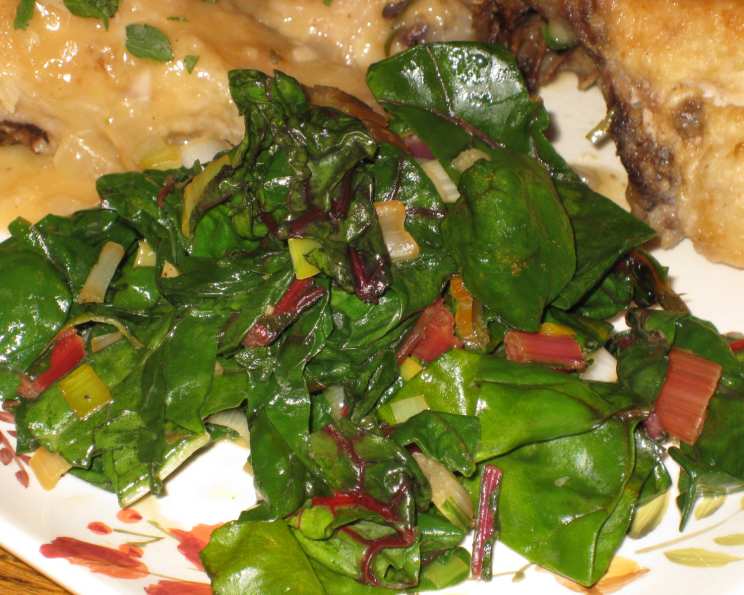
Seared Rainbow Chard With Leeks: A Symphony of Earthy Flavors
My grandmother, a woman of few words but endless wisdom in the kitchen, always said, “Eat your greens; they’ll put color in your cheeks and fire in your soul.” I can still picture her in her sun-drenched kitchen, wielding a well-worn knife, transforming humble bunches of chard into vibrant, flavorful dishes. This recipe for seared rainbow chard with leeks is an homage to her, a simple yet elegant celebration of fresh, seasonal produce that’s sure to become a staple in your own kitchen. The slight bitterness of the chard, mellowed by sweet leeks and a touch of butter, is a taste of sunshine on a plate.
Recipe Overview
- Prep Time: 10 minutes
- Cook Time: 10 minutes
- Total Time: 20 minutes
- Servings: 4-6
- Yield: Varies by chard bunch size
- Dietary Type: Gluten-Free
Ingredients
- 2 bunches rainbow chard leaves or 2 bunches red and green swiss chard
- 3 tablespoons unsalted butter
- 2 tablespoons extra virgin olive oil
- 2 large leeks, halved lengthwise and cut crosswise into 1/4-inch-thick slices (white and pale green parts only)
- 3⁄4 teaspoon fine sea salt
Equipment Needed
- 12-inch heavy skillet
- Cutting board
- Chef’s knife
Instructions
- Begin by preparing the chard. Separate the stems from the leaves. If the leaves are large, cut out the coarse portions of the rib. Cut the stems crosswise into 1/4-inch-thick slices.
- Stack the chard leaves and roll them into tight cylinders. Cut the cylinders crosswise to make 1-inch-thick strips of leaves. This chiffonade cut ensures even cooking and a pleasant texture.
- Heat the butter and olive oil in a 12-inch heavy skillet over moderately high heat. Allow the butter to melt completely and the mixture to become hot. The mixture is ready when the foaming subsides.
- Add the sliced chard stems and leeks to the skillet. Season with sea salt and pepper to taste. Sauté, stirring occasionally, until the chard stems and leeks are slightly soft, about 3 to 5 minutes. Ensure the leeks and chard are not browning too quickly by adjusting the heat as needed.
- Add the chopped chard leaves to the skillet. Continue to sauté, stirring frequently, until the leaves are wilted, another 3 to 5 minutes. If the greens begin to brown before they wilt, sprinkle with a few drops of water to help them steam and prevent burning.
Expert Tips & Tricks
- Don’t overcrowd the pan: If you have a very large quantity of chard, cook it in batches to ensure even cooking. Overcrowding lowers the pan temperature and results in steamed, rather than seared, greens.
- Prep ahead: The chard stems and leaves can be prepped ahead of time and stored separately in the refrigerator for up to a day. This speeds up the cooking process when you’re ready to eat.
- Enhance the flavor: A squeeze of fresh lemon juice at the end brightens the dish and adds a touch of acidity. A sprinkle of red pepper flakes provides a hint of heat.
- Brown Butter: If you want to add a deeper, nutty flavor, cook the butter a little longer until it turns a light brown color before adding the olive oil. Be careful not to burn it.
- Garlic Infusion: For an extra layer of flavor, add one or two minced cloves of garlic to the pan during the last minute of cooking the leeks.
Serving & Storage Suggestions
Serve the seared rainbow chard with leeks immediately as a side dish. It pairs beautifully with roasted chicken, grilled fish, or even a simple frittata. The vibrant colors and earthy flavors make it a welcome addition to any meal.
Leftovers can be stored in an airtight container in the refrigerator for up to 3 days. To reheat, gently warm in a skillet over medium heat until heated through. Avoid microwaving, as this can make the greens mushy.
This dish is best enjoyed fresh, but can be reheated if needed. However, the texture of the chard may soften slightly upon reheating.
Nutritional Information
| Nutrient | Amount per Serving | % Daily Value |
|---|---|---|
| Calories | 163.2 kcal | N/A |
| Calories from Fat | 139 g | 86% |
| Total Fat | 15.5 g | 23% |
| Saturated Fat | 6.4 g | 32% |
| Cholesterol | 22.9 mg | 7% |
| Sodium | 446.2 mg | 18% |
| Total Carbohydrate | 6.3 g | 2% |
| Dietary Fiber | 0.8 g | 3% |
| Sugars | 1.7 g | 6% |
| Protein | 0.8 g | 1% |
Note: Nutritional information is an estimate and may vary based on specific ingredients and portion sizes.
Variations & Substitutions
- Spice it up: Add a pinch of red pepper flakes to the skillet for a touch of heat.
- Add nuts: Toasted pine nuts or slivered almonds add a delightful crunch and nutty flavor.
- Cheese please: A sprinkle of grated Parmesan cheese or crumbled feta cheese adds a salty and savory element.
- Vinegar twist: A splash of balsamic vinegar at the end of cooking adds a tangy sweetness.
- Other Greens: This recipe works well with other leafy greens such as spinach, kale, or collard greens. Adjust cooking times accordingly, as some greens may require longer to wilt.
- Vegan Variation: Substitute the butter with vegan butter or more olive oil.
FAQs (Frequently Asked Questions)
Q: Can I use frozen chard for this recipe?
A: While fresh chard is preferred for its texture and flavor, frozen chard can be used in a pinch. Be sure to thaw it completely and squeeze out any excess water before adding it to the skillet.
Q: What if I can’t find rainbow chard?
A: Red and green Swiss chard are excellent substitutes. The flavor is very similar.
Q: How do I clean leeks properly?
A: Leeks tend to trap dirt between their layers. After slicing, place the leeks in a bowl of cold water and swish them around to dislodge any dirt. The dirt will sink to the bottom of the bowl, and you can scoop out the clean leeks.
Q: Can I add other vegetables to this dish?
A: Absolutely! Mushrooms, garlic, and shallots are all great additions. Add them to the skillet along with the leeks.
Q: How do I prevent the chard from becoming bitter?
A: Sautéing the chard over moderately high heat and adding a touch of salt helps to mellow out its natural bitterness. Don’t overcook it, as this can intensify the bitterness.
Final Thoughts
This seared rainbow chard with leeks is more than just a side dish; it’s a celebration of simple, fresh ingredients and the joy of home cooking. I encourage you to give this recipe a try and experiment with your own variations. Don’t be afraid to add a personal touch, whether it’s a sprinkle of your favorite spice or a handful of toasted nuts. Share your creations with friends and family, and remember, the best meals are those made with love and shared with those you cherish. Enjoy!